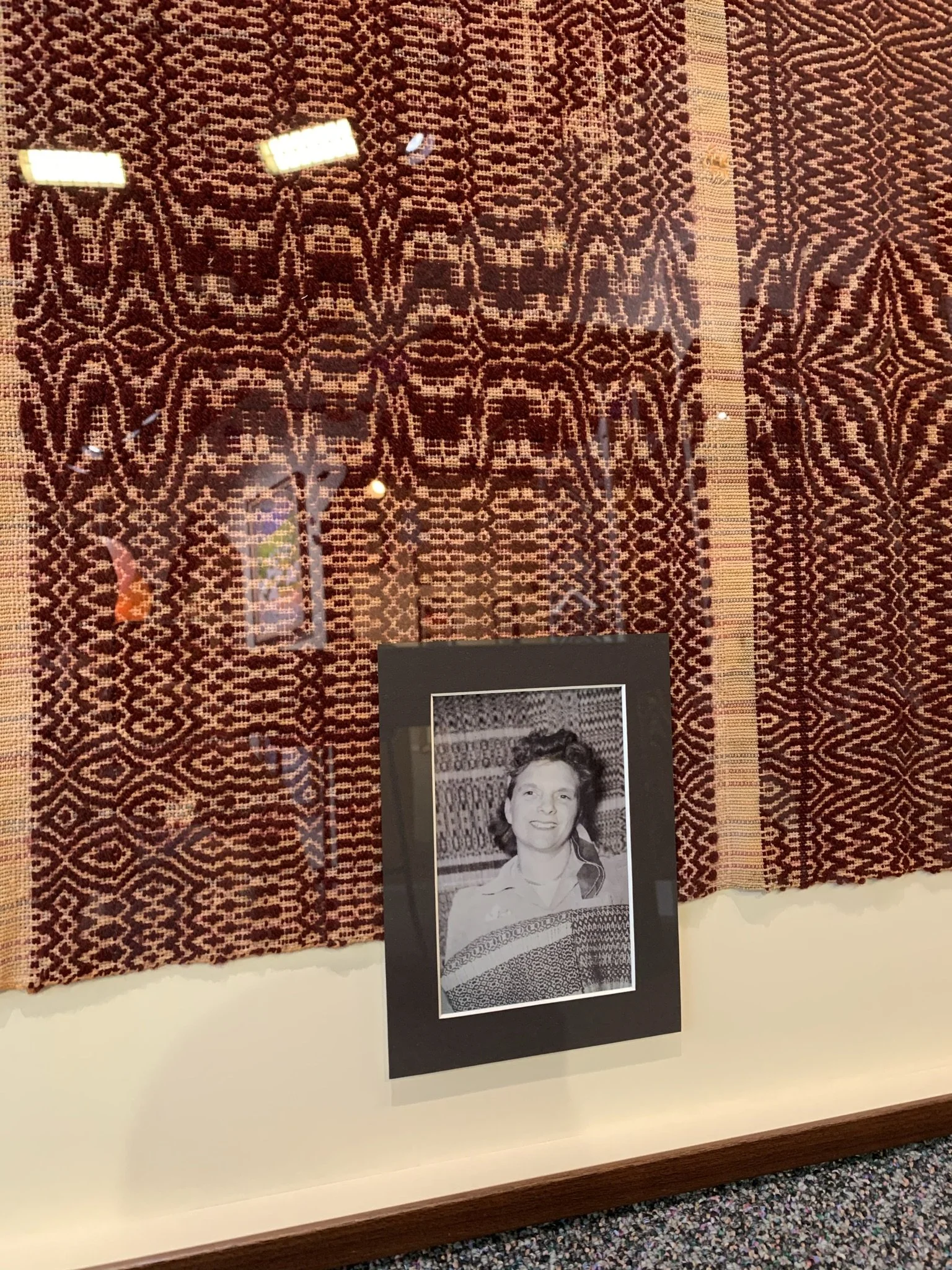
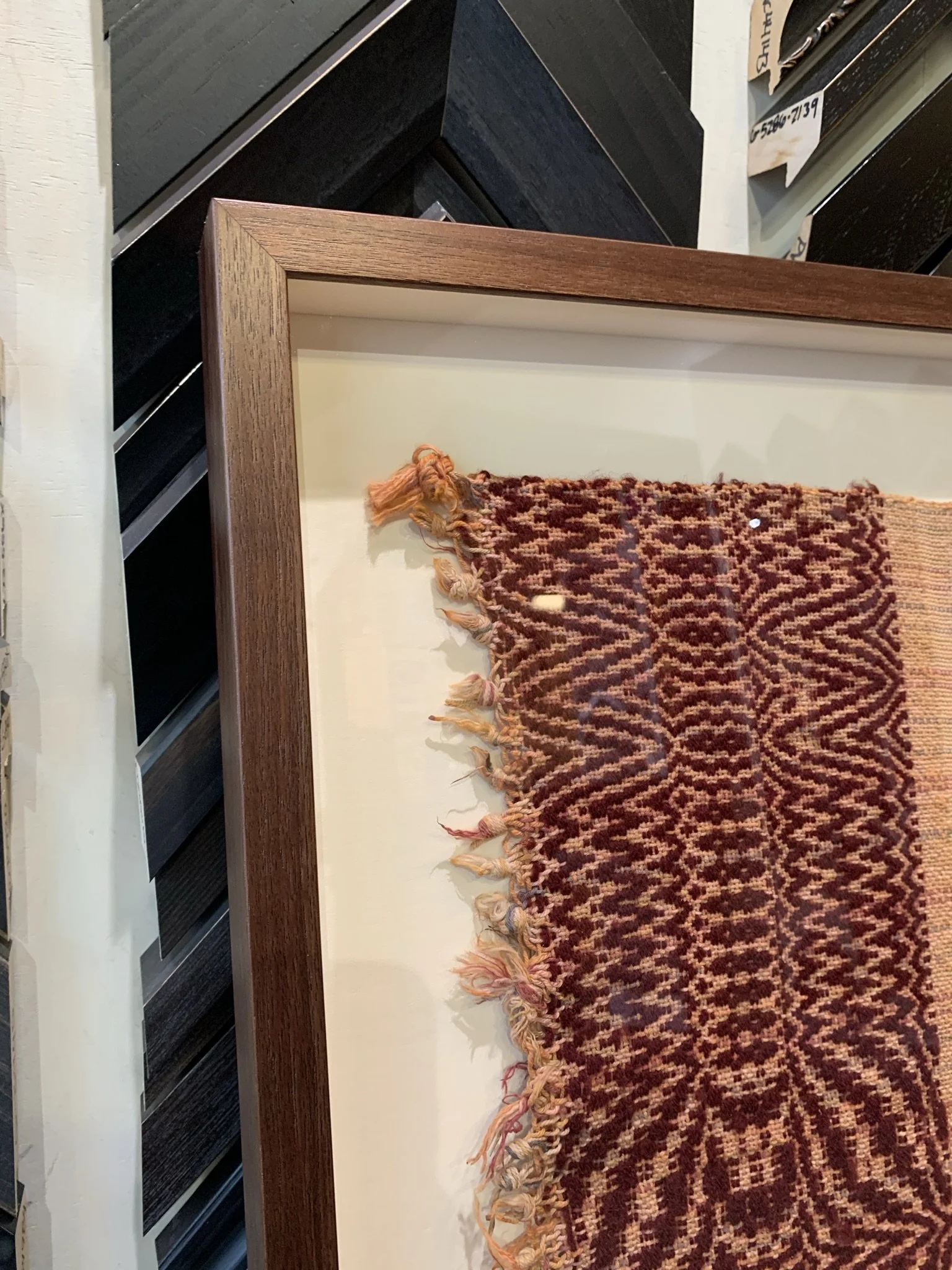
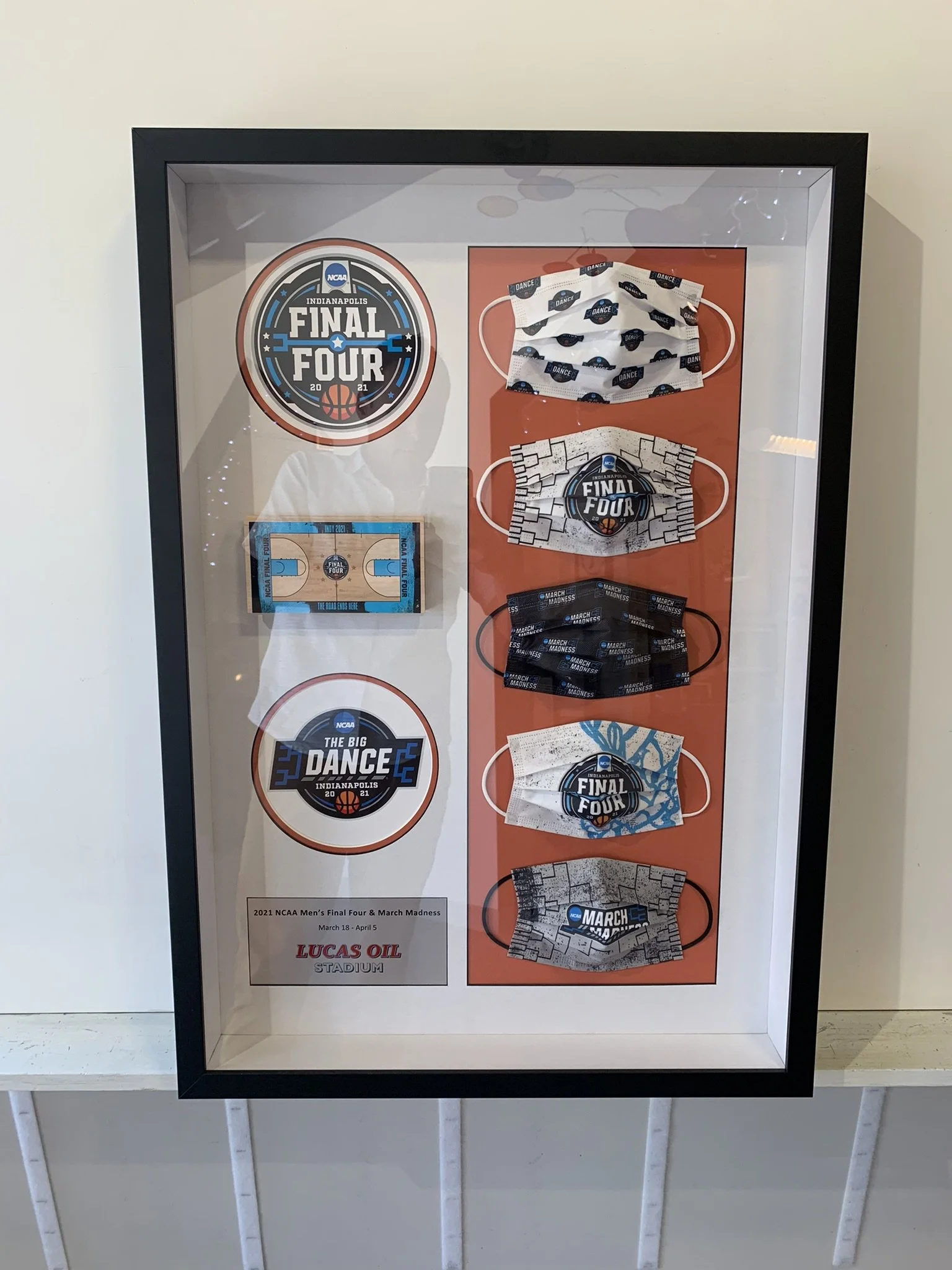
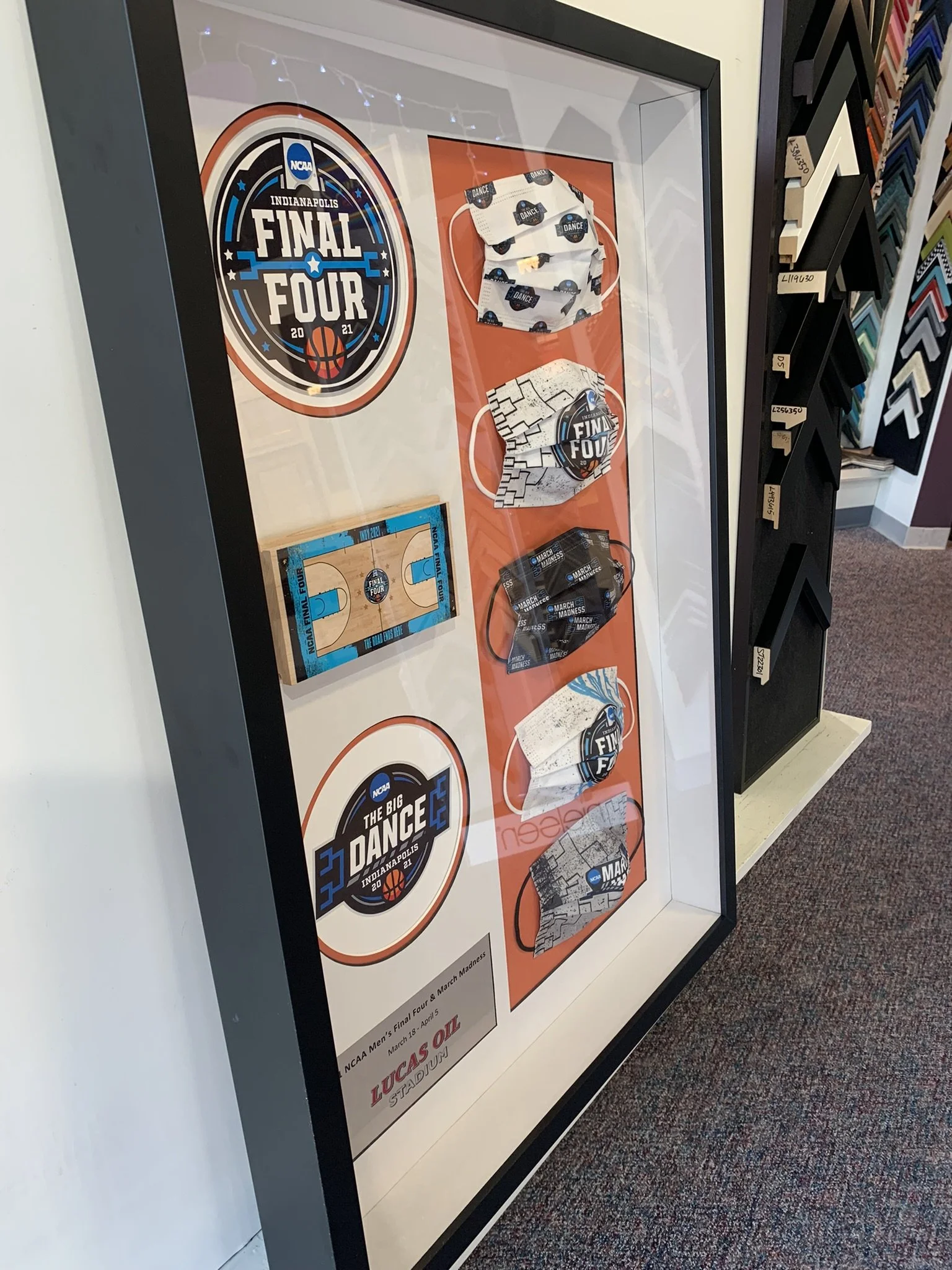
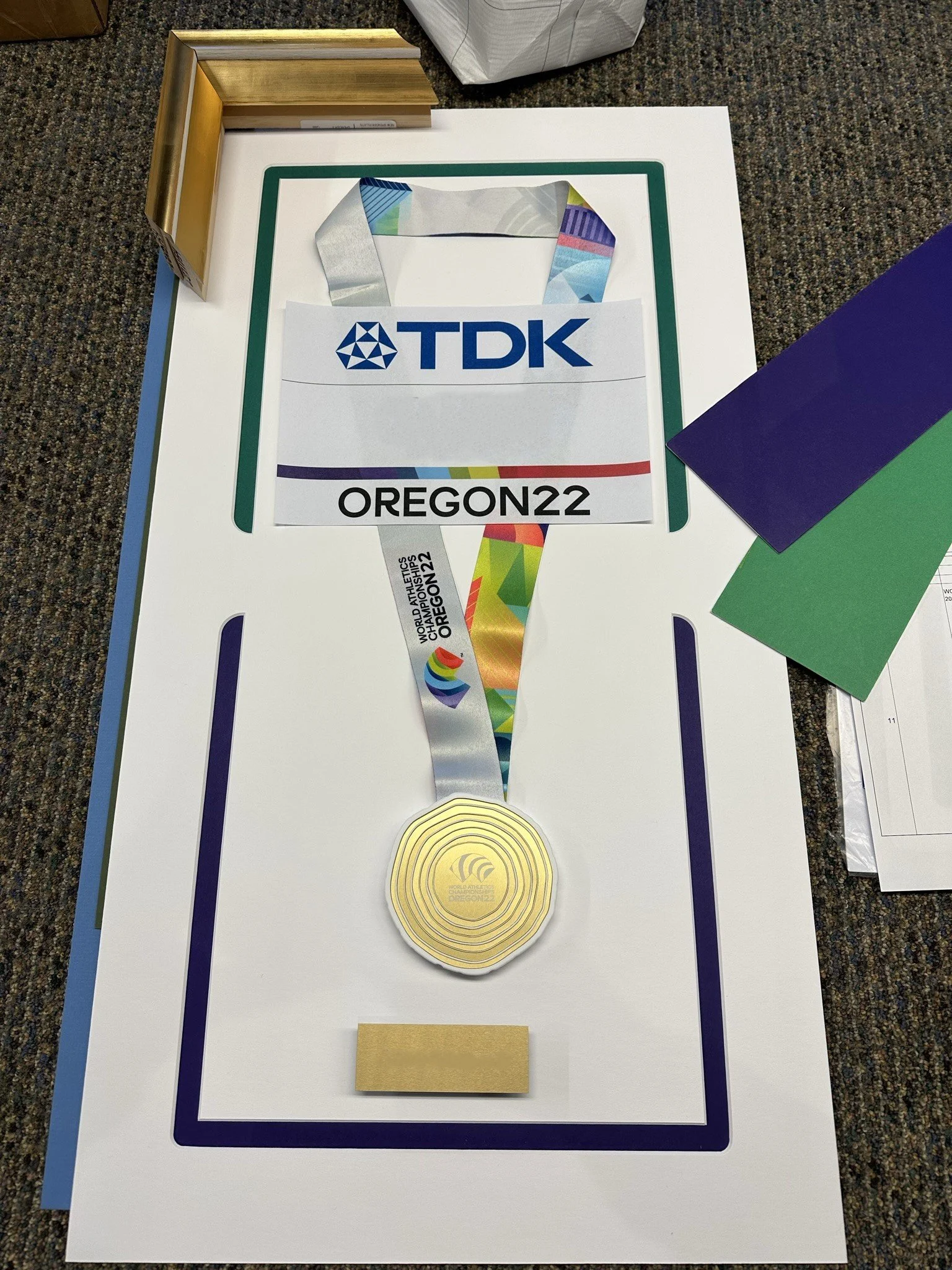
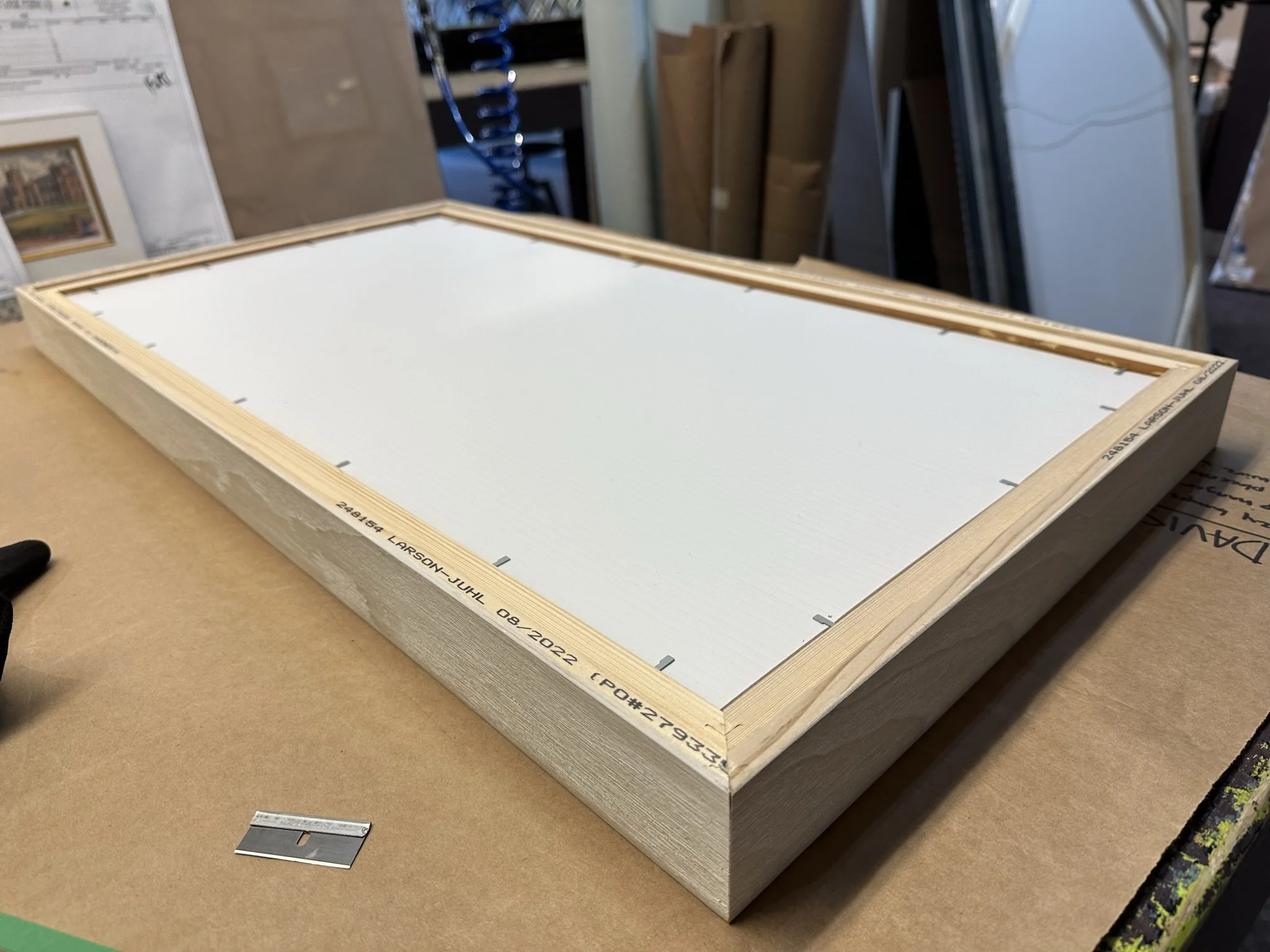
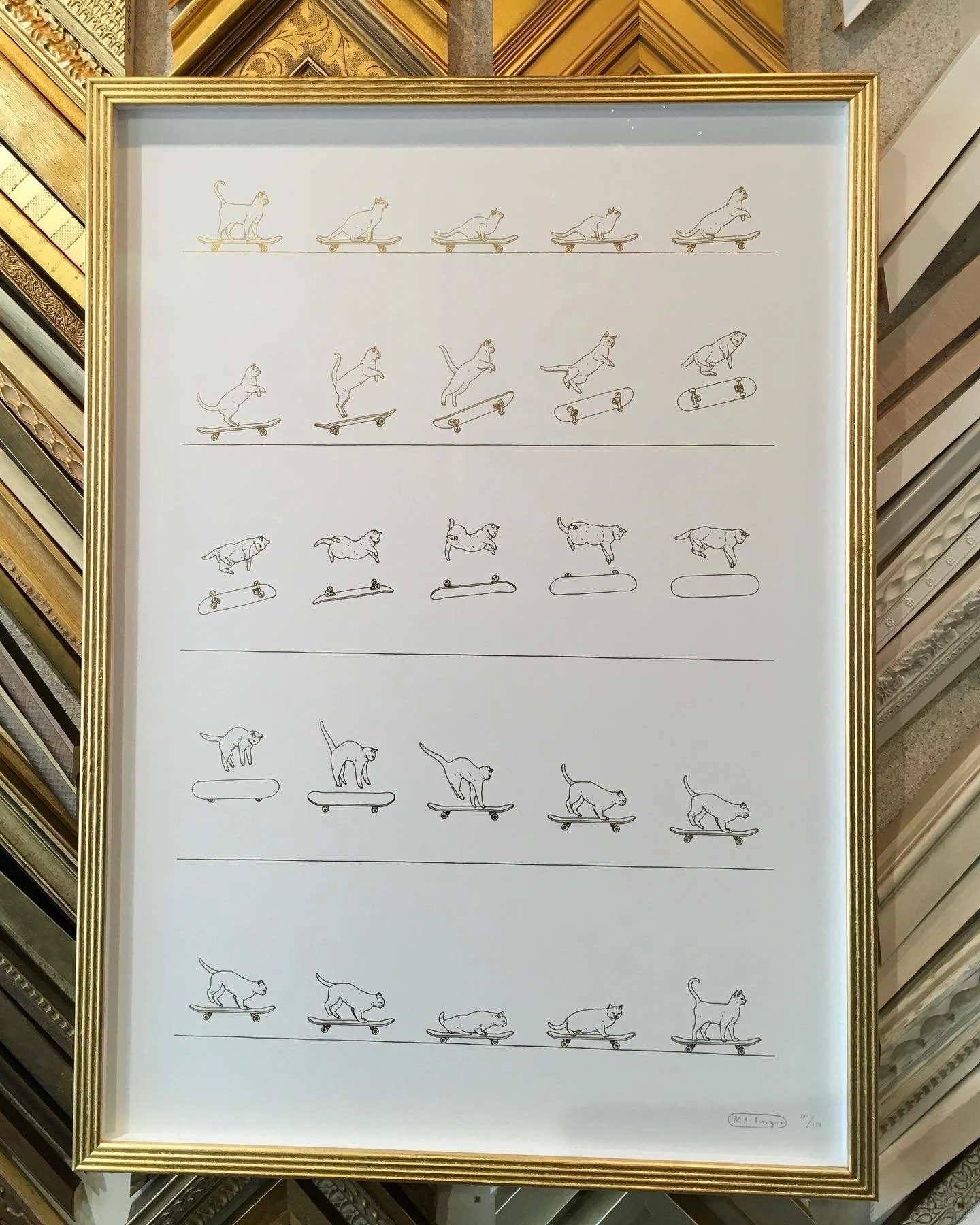
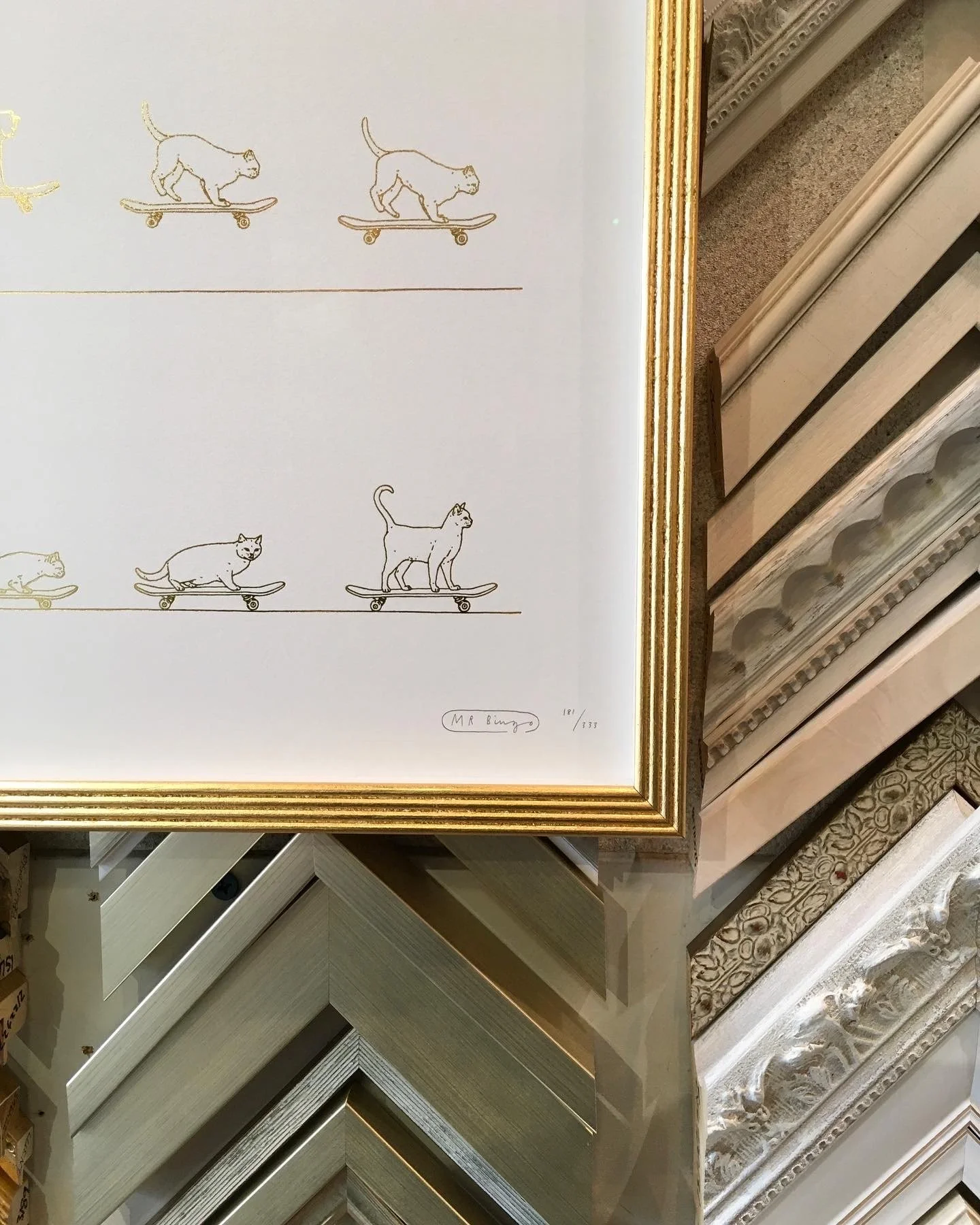
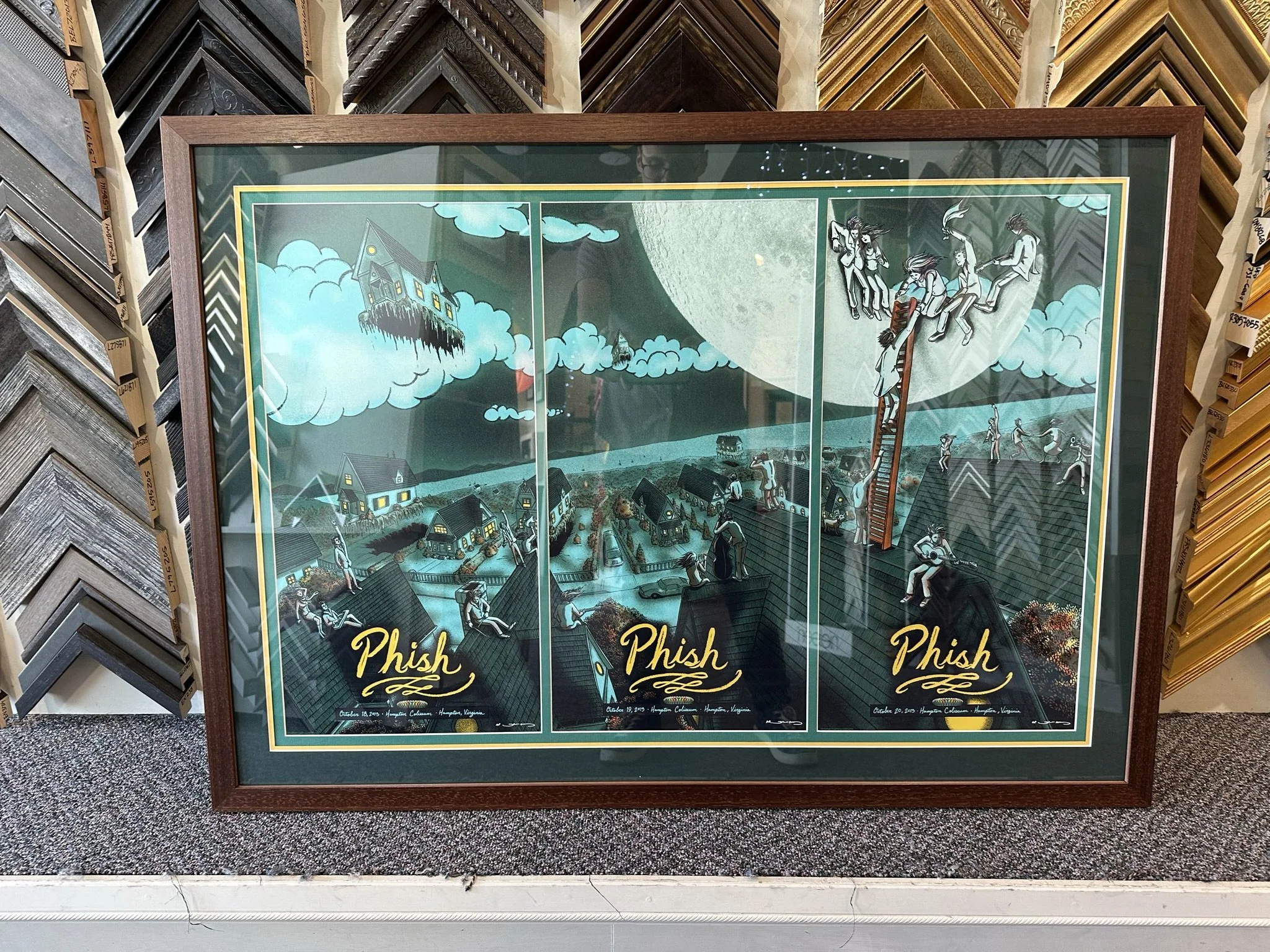
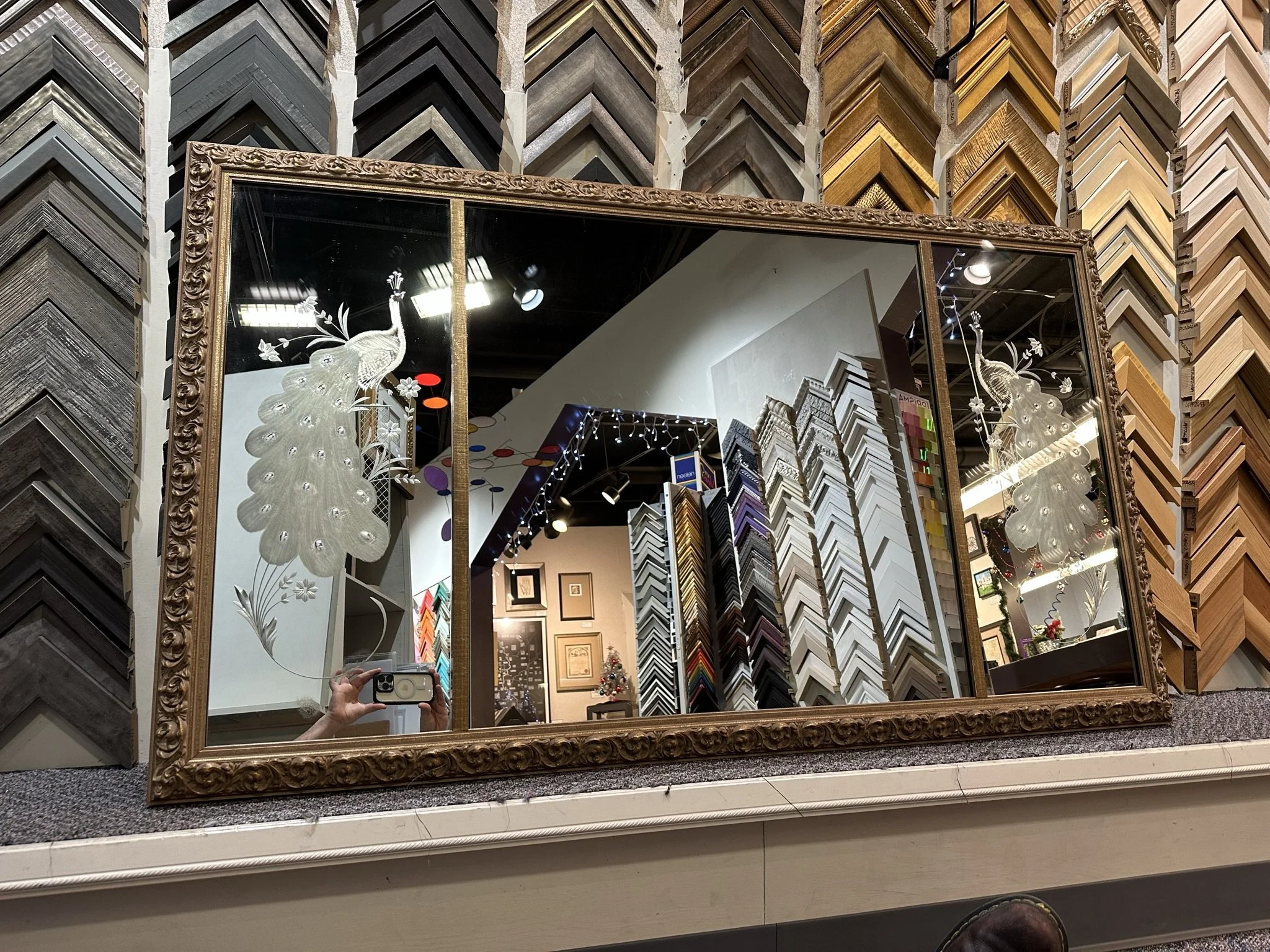
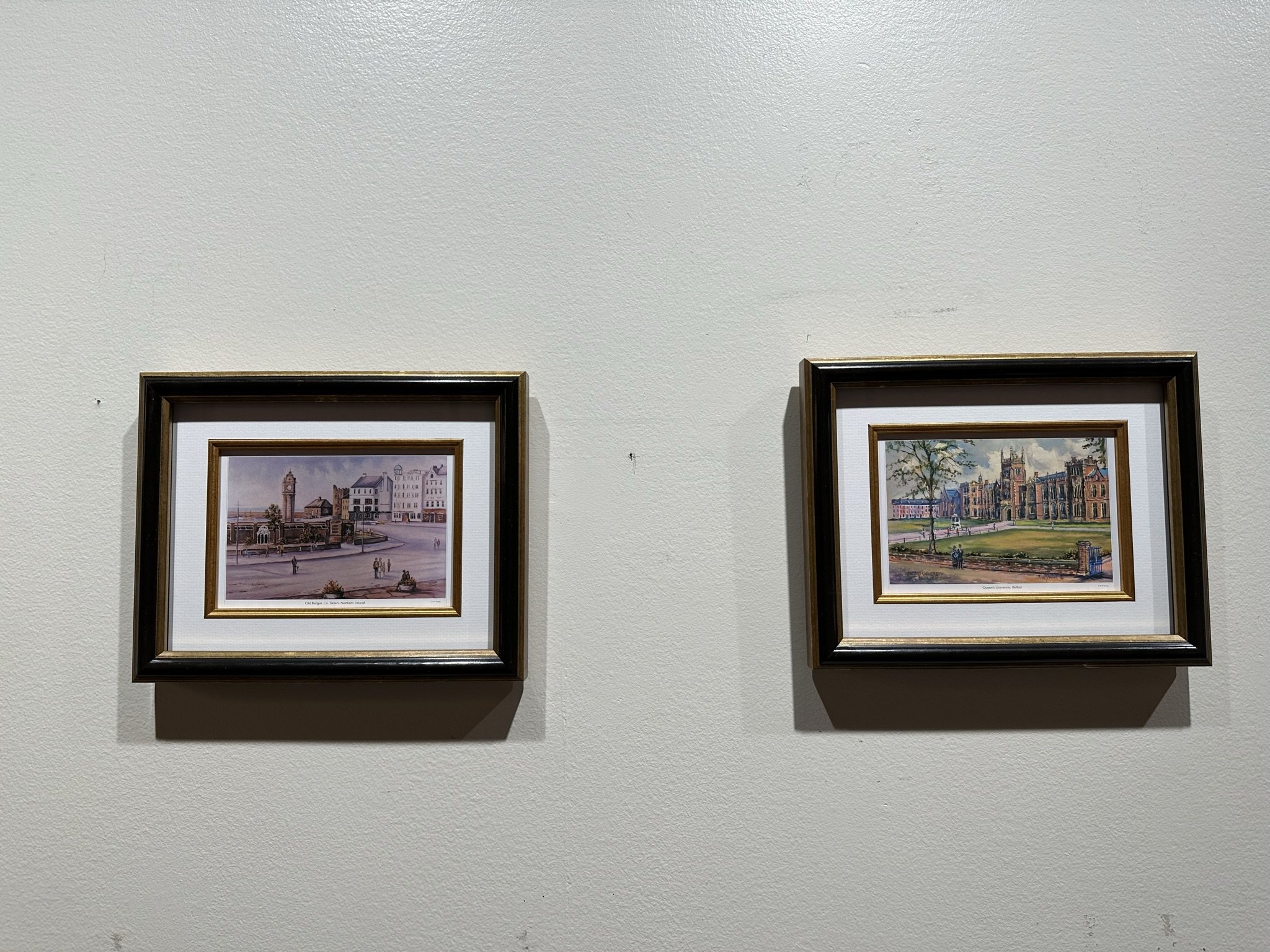
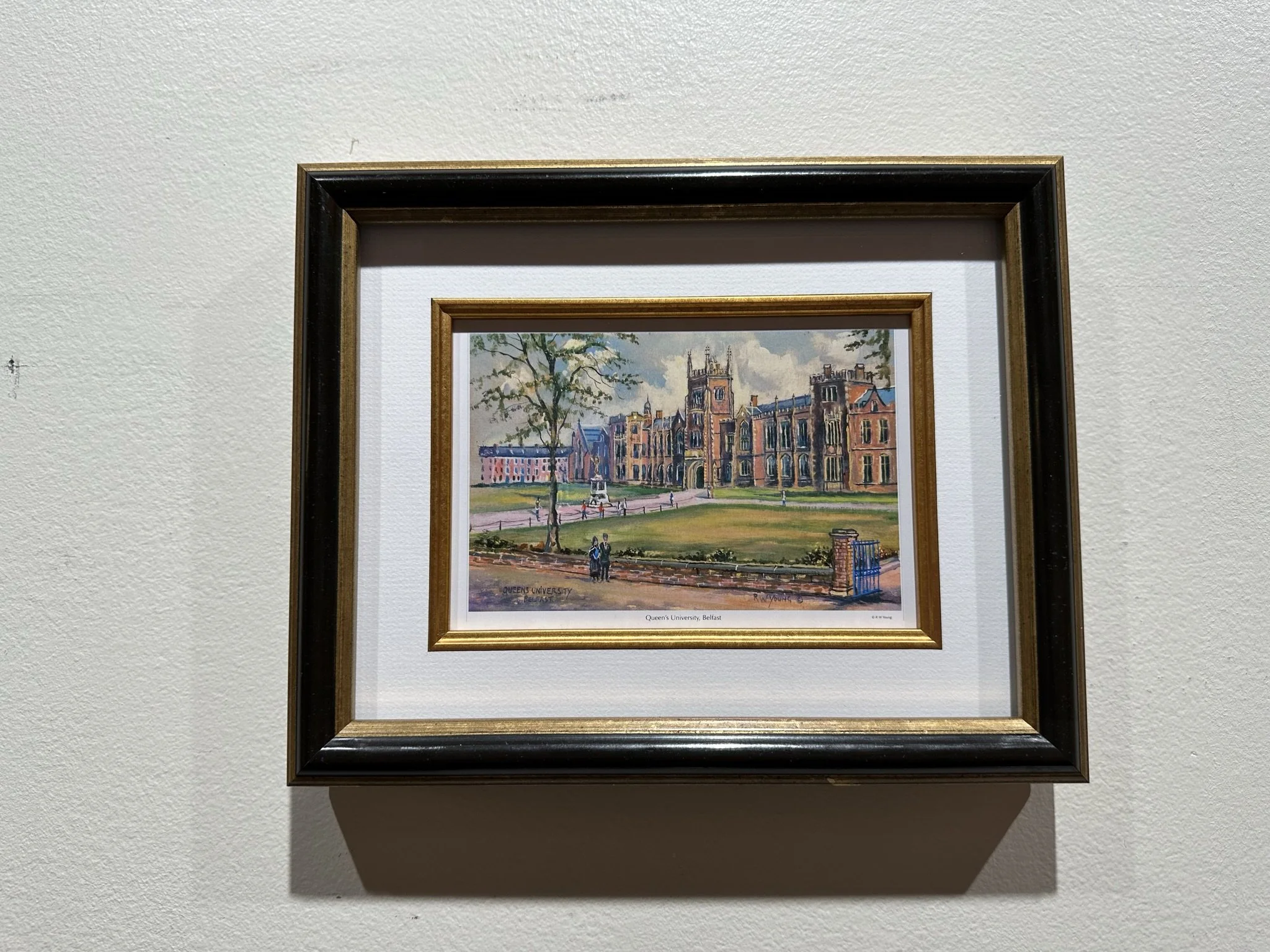
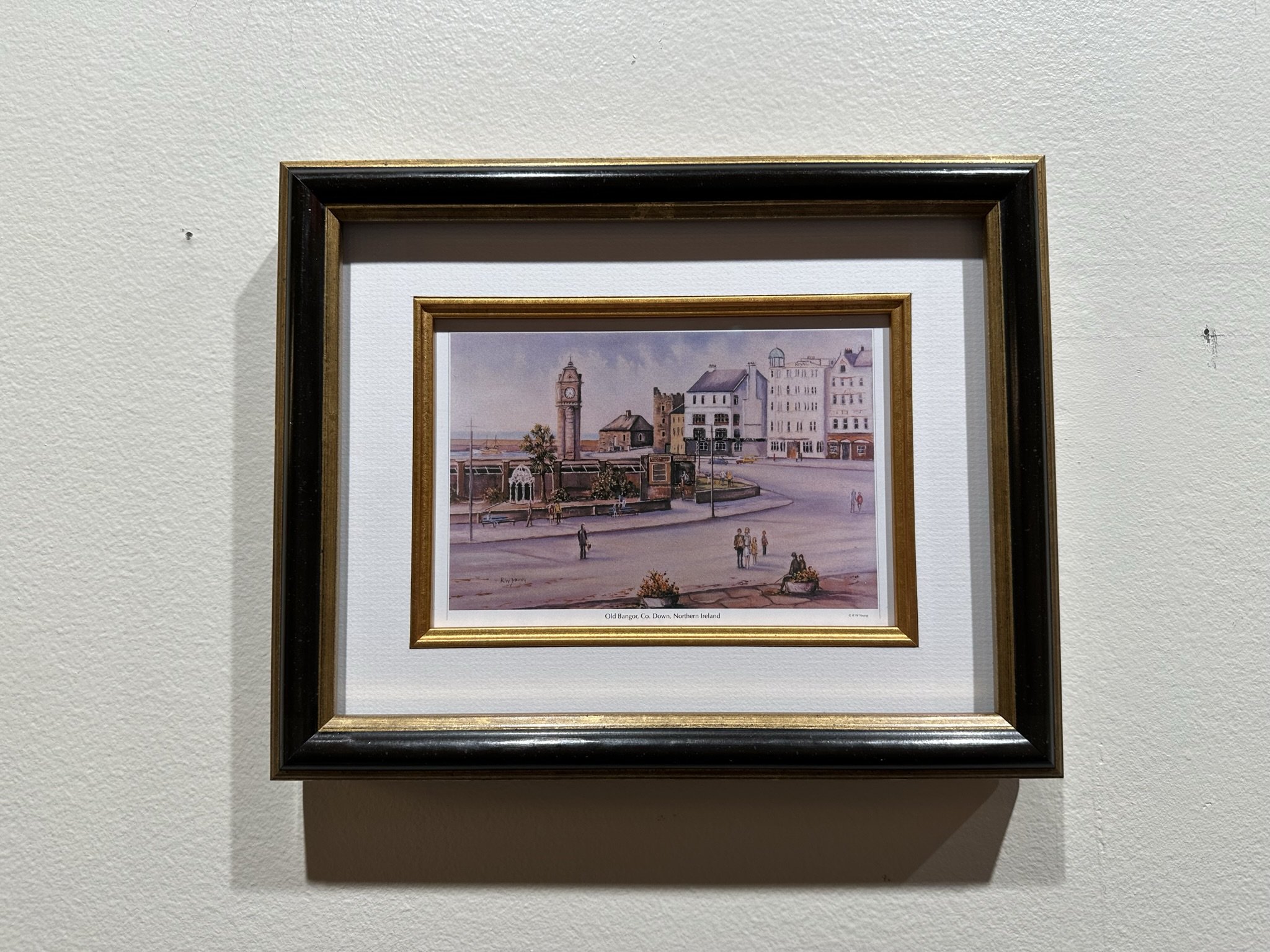
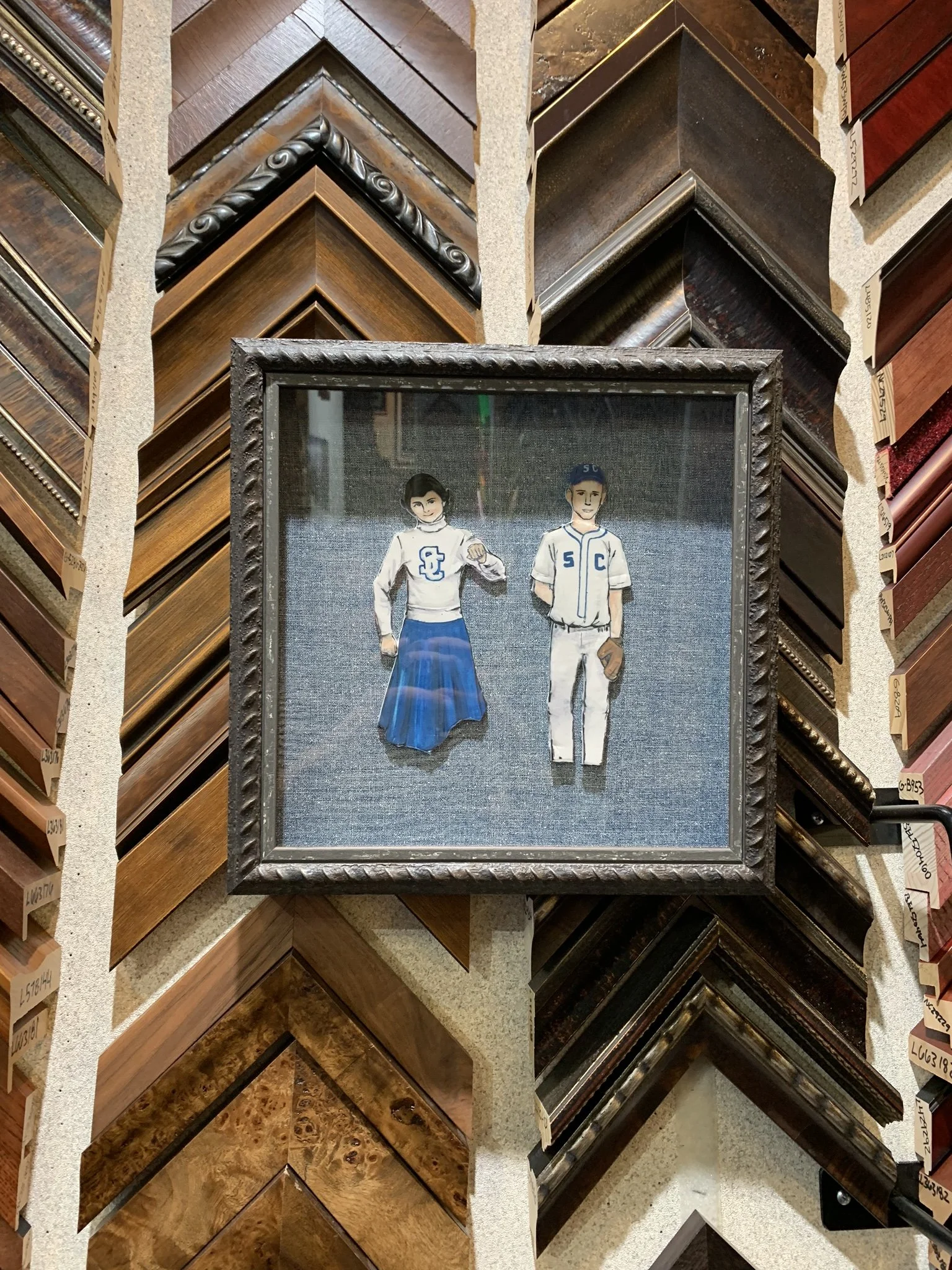
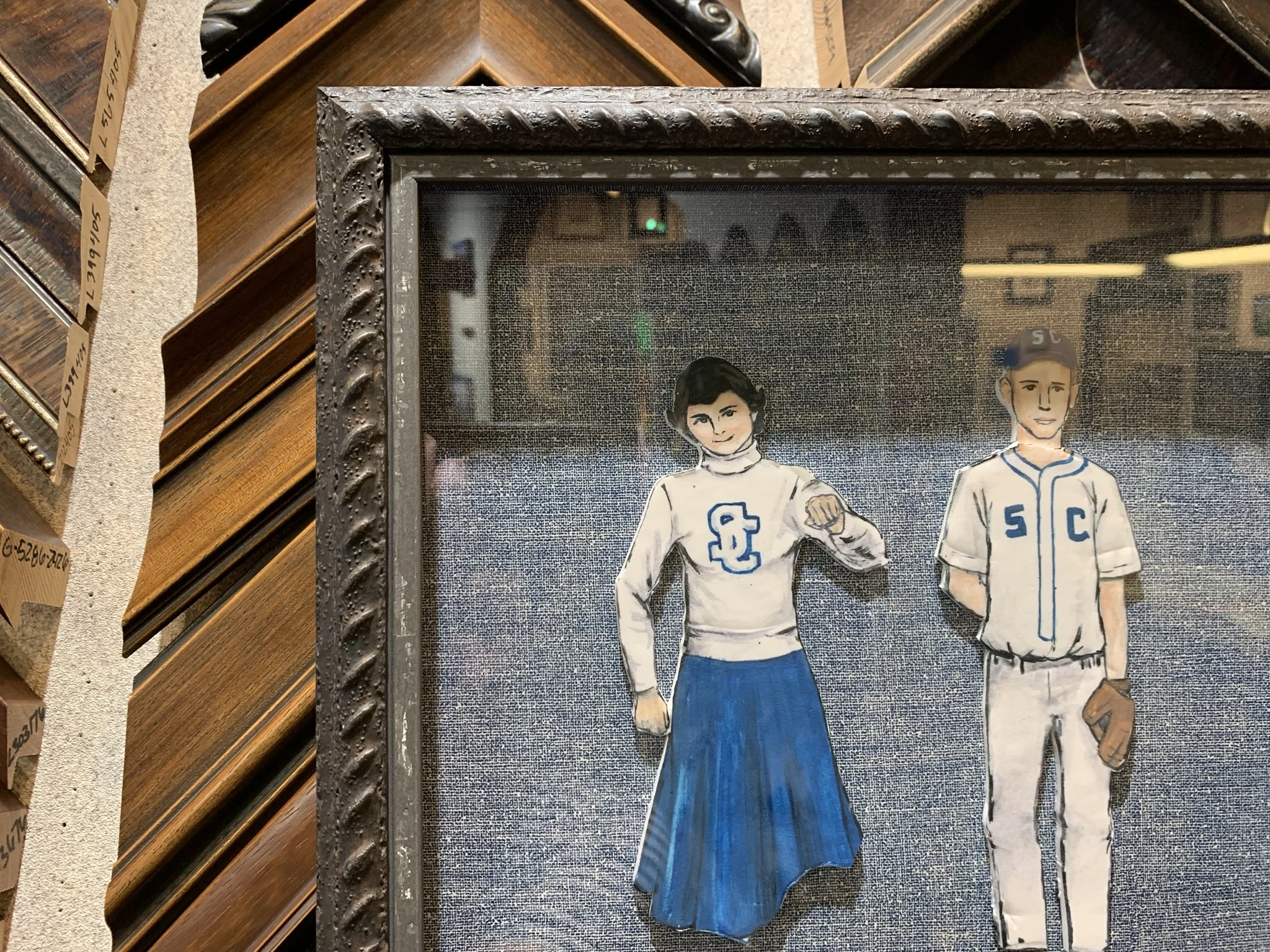
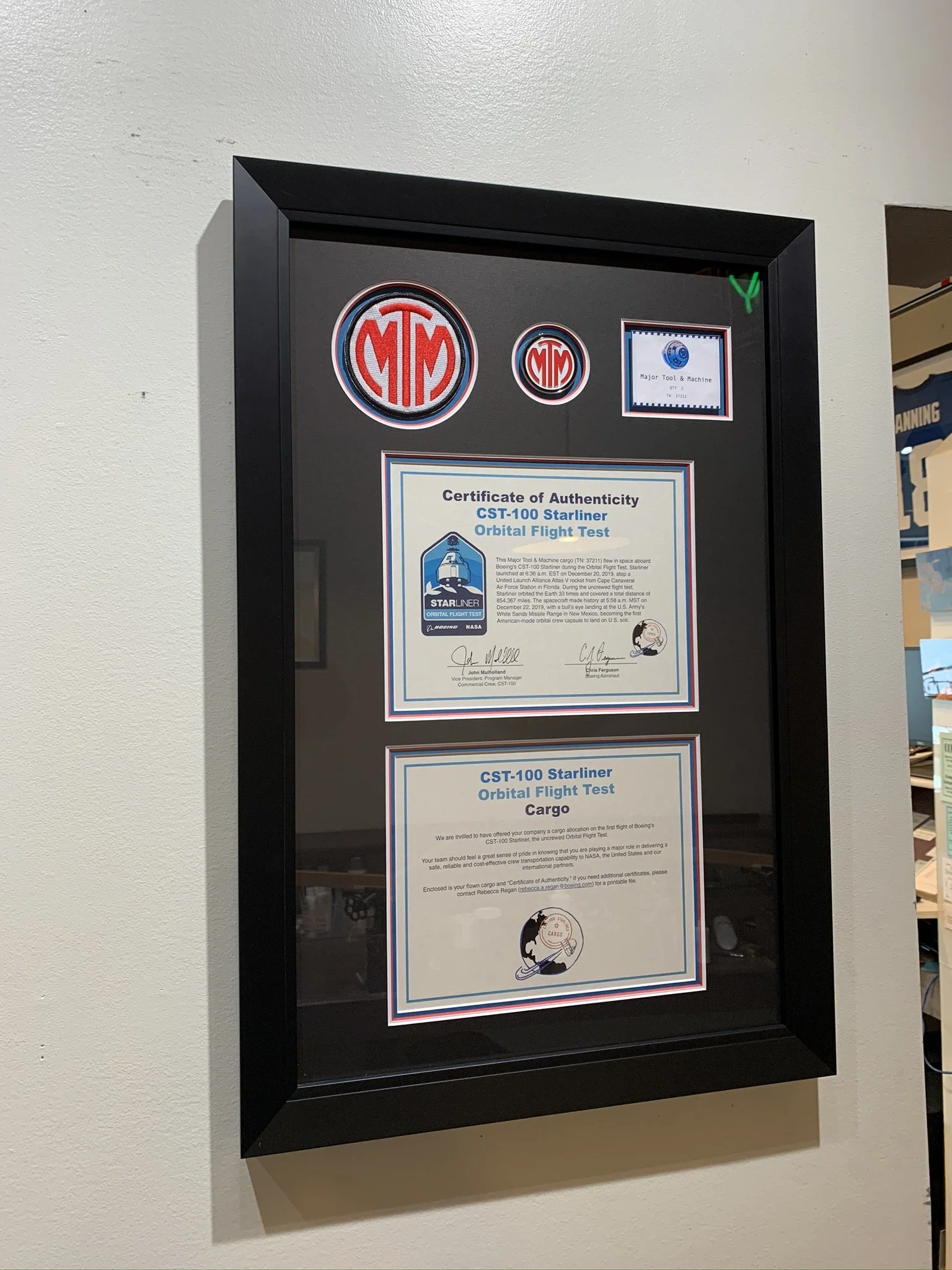
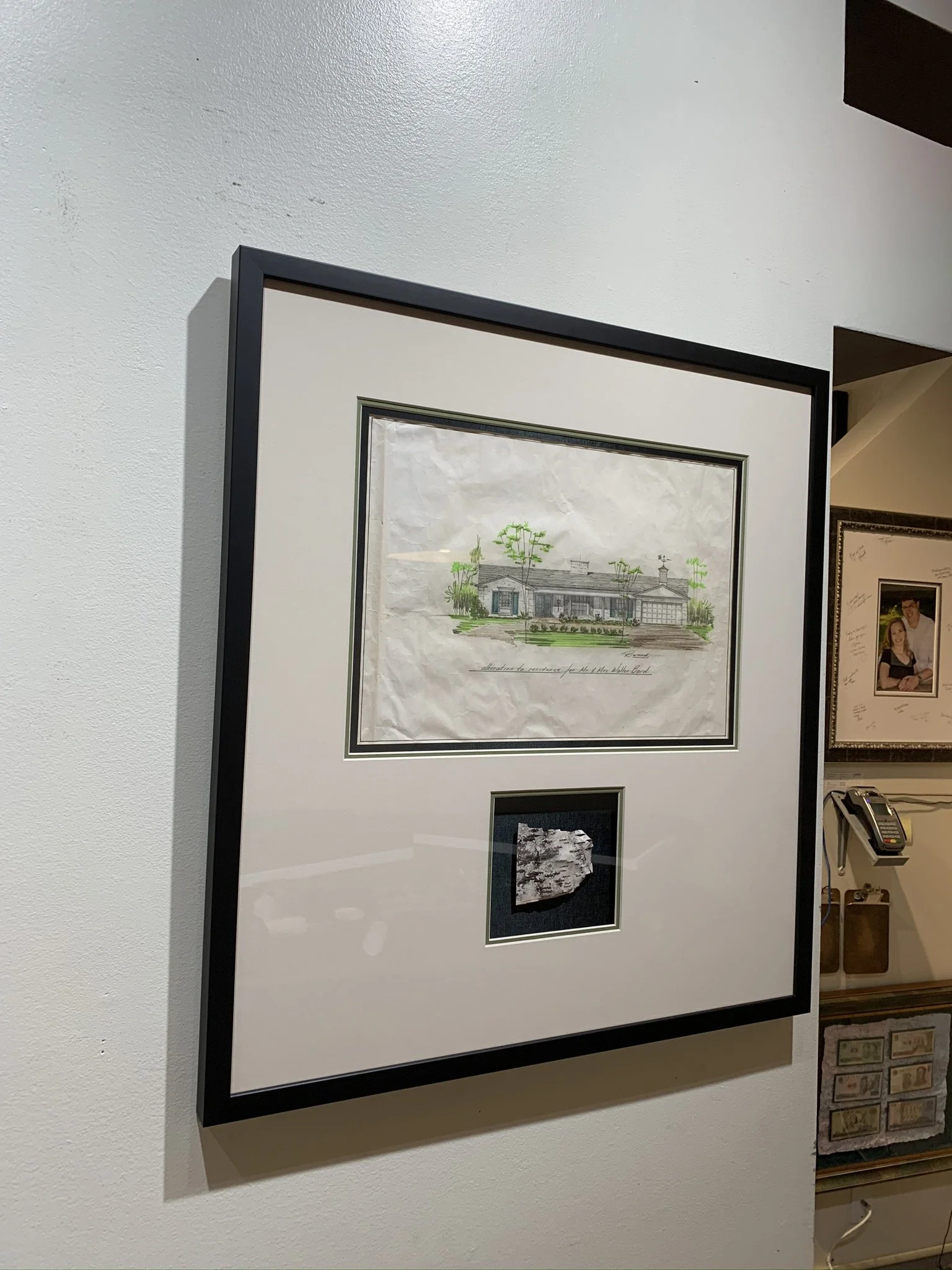
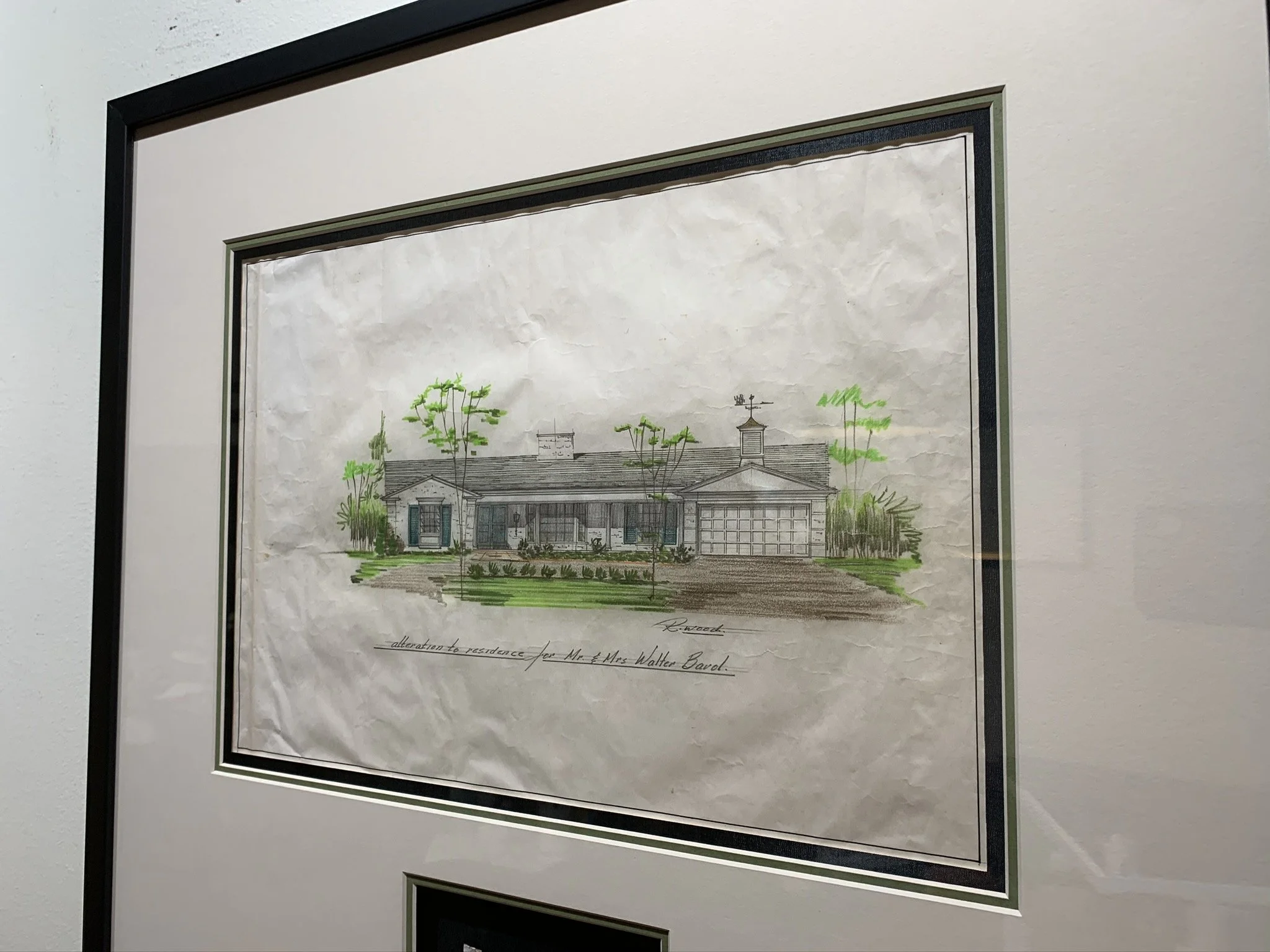
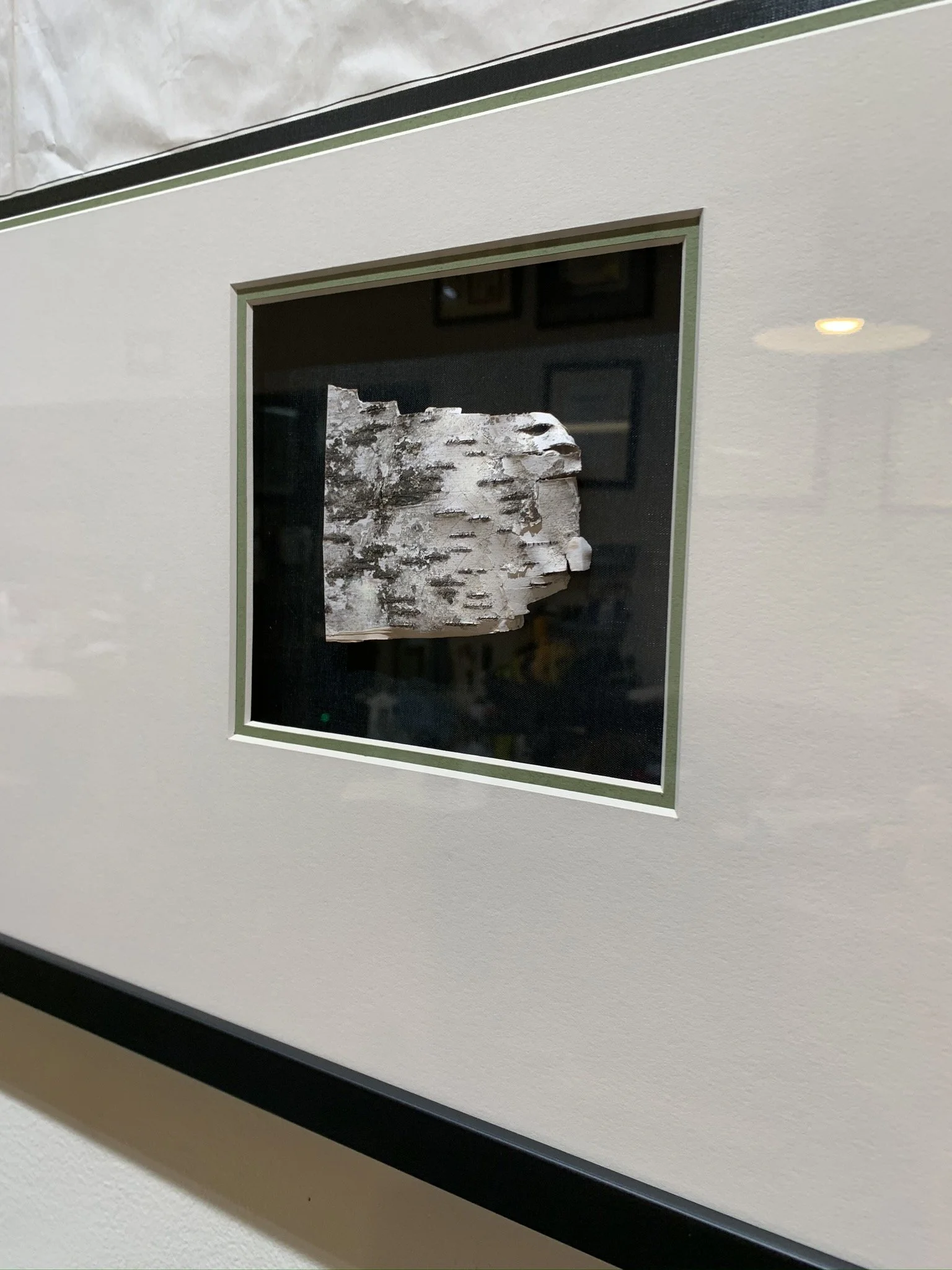
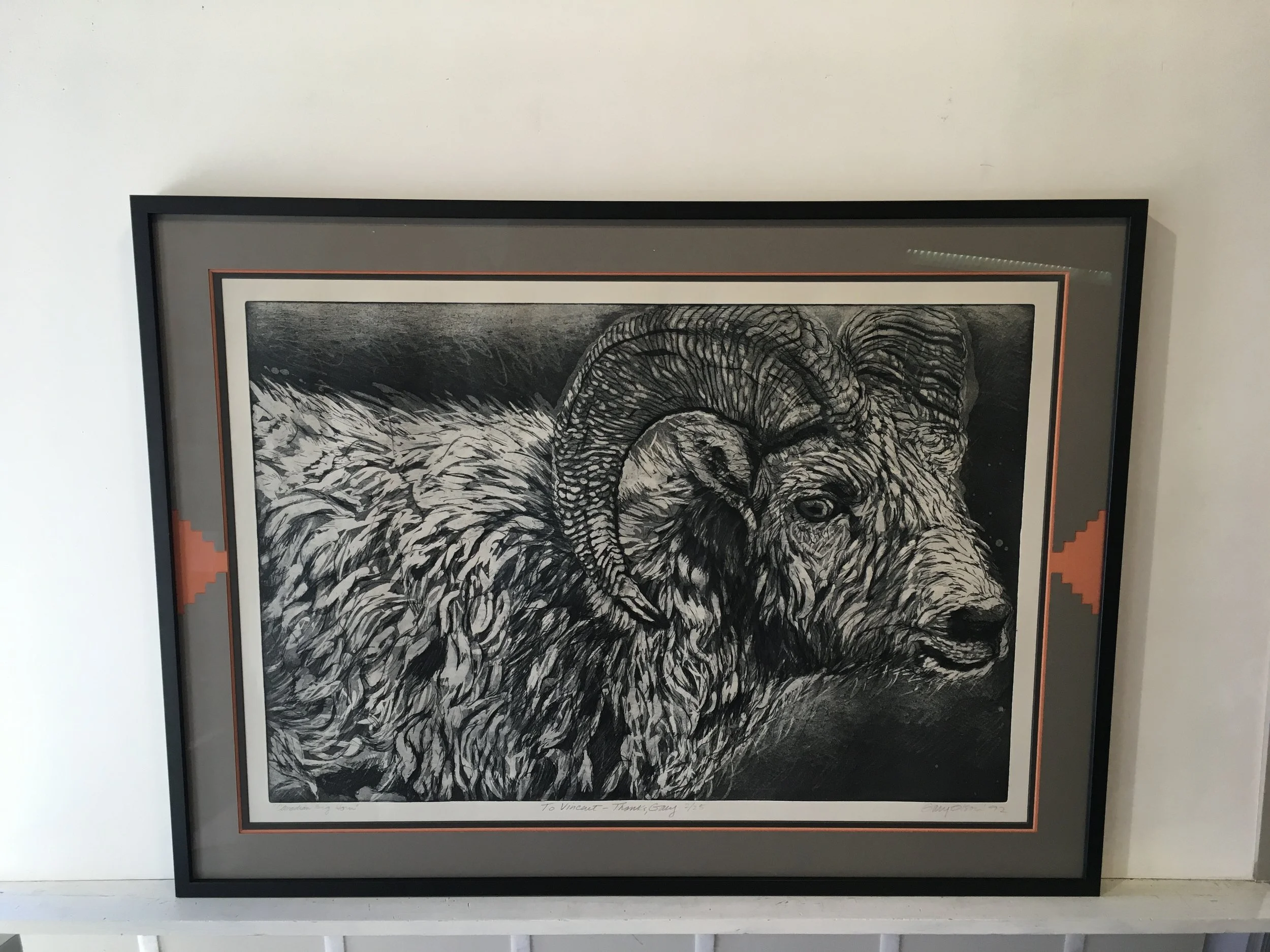
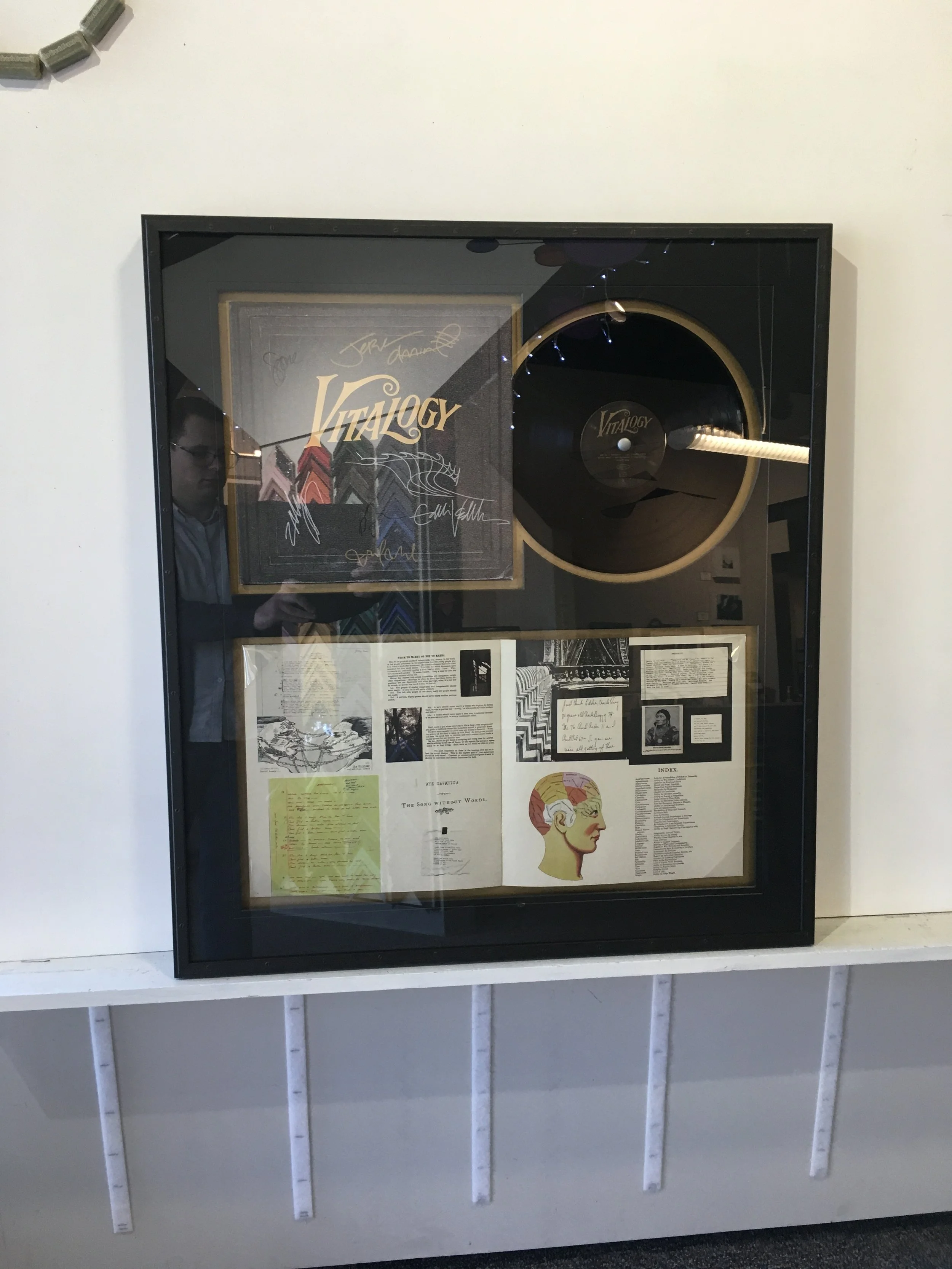
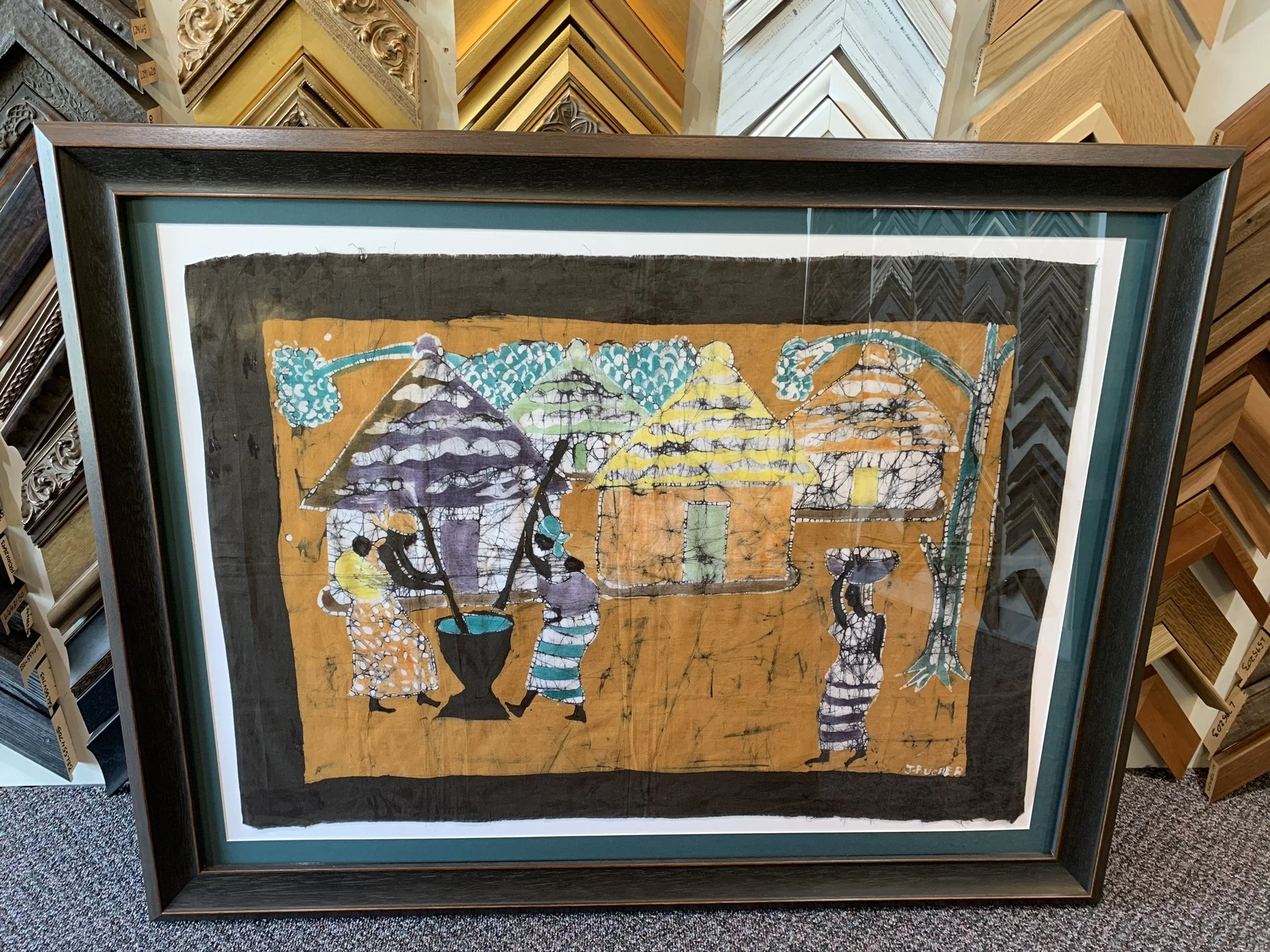
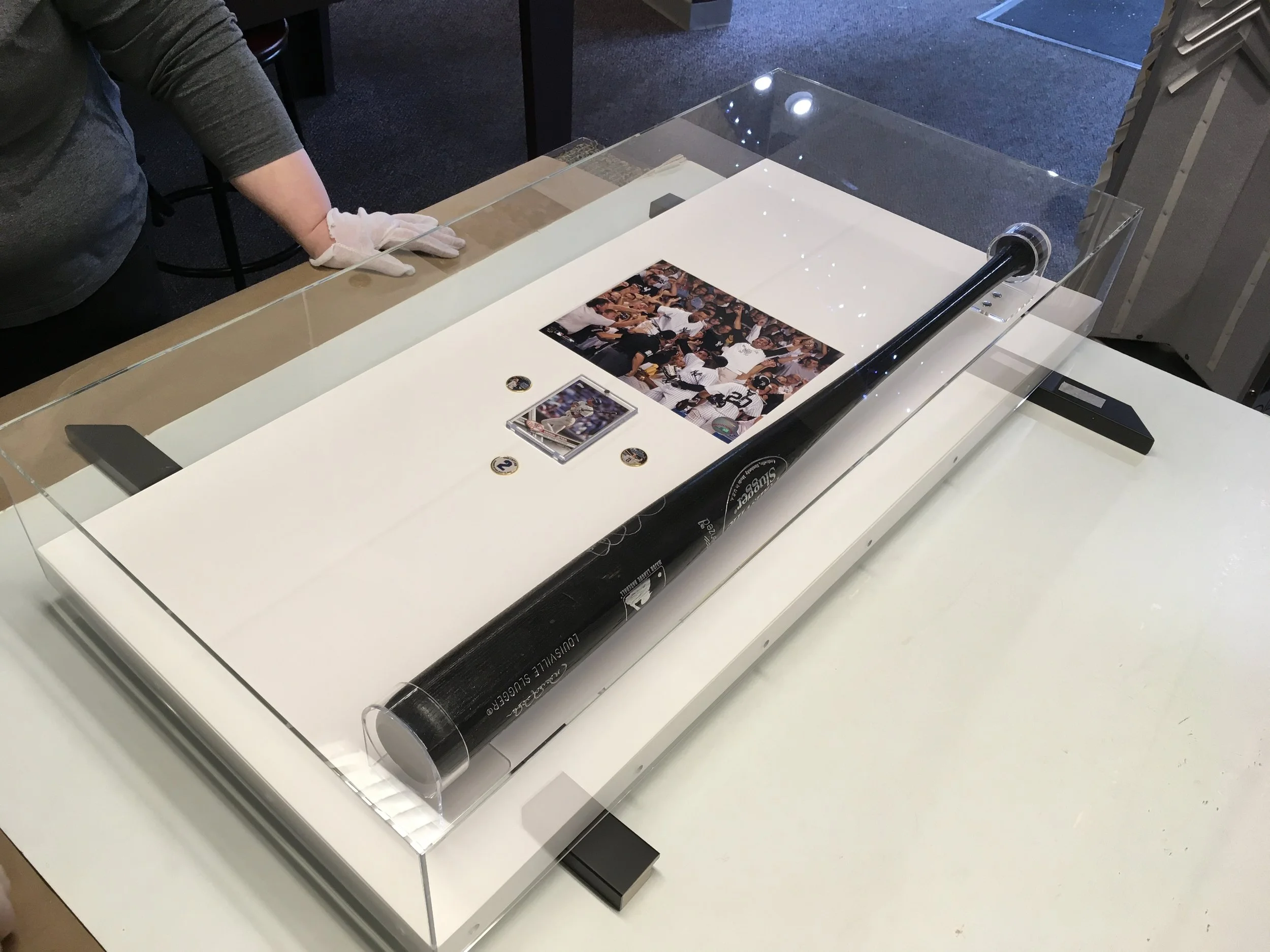
Bringing to view project examples as well as step-by-step guides learned from my professional experience at The Great Frame Up in downtown Indianapolis.
The projects shown here are of client’s work as well as my own personal projects.
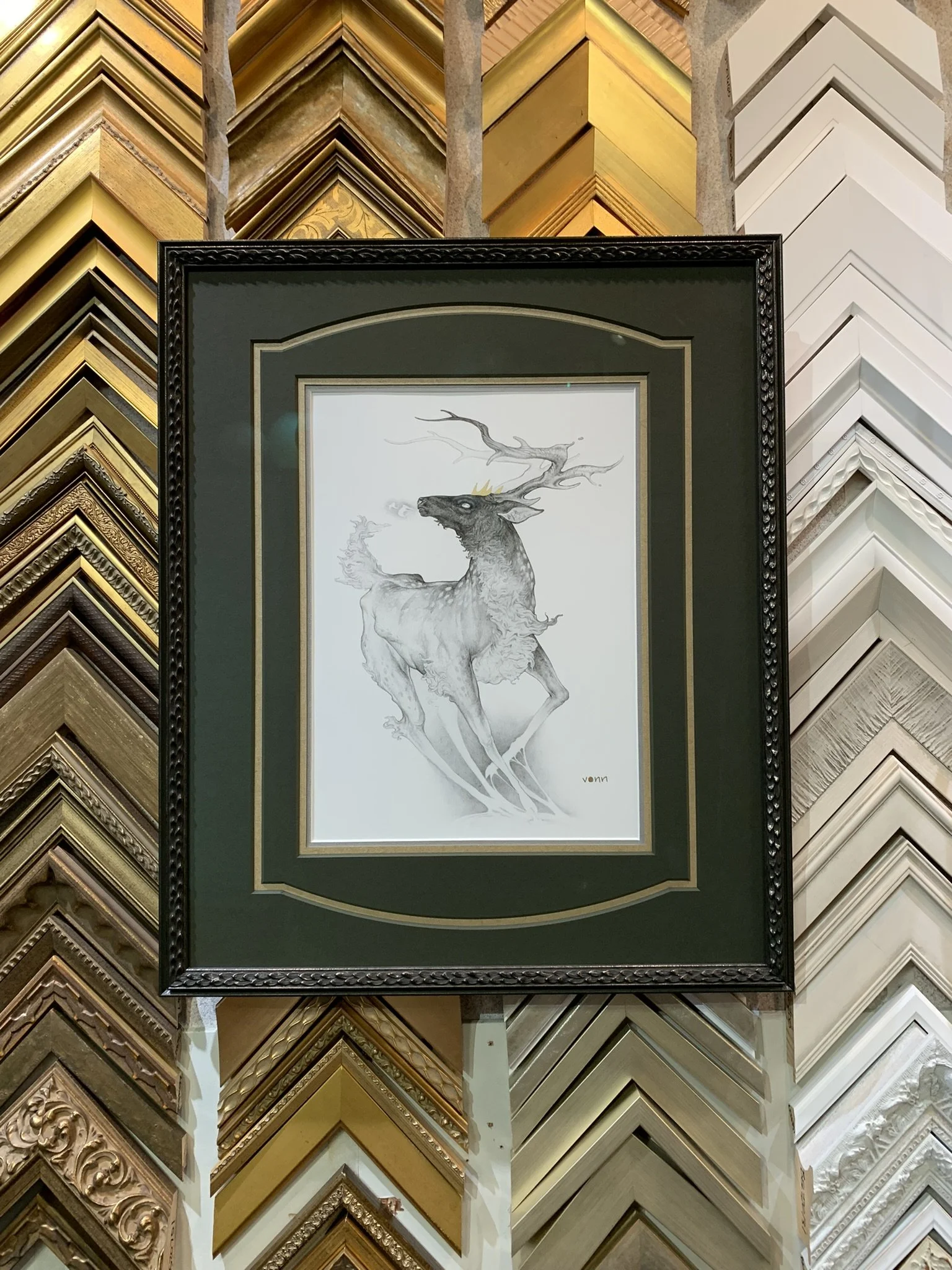
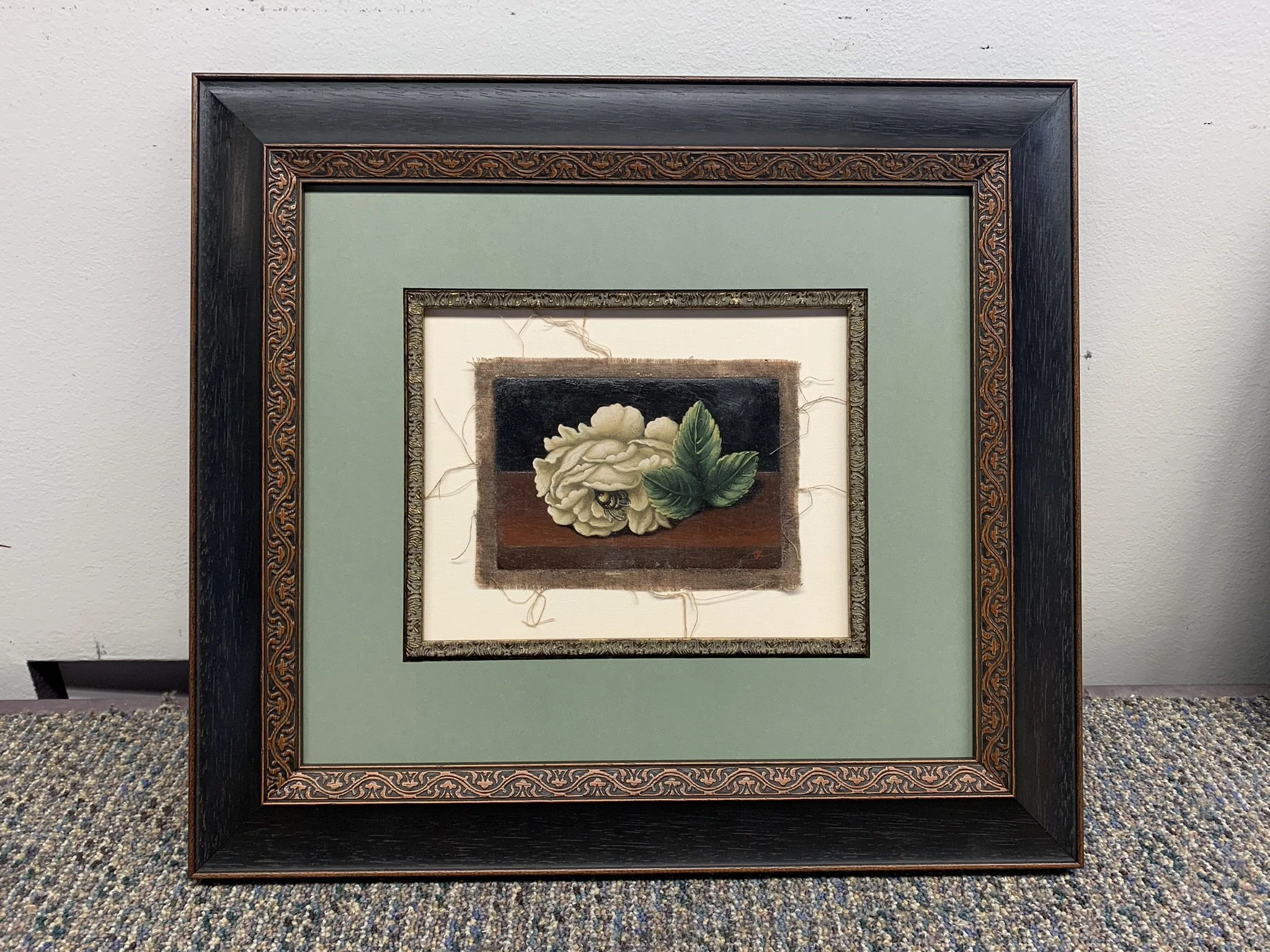

Top Mount Hinging, a step-by-step
-
![]()
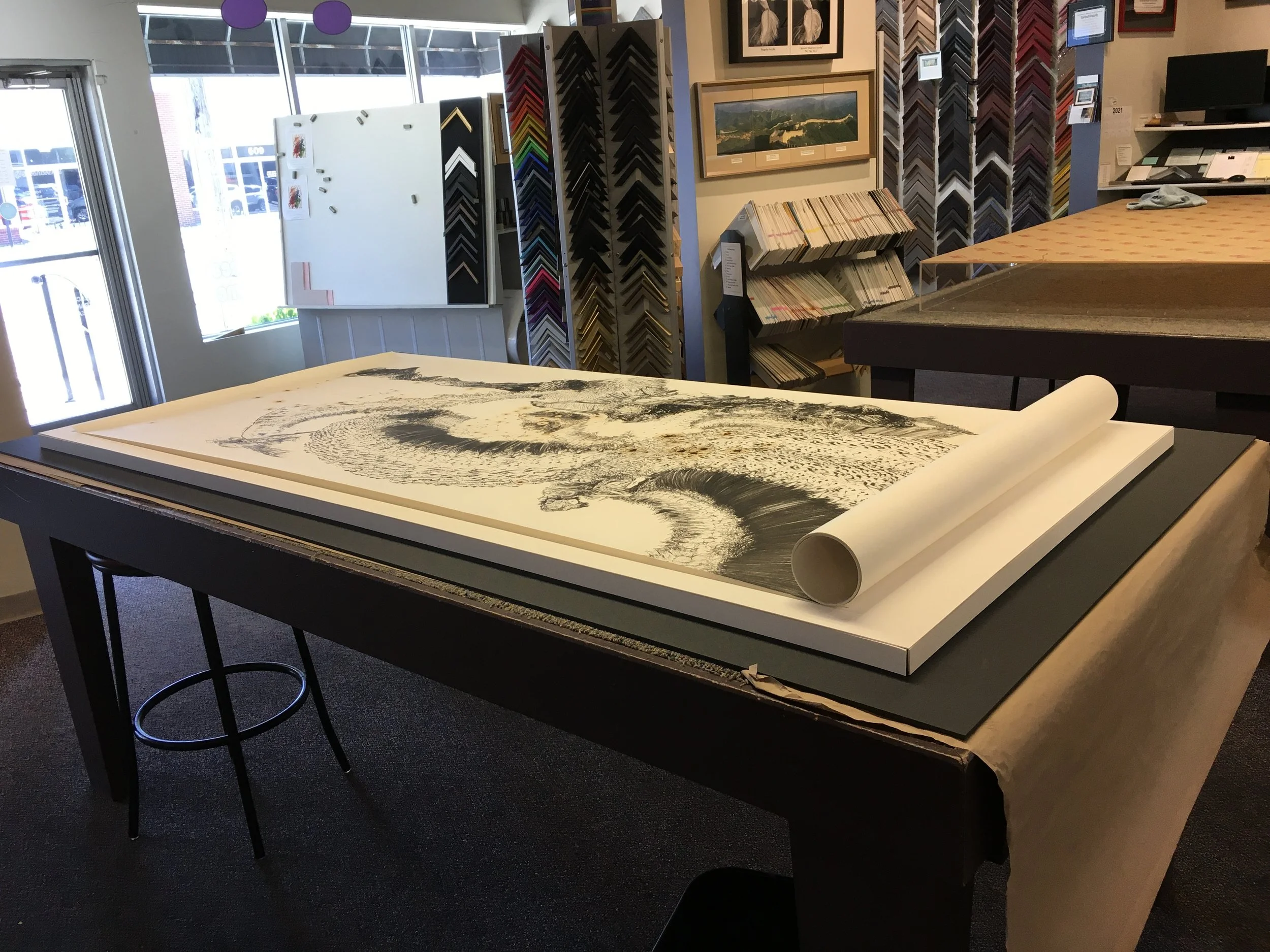
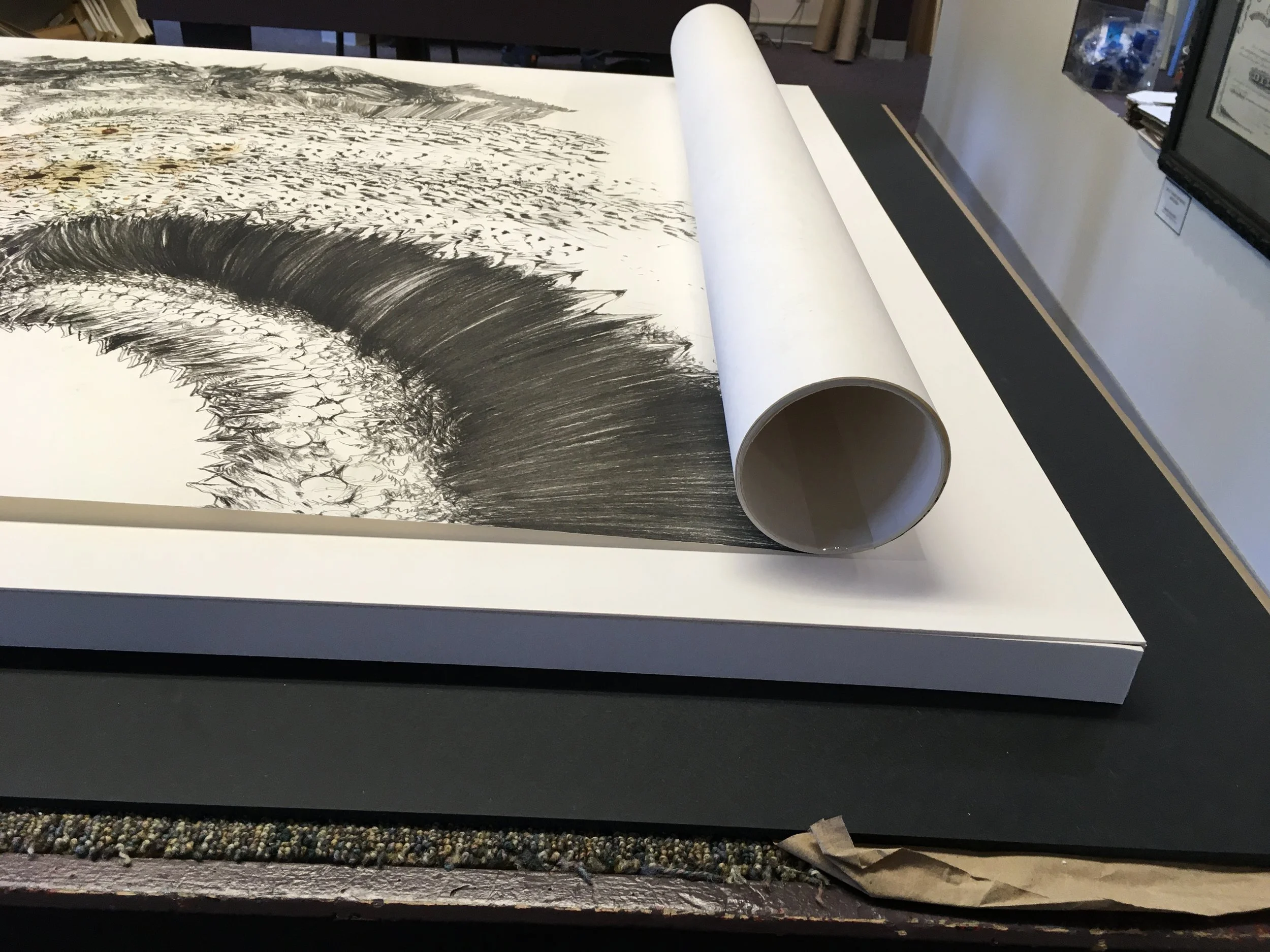
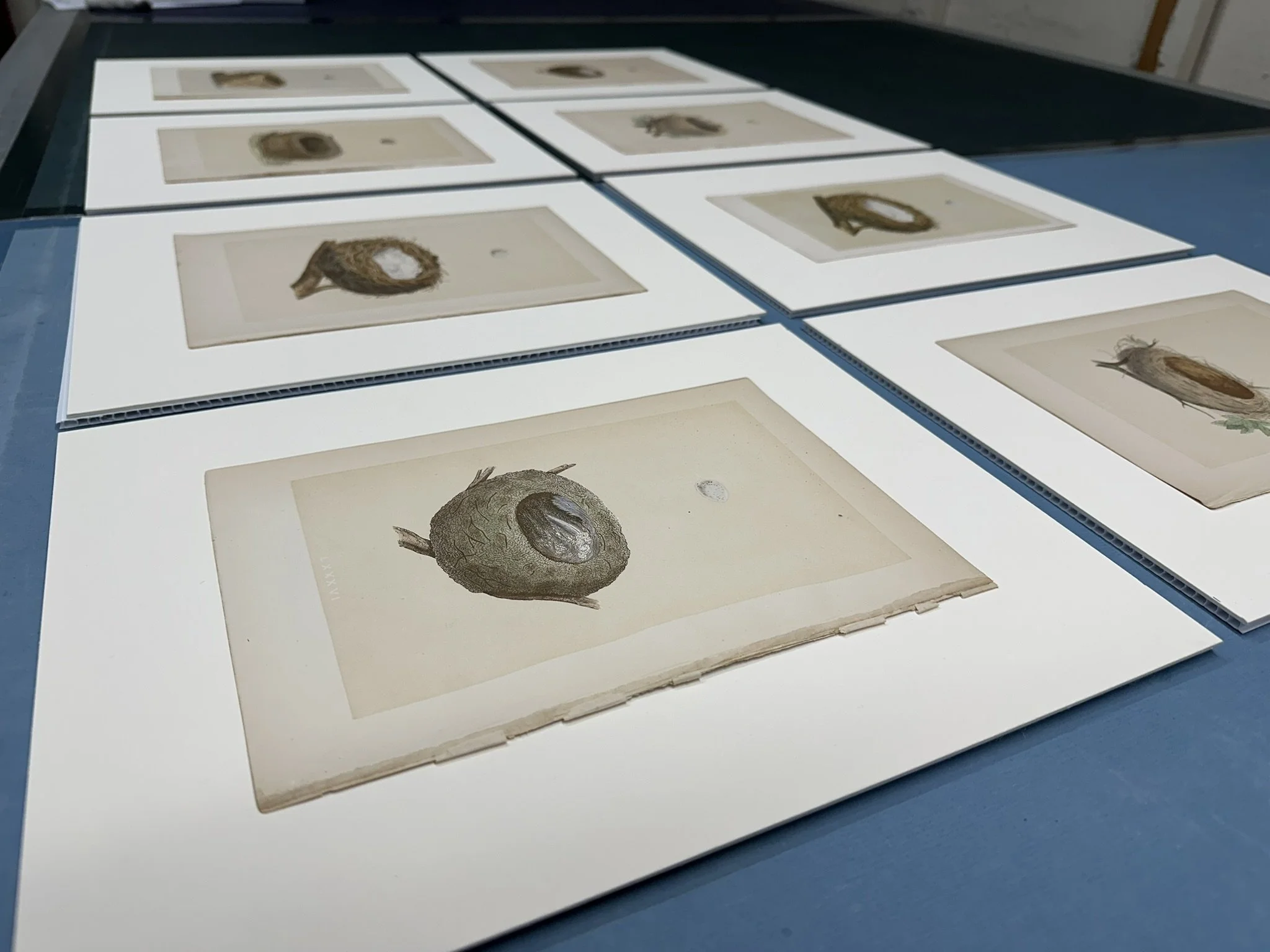
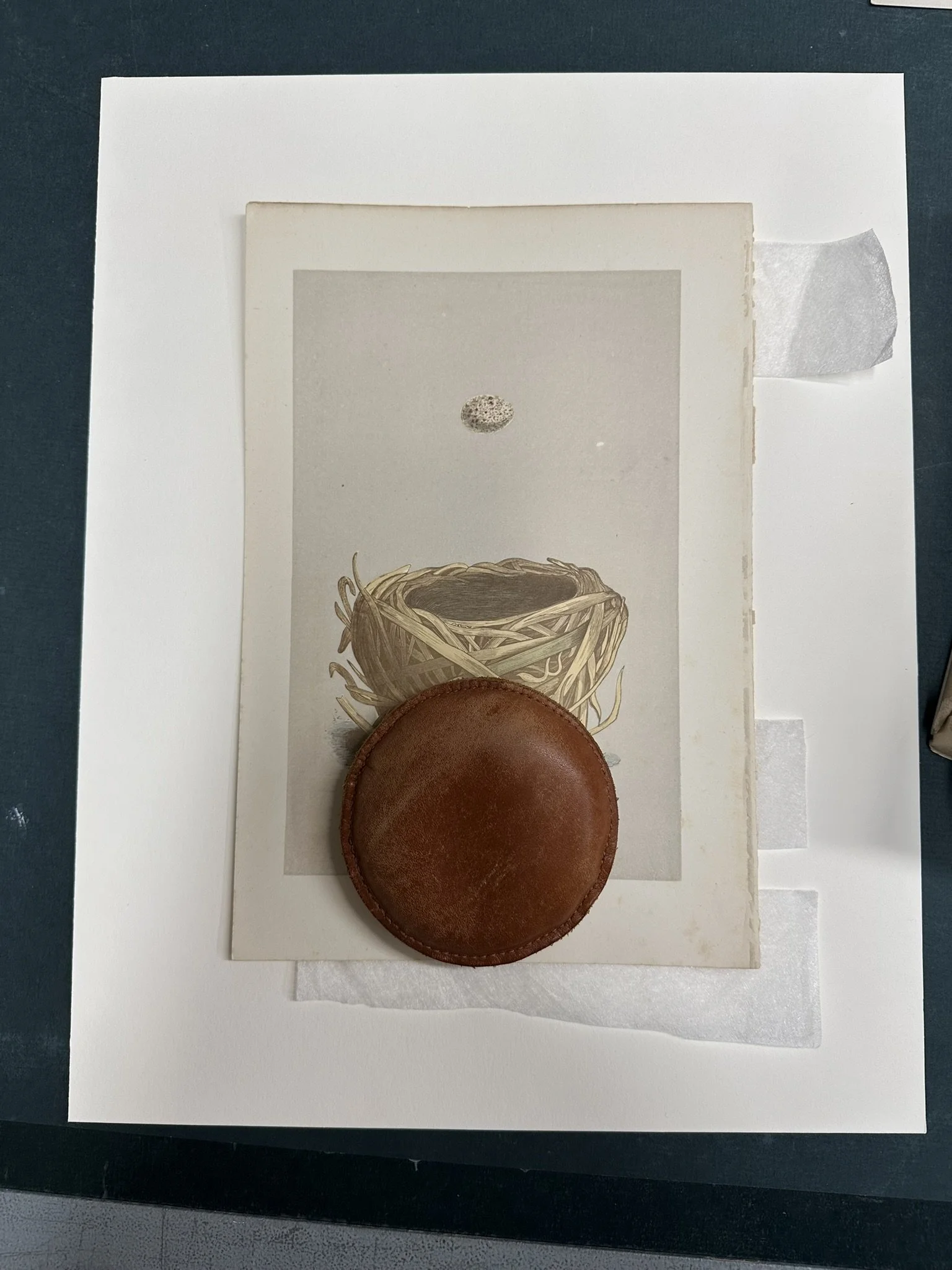
Floating art
Top mount hinging is a strategic and method for displaying the entire surface of artwork on paper, all while adhering to preservation standards.
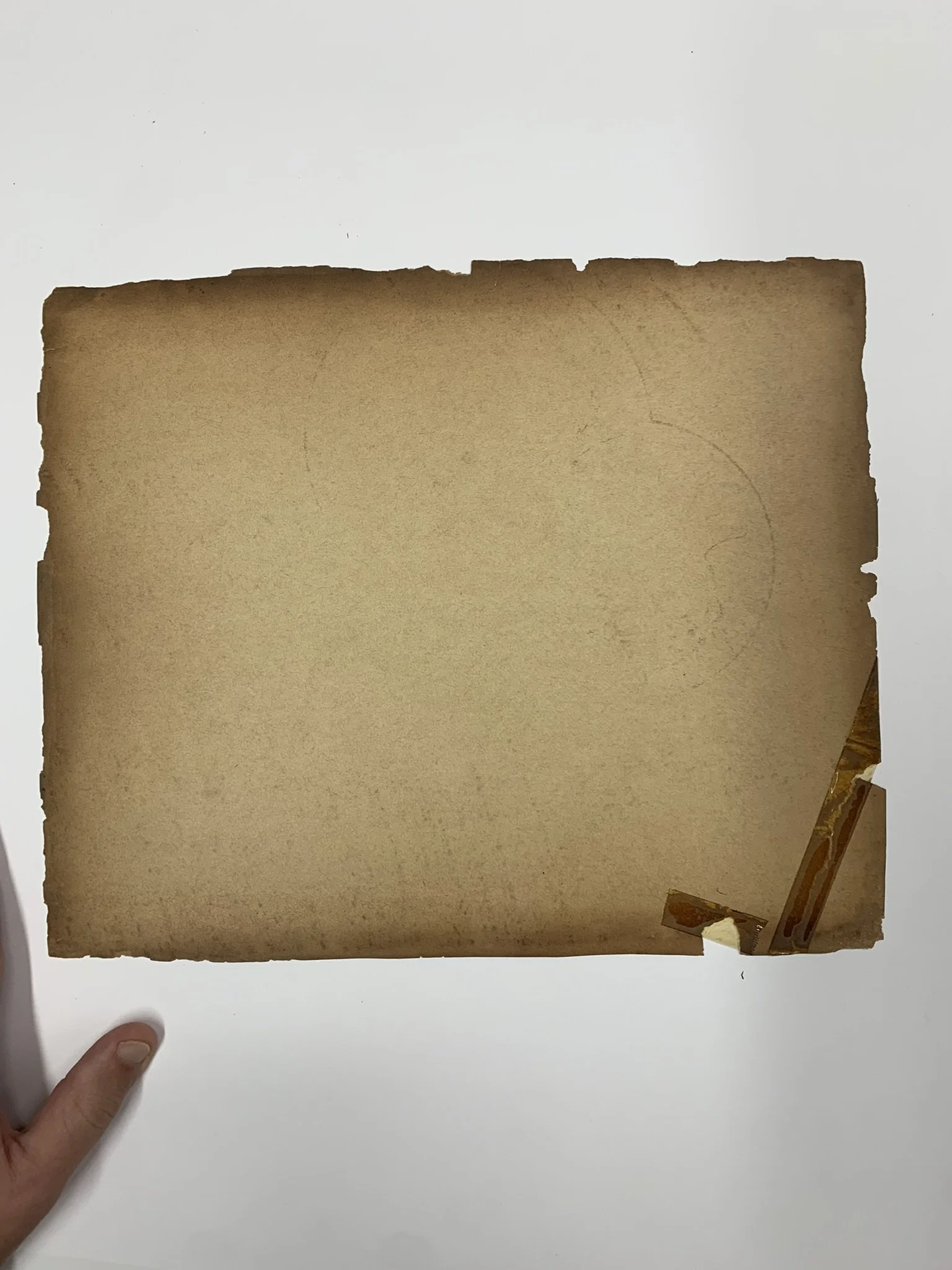
This example consists of series of illustrations taken from a book. The paper had become brittle with age and requires a delicate mounting method.
-
![]()
Hinging paper
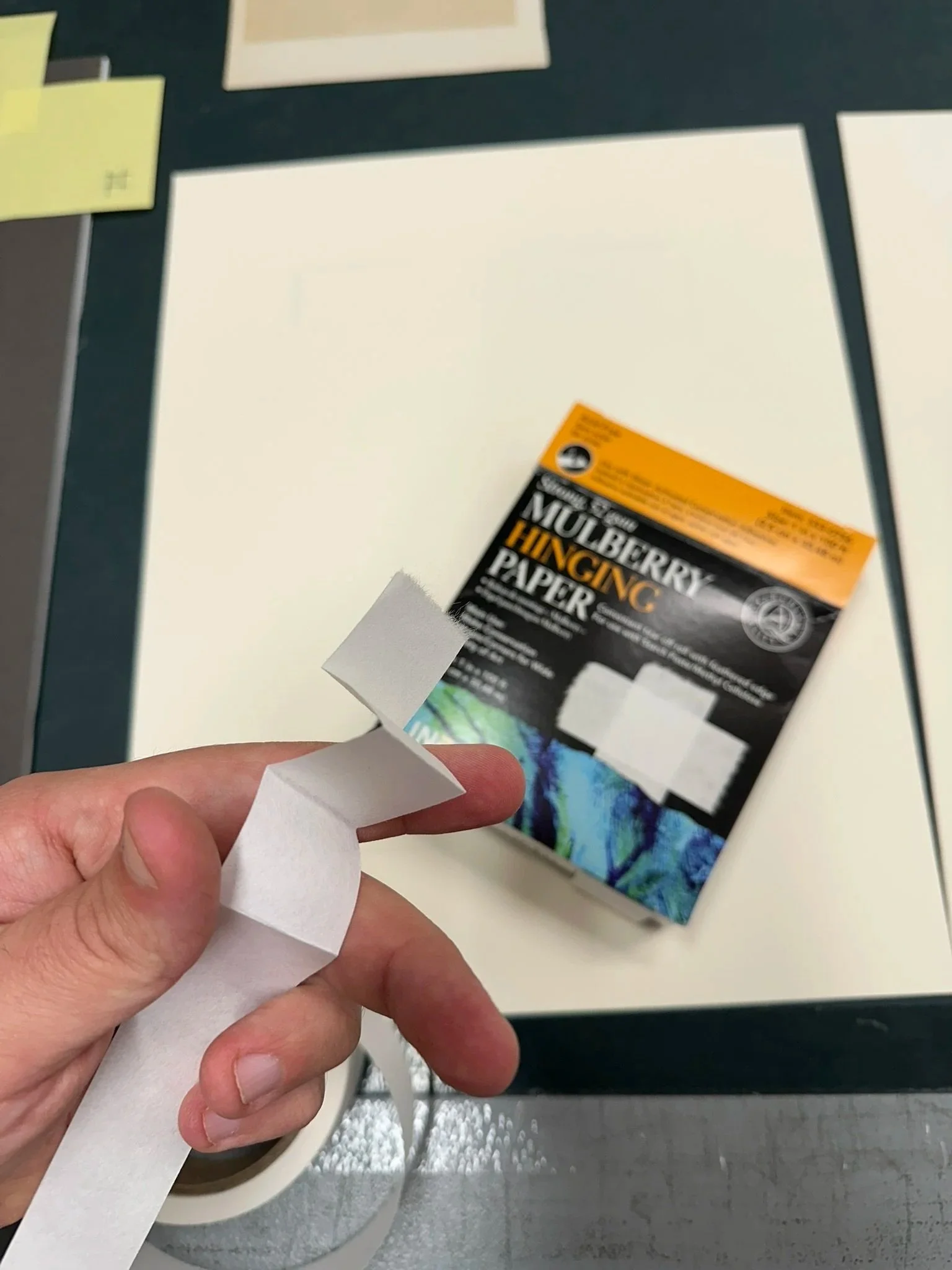
In this example, we are using mulberry hinging paper (weight 52 gsm) made by Lineco.
Here I am folding my hinges to be torn at specific lengths. The lengths of the hinge depend on the dimensions of the artwork as well as the type of hinge configurations you will be using for your project.
Hinging paper must be torn, not cut, to achieve feathered ends. The feathered paper fibers grab onto the artwork as well as the mounting substrate.
-
![]()
Wheat paste
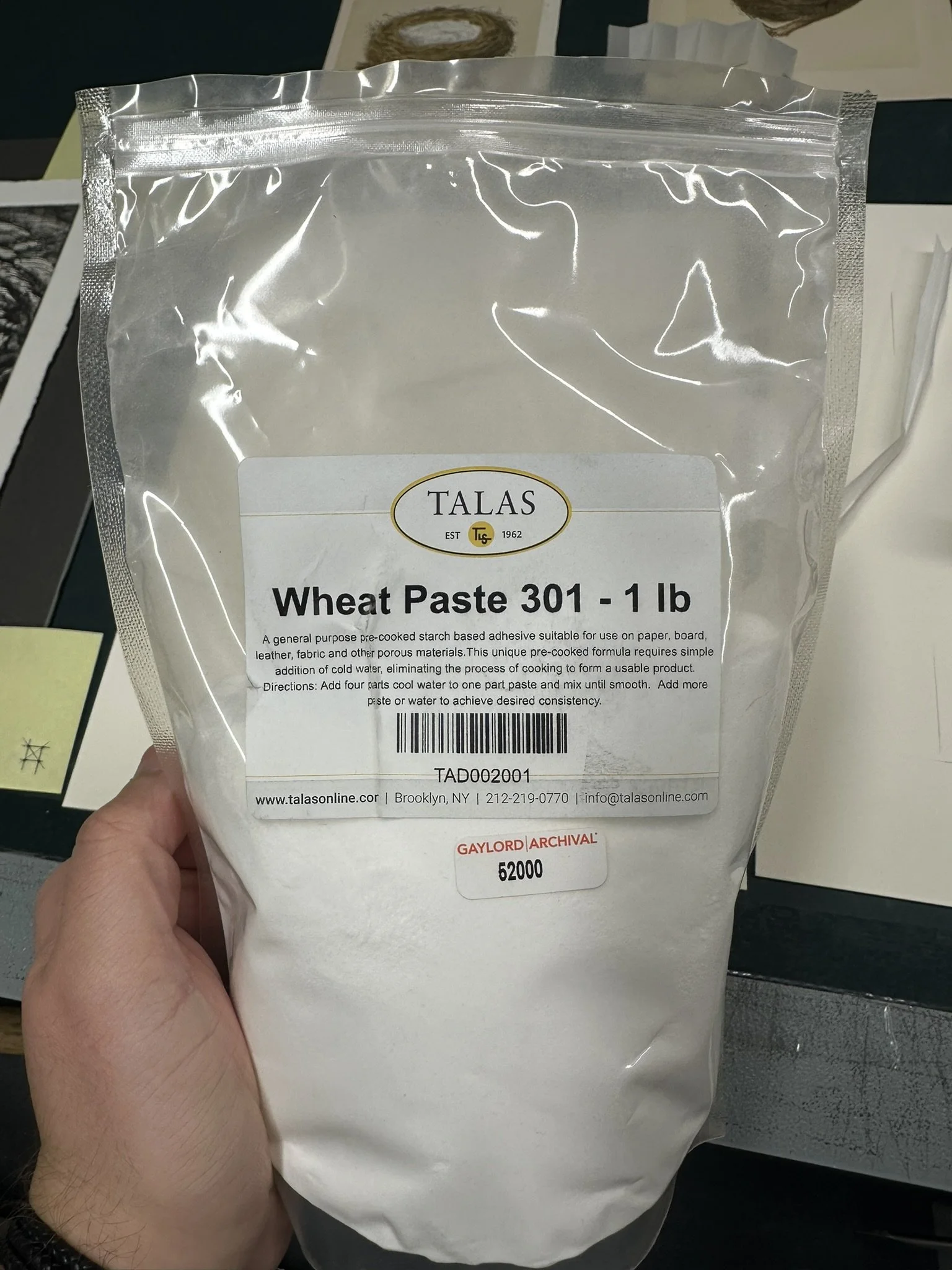
This is our starch-based adhesive. The paste creates a strong bond yet is completely reversible with water and patience.
The paste is applied to our hinging paper, and this combination is what mounts our artwork to our matboard.
-
![]()
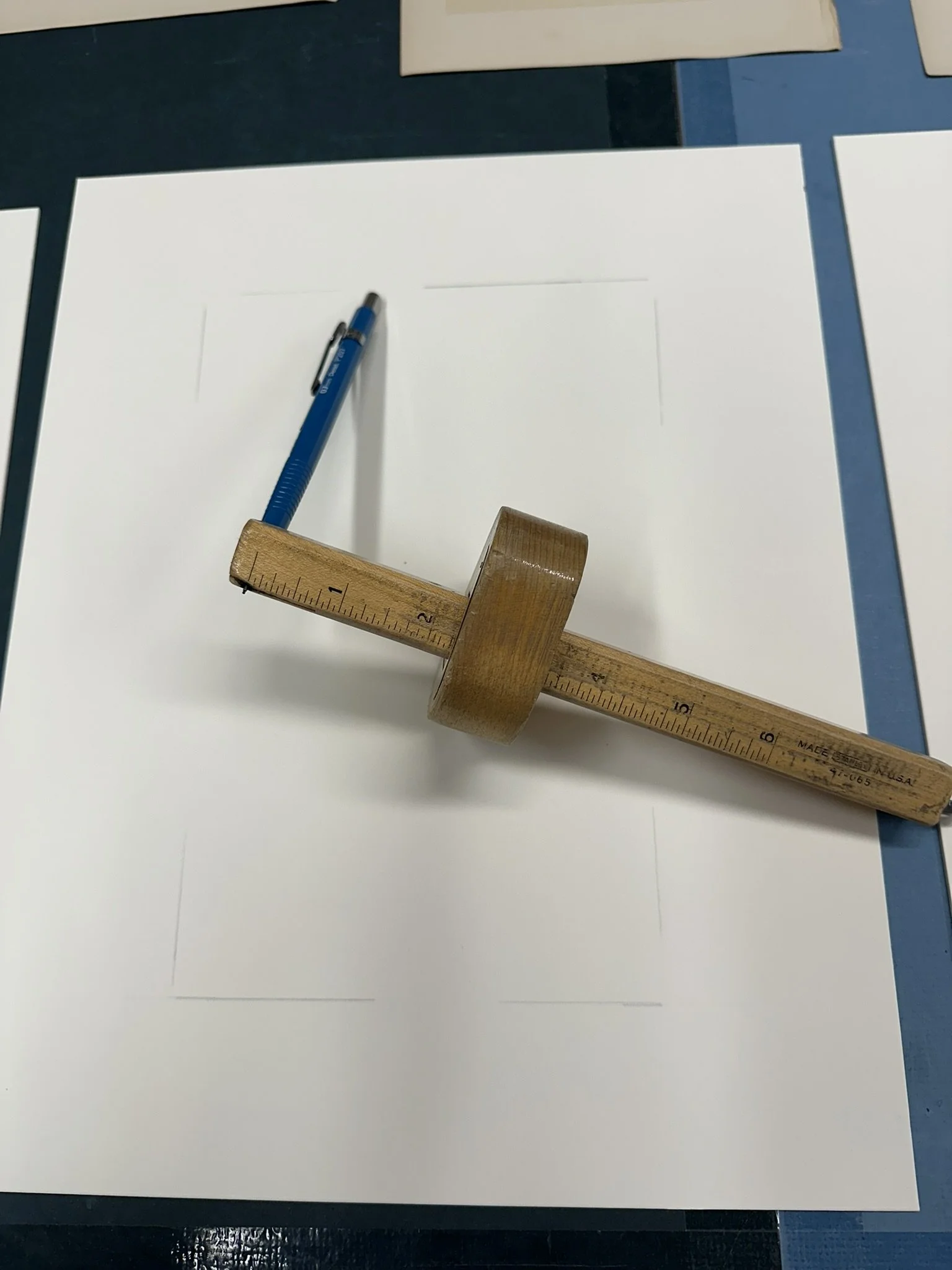
Step 1: Set the parameters for the hinges
When floating artwork, the goal of the design typically is to leave a matboard border around the artwork. Therefore, we need to think about how much space we are leaving around the artwork.
Here, using a scribe, I have marked faint lines a ¼ to ½ inch inside of the outside edge of where the artwork will lay.
-
![]()
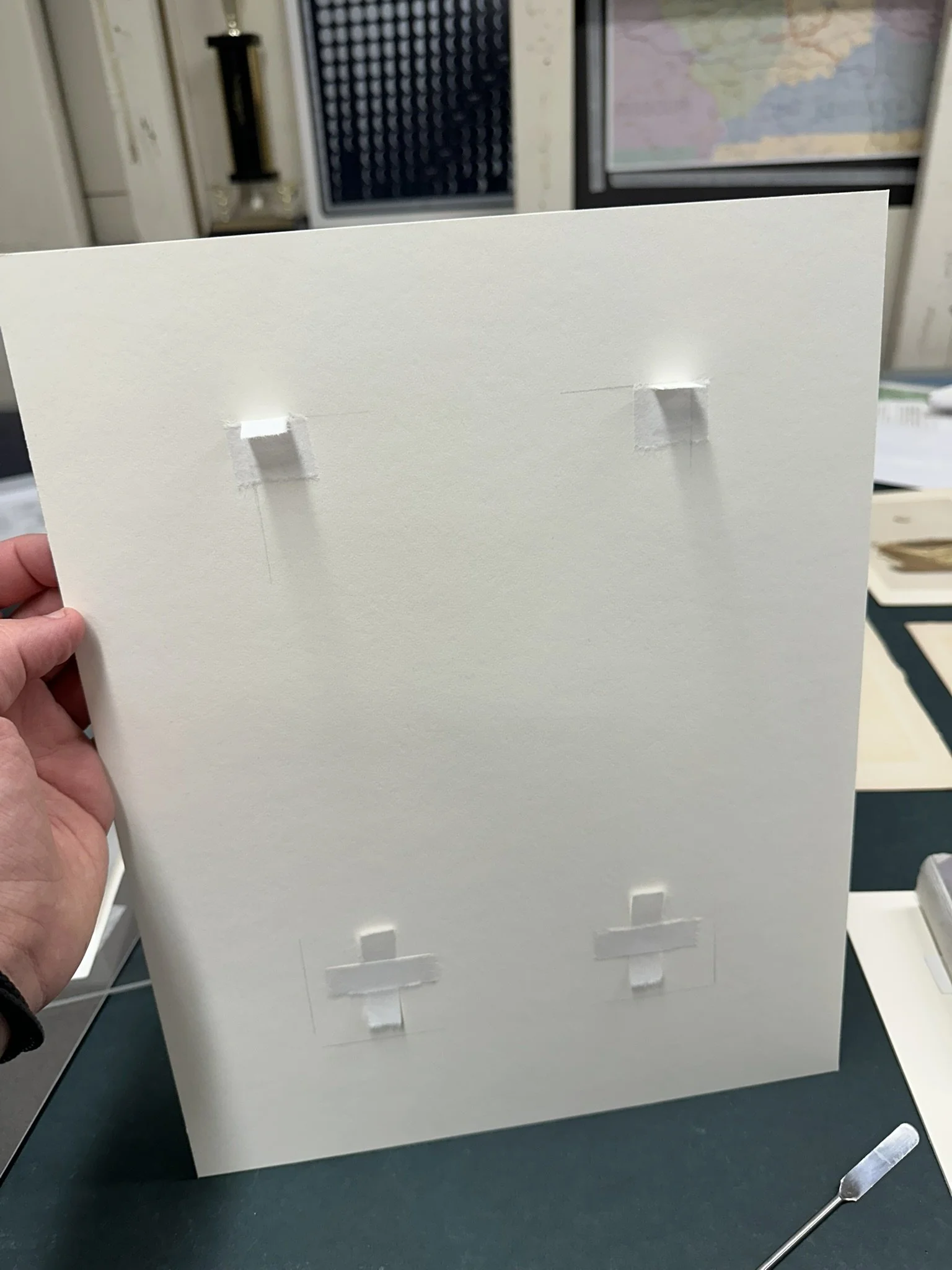
Step 2: Lay out the hinges
Here I am using 2 different hinge configurations to hold our artwork. The hinges at the top can be called reinforced v-hinges and the bottom portion of the matboard will have what are called slide hinges.
The reinforced v-hinge has a crosspiece of hinge paper to hold down the v-shape that connects our artwork to the matboard. The crosspiece prevents the hinge paper from peeling up from our matboard.
Slide hinges are unique to my particular framing experience. They allow for movement yet prevent the bottom edges of the artwork from tipping towards the frame glazing. The horizontal crosspiece is only adhered to the matboard or mounting substrate, and the vertical piece is attached to the artwork.
-
![]()
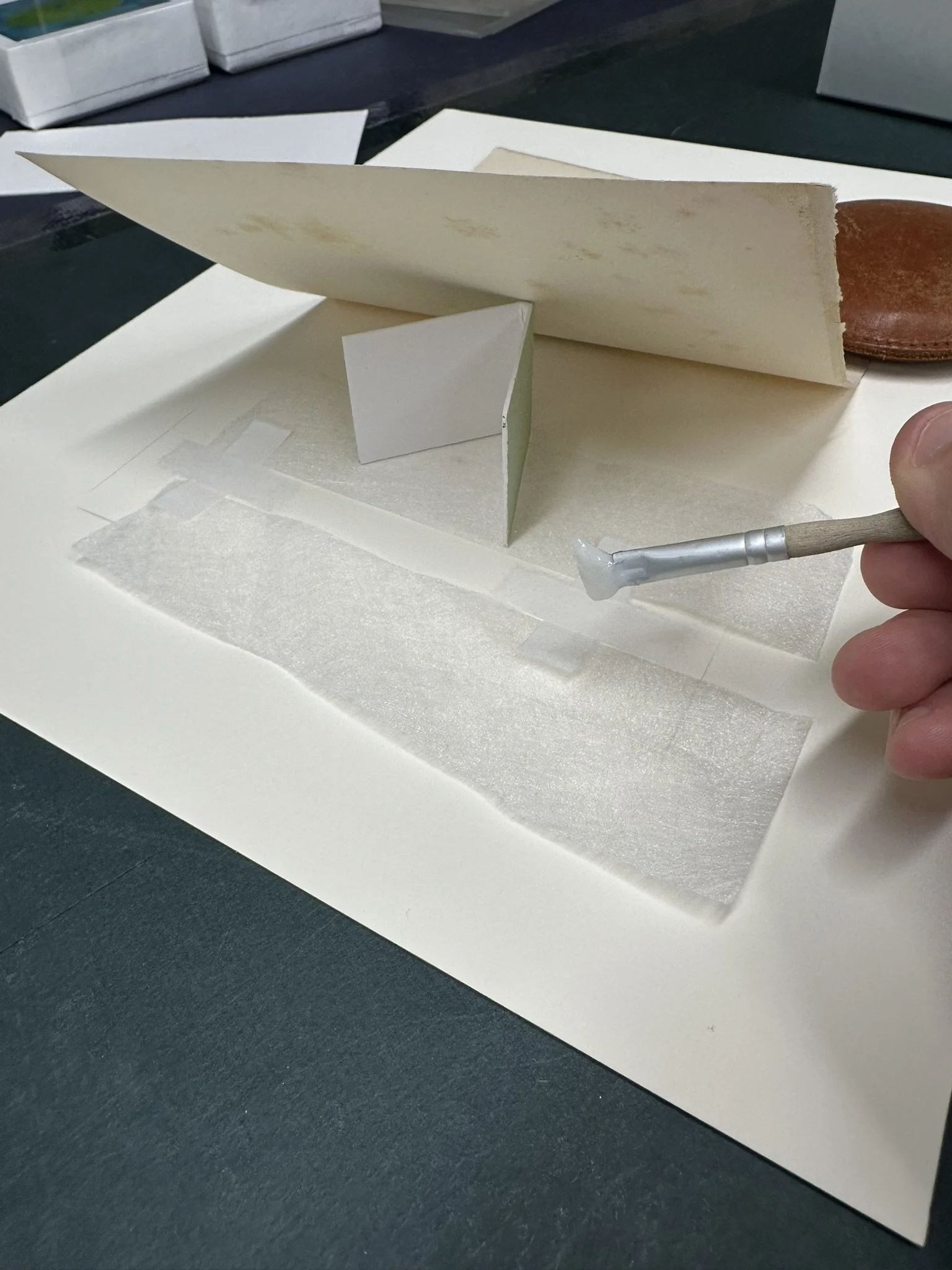
Step 3: Apply paste to your hinges
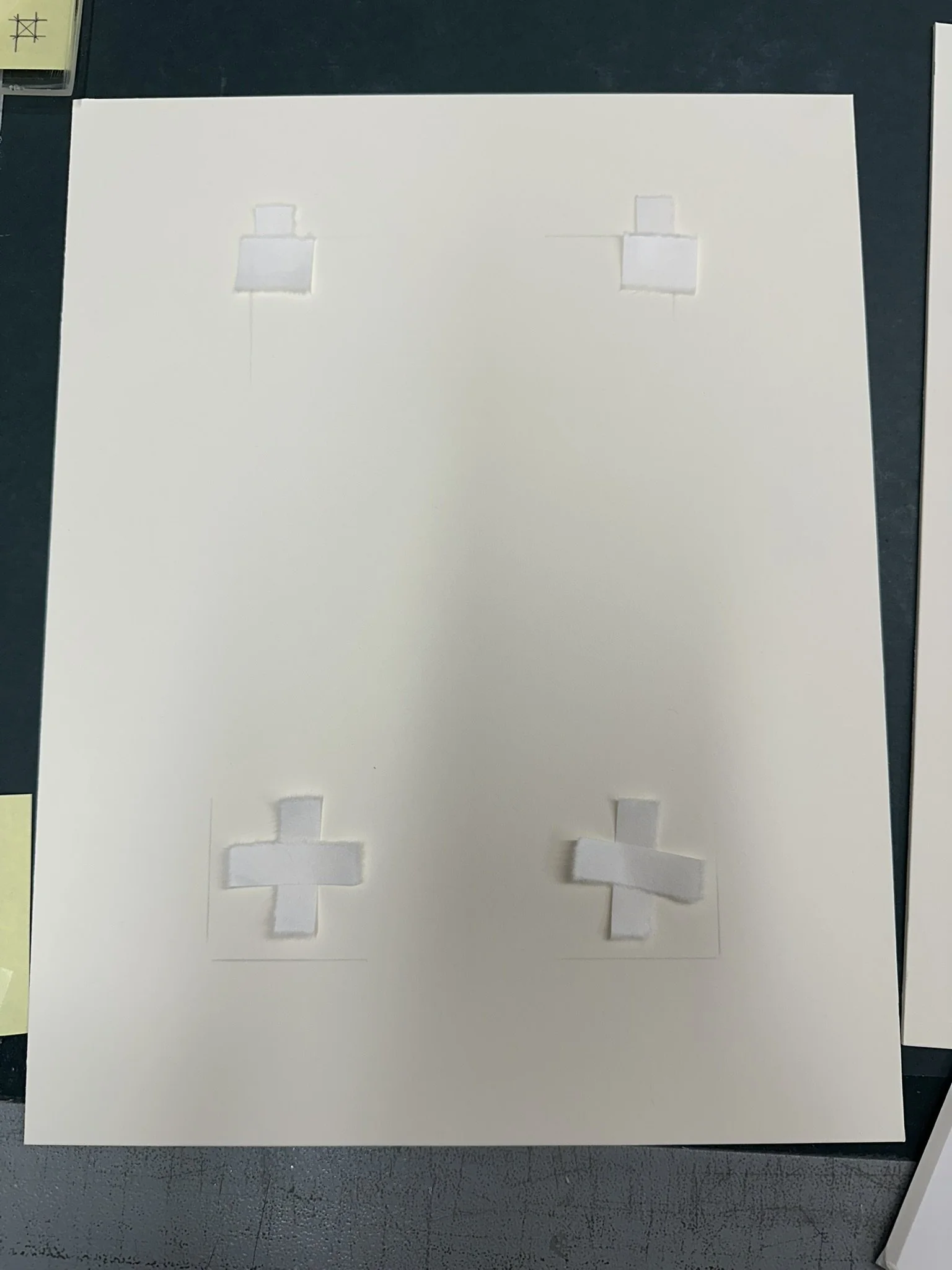
In this step I applied paste to our horizontal crosspieces only and placed them within my boundary lines.
It is crucial to give this step proper drying time once the hinges are placed, as the hinges can peel up while they are still damp.
-
![]()
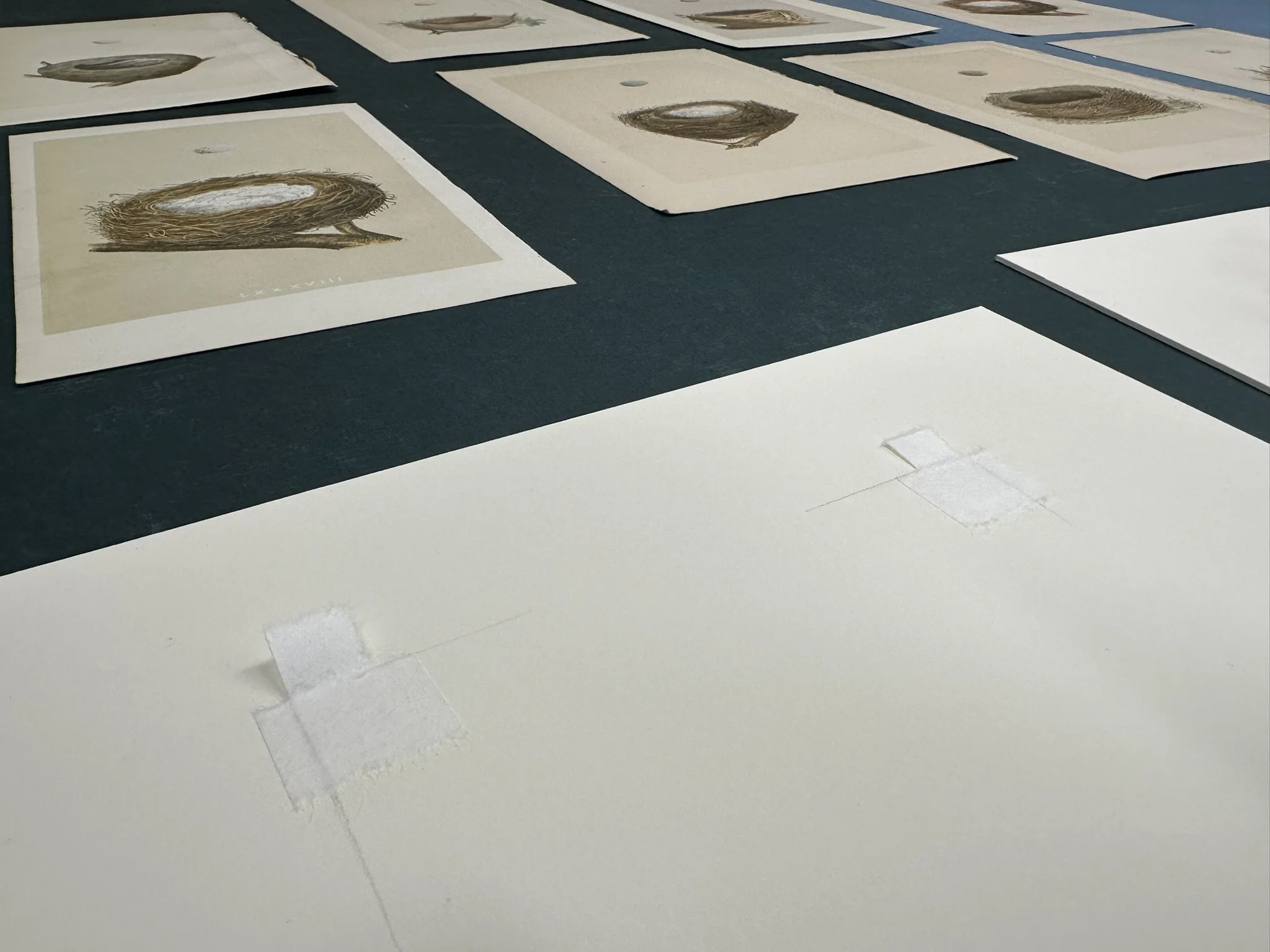
Step 4: Let the initial application dry
After the first round of applying the wheat starch paste and allowing it to dry, the vertical hinges should be free and only held down by the horizontal hinges.
-
![]()
Step 5: Set the artwork
Here, and as demonstrated on the next slide, we have centered the artwork on our matboard with polyester interfacing behind the hinges.
Weight the artwork so it does not move from its place.
-
![]()
Step 6: Apply paste to the vertical hinges
Here I am applying paste to both feathered ends of the vertical hinges. These ends will be attached to the bottom section of the artwork; the slide hinges are only here to prevent the artwork from tipping towards the glazing.
Most of the strain will be on the top reinforced v-hinges as they hold onto the top portion of the artwork.
-
![]()
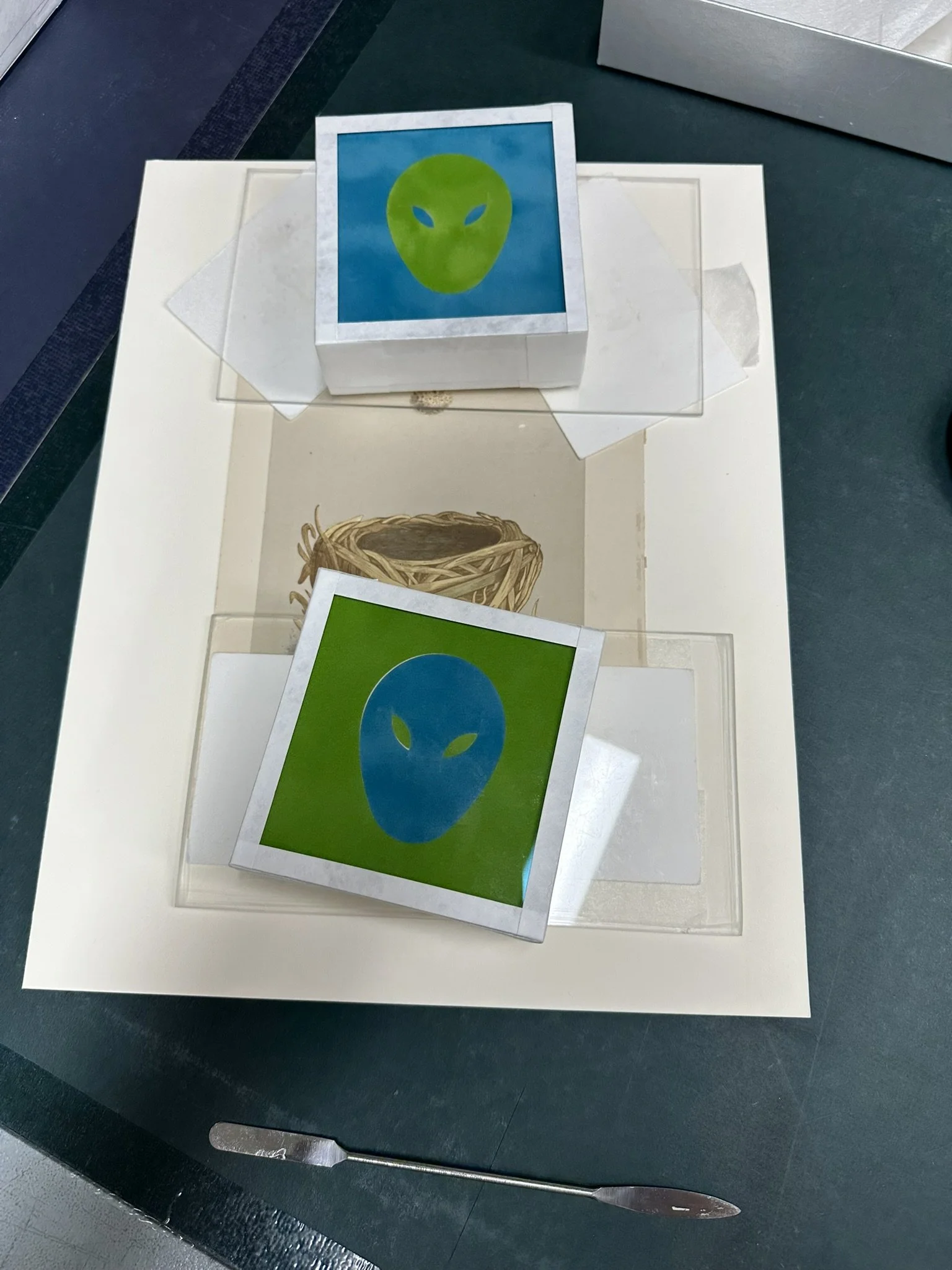
Step 7: Let the hinges dry
Here I have the artwork drying under glass weights. To prevent any damage to the artwork, I have a rag 2-ply matboard and acrylic glazing between the artwork and glass weight.
-
![]()
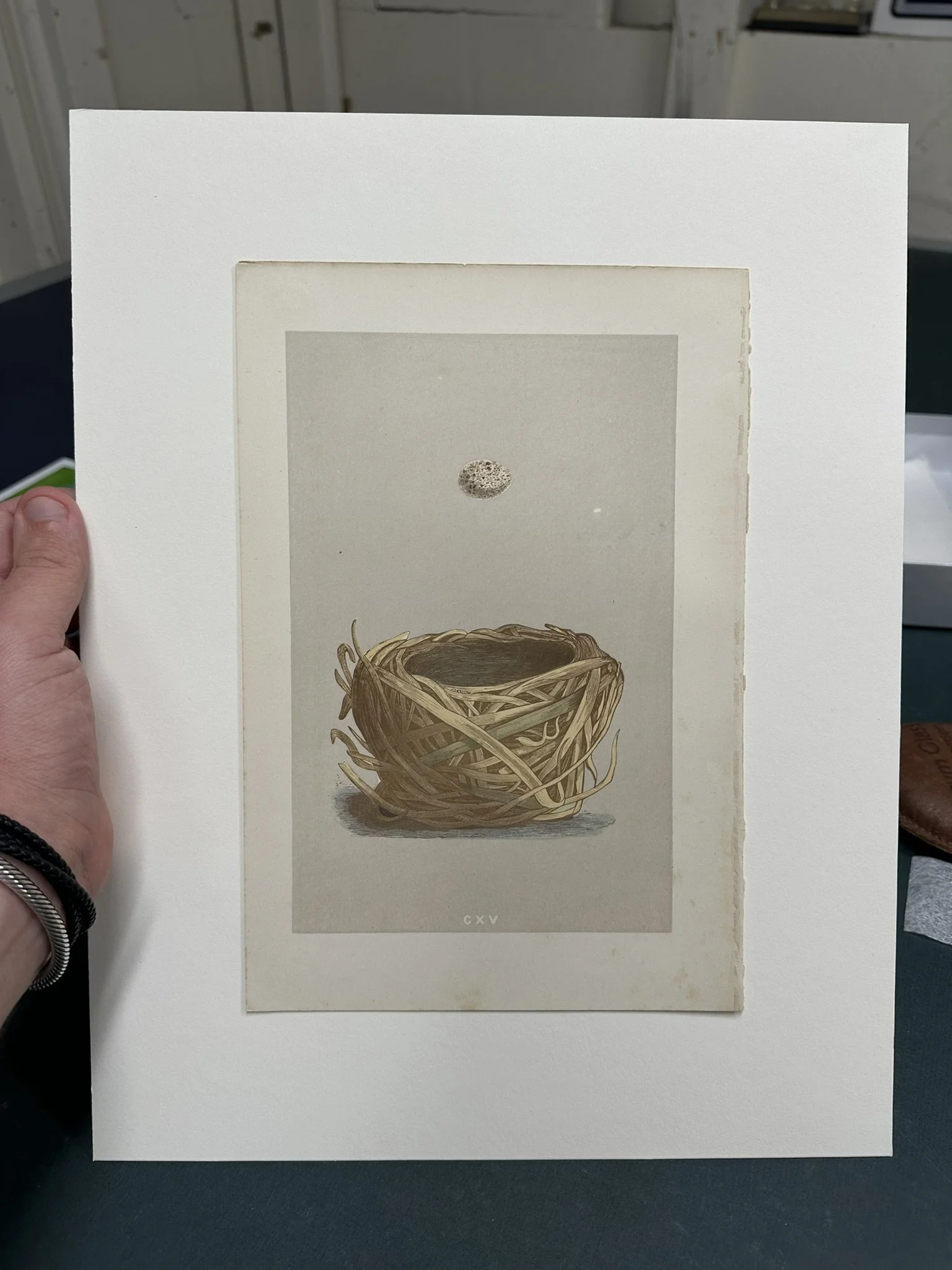
End result
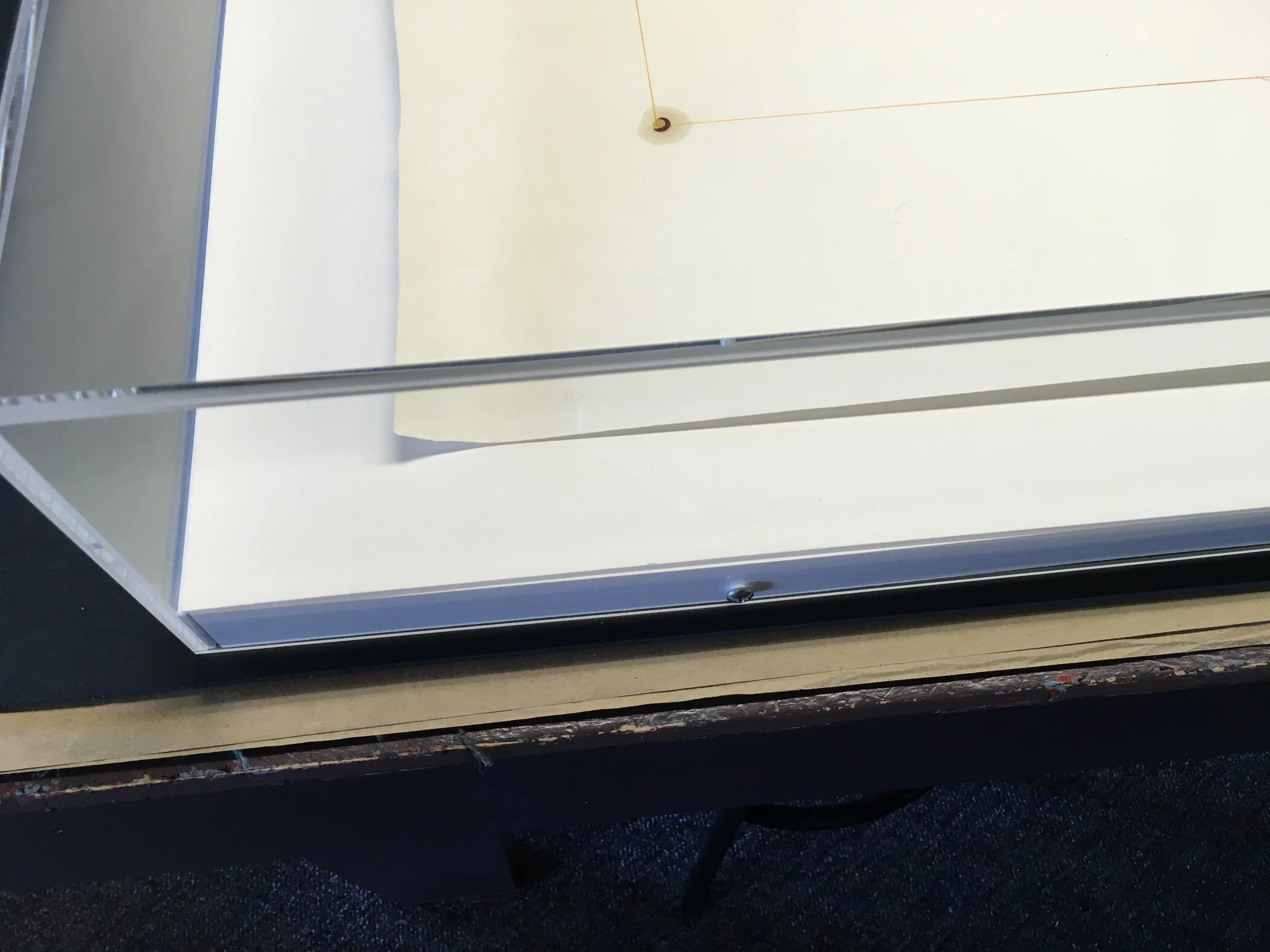
The artwork is finally secured without using an invasive mounting method. The project is now ready to be fit inside the frame. However, with this mounting method, we need to set the glazing away from the artwork to avoid any contact.
Applying paste to hinges
Here is a video of how I apply the wheat starch paste to the hinges. It is a delicate process and requires the space to be clean and organized.
Direct Contact Overlay, a step-by-step
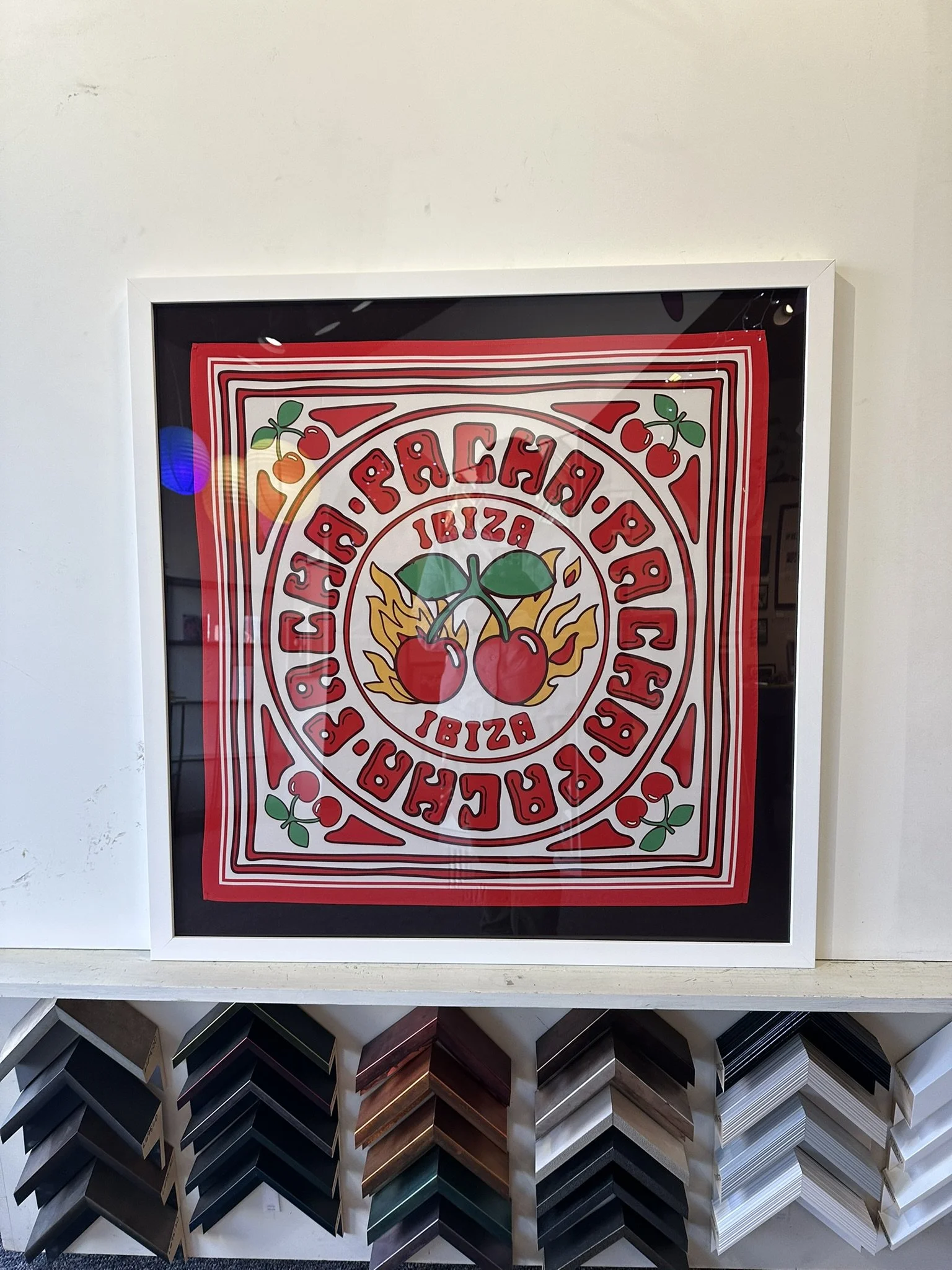
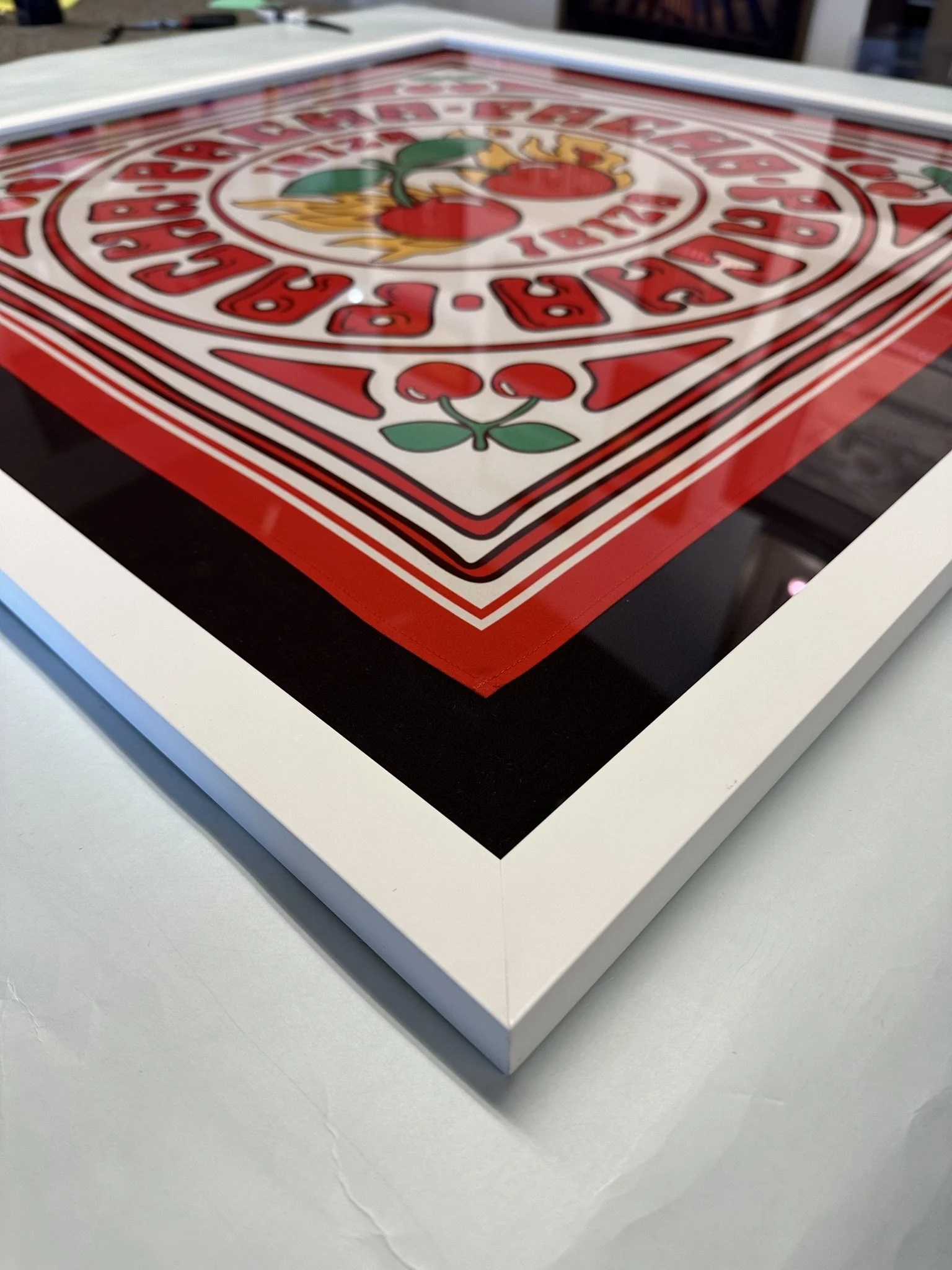
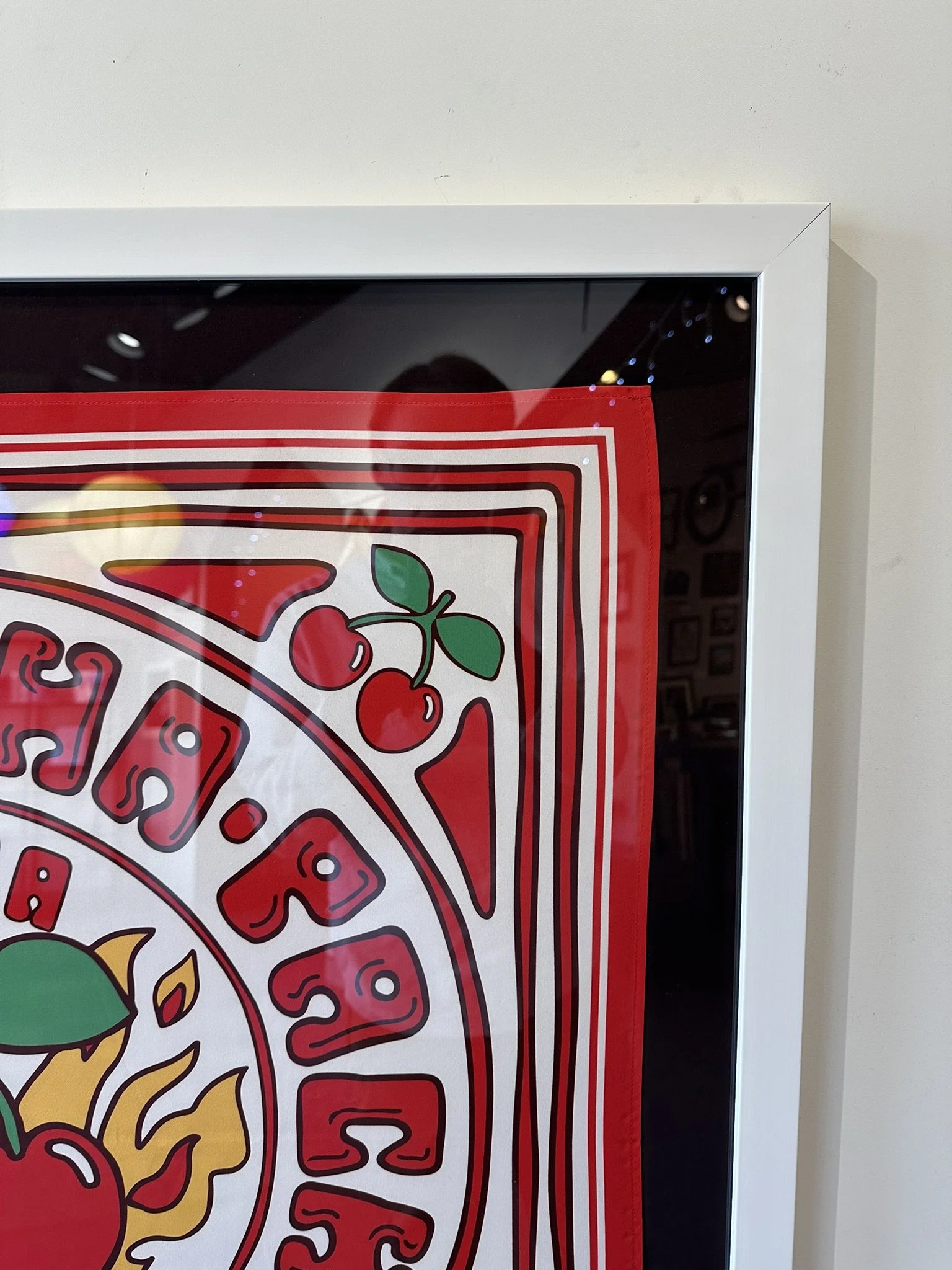
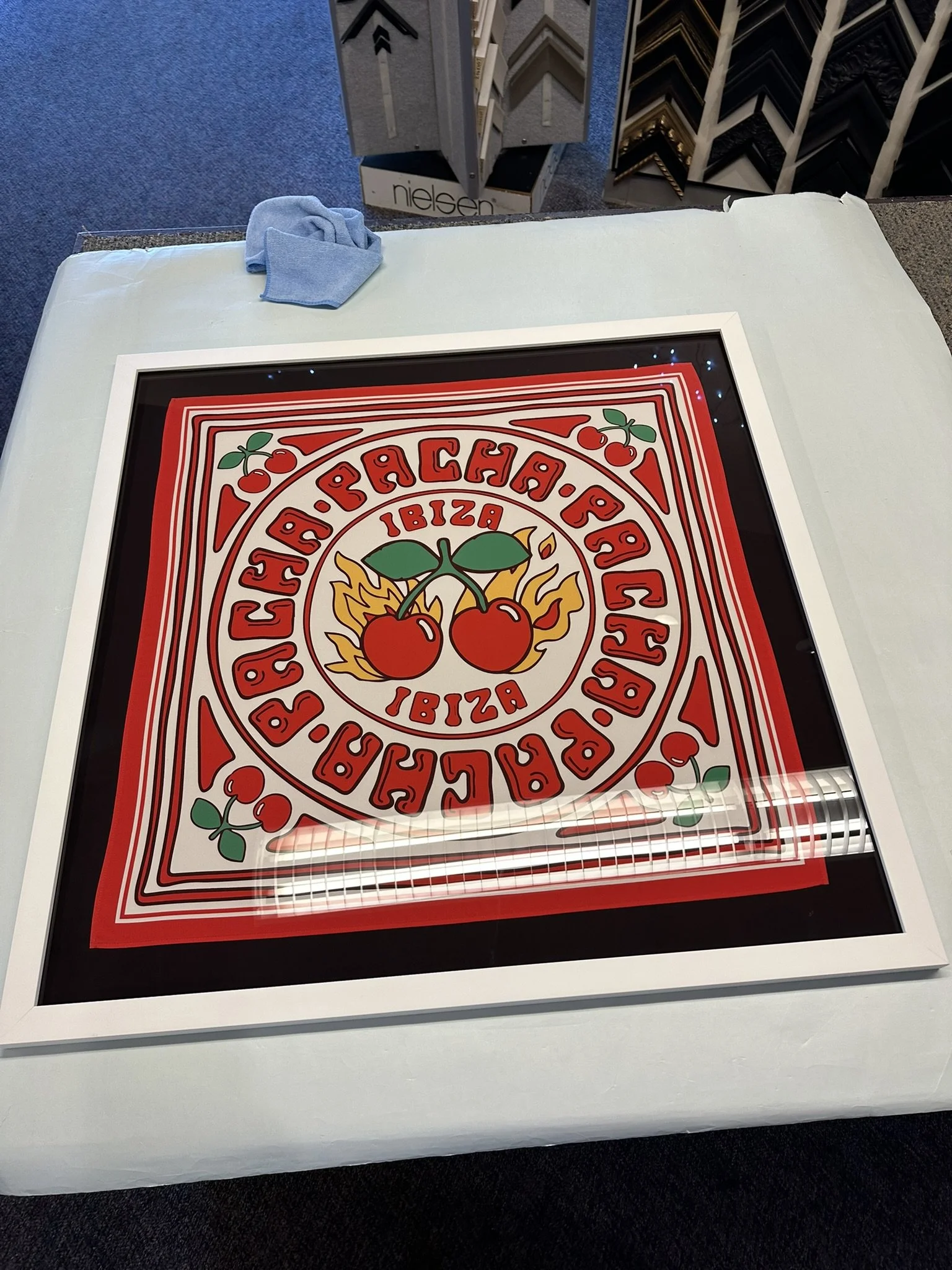
A direct contact overlay is a favorite mounting method of mine. This approach has a range of applications and in this example, I have mounted and framed a silk scarf.
It is essential to note that this method requires acrylic glazing, not glass, as the piece of acrylic is directly touching the artwork. The pressure between the glazing and mounting substrate is what holds the artwork in place.
The preferred glazing for this method is Optium Museum Acrylic, one of its many qualities is being abrasion resistant.
-
![]()
Making the substrate
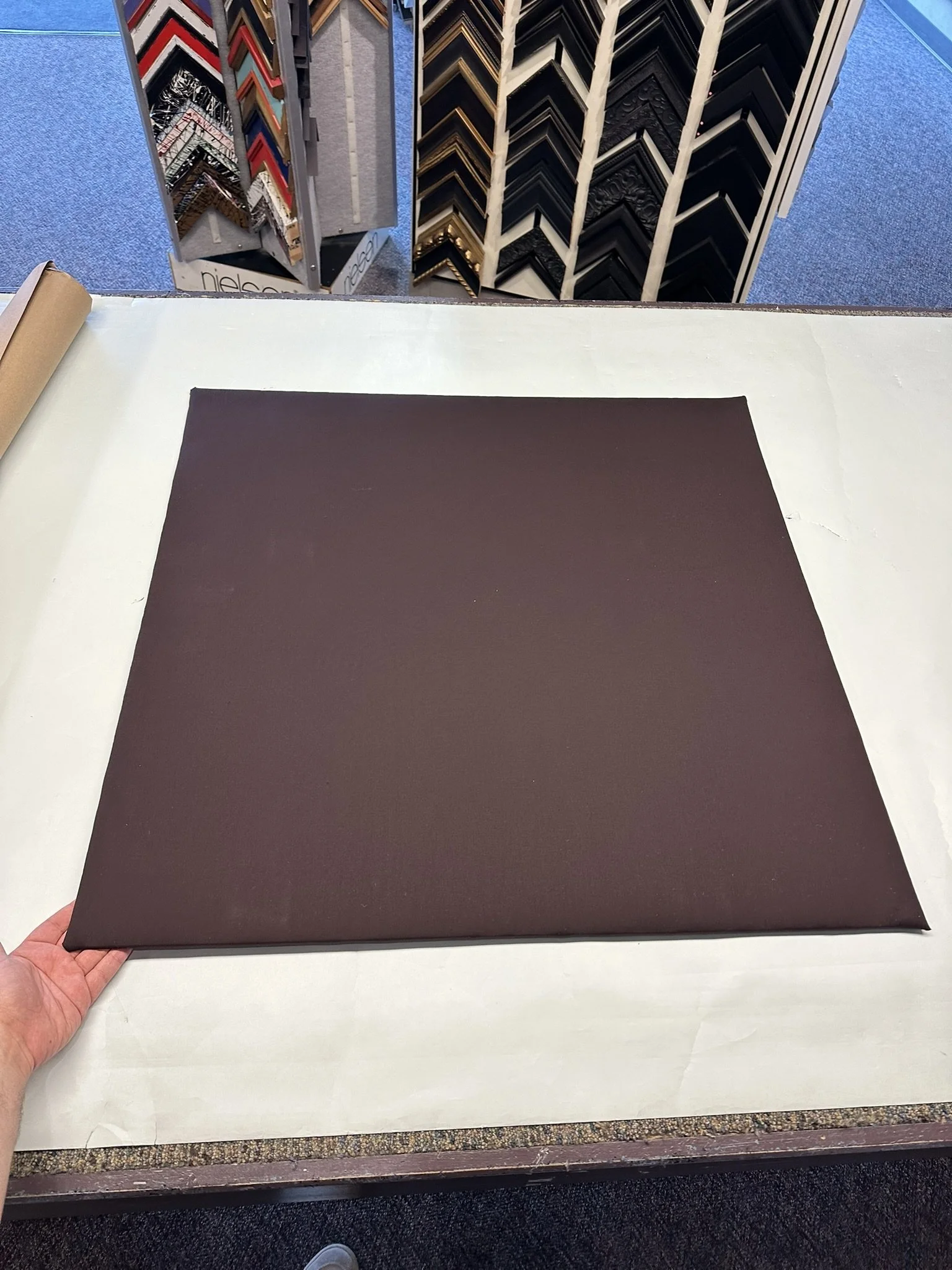
For this mounting method to work, we need a solid mounting substrate with a cushioned surface.
The steps to make this fabric-covered board are demonstrated in the following slides.
-
![]()
Gathering supplies
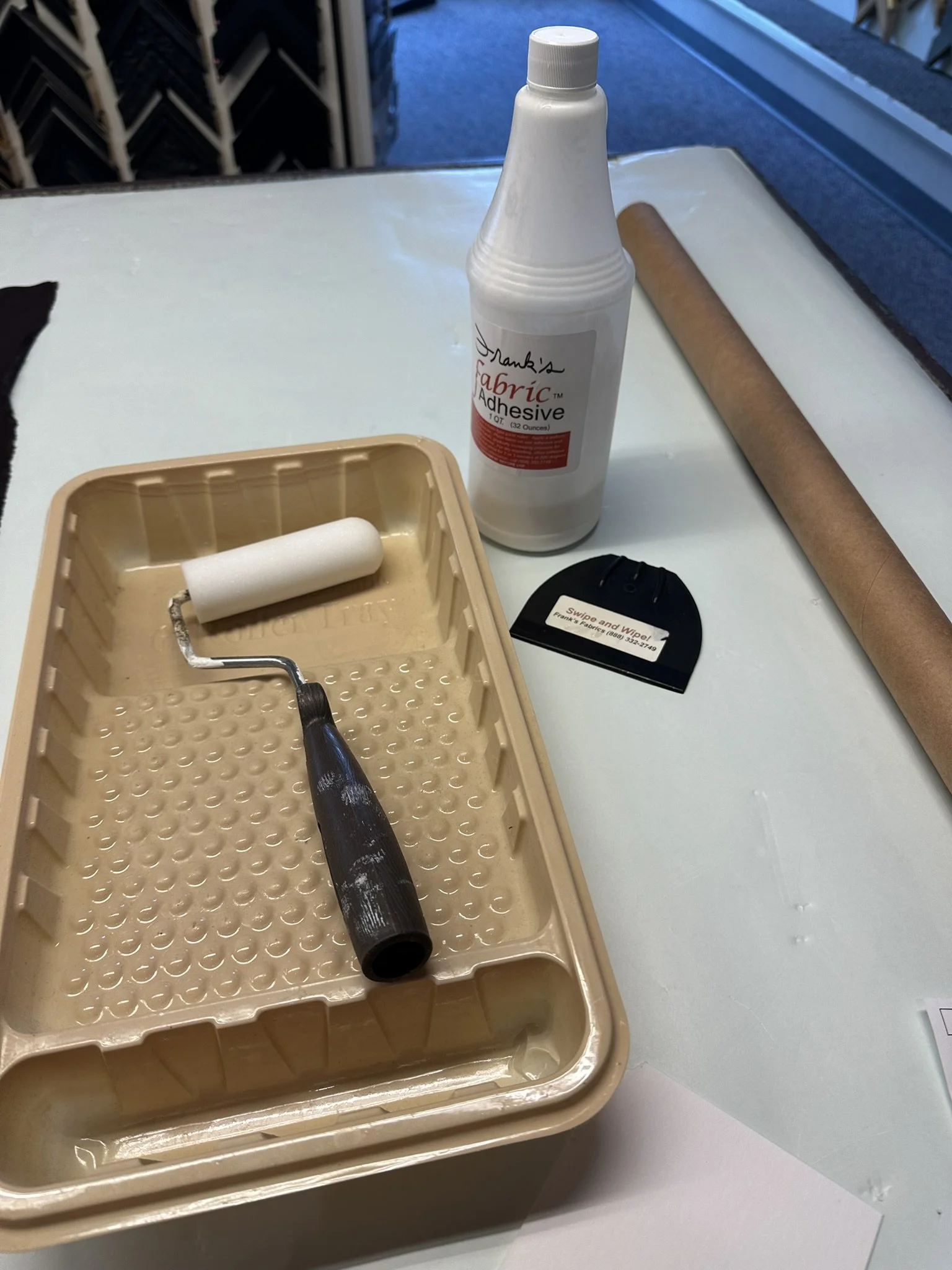
We need several materials to make our board: fabric glue, paint roller, fabric cutters, scissors, polyester batting, and fabric.
-
![]()
Step 1: Cutting the board to size
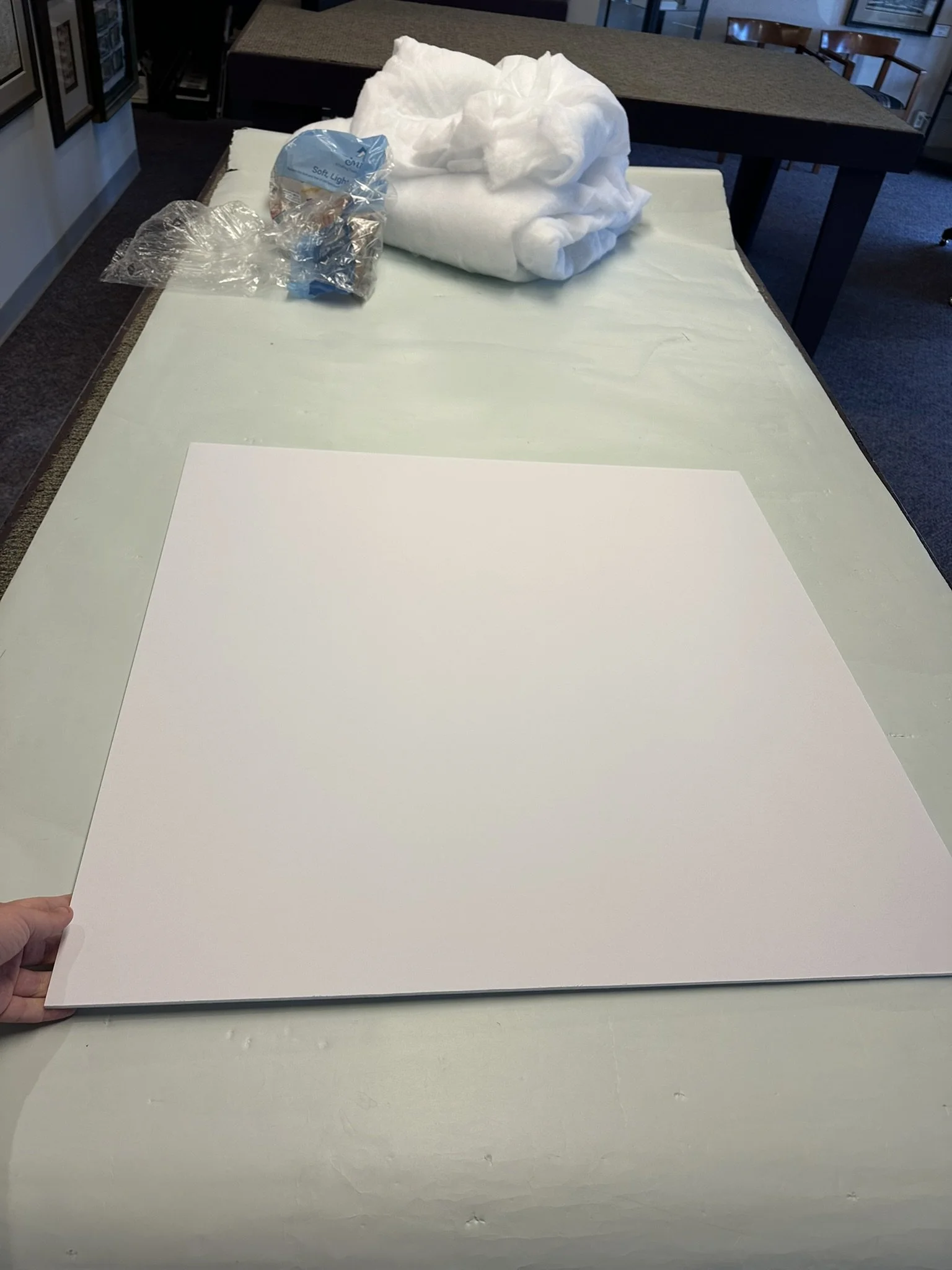
As the base of the substrate, I am using an acid-free foamboard. There are several different options we could use here, but this particular frame shop carries primarily foamboard.
The paper surface allows for the fabric glue to bond well with the fabric.
I cut the board about an eighth of an inch smaller than my frame size, before allowance. Due to the combination of fabric and batting being wrapped around the board’s edges.
-
![]()
Step 2: Adding a layer of batting
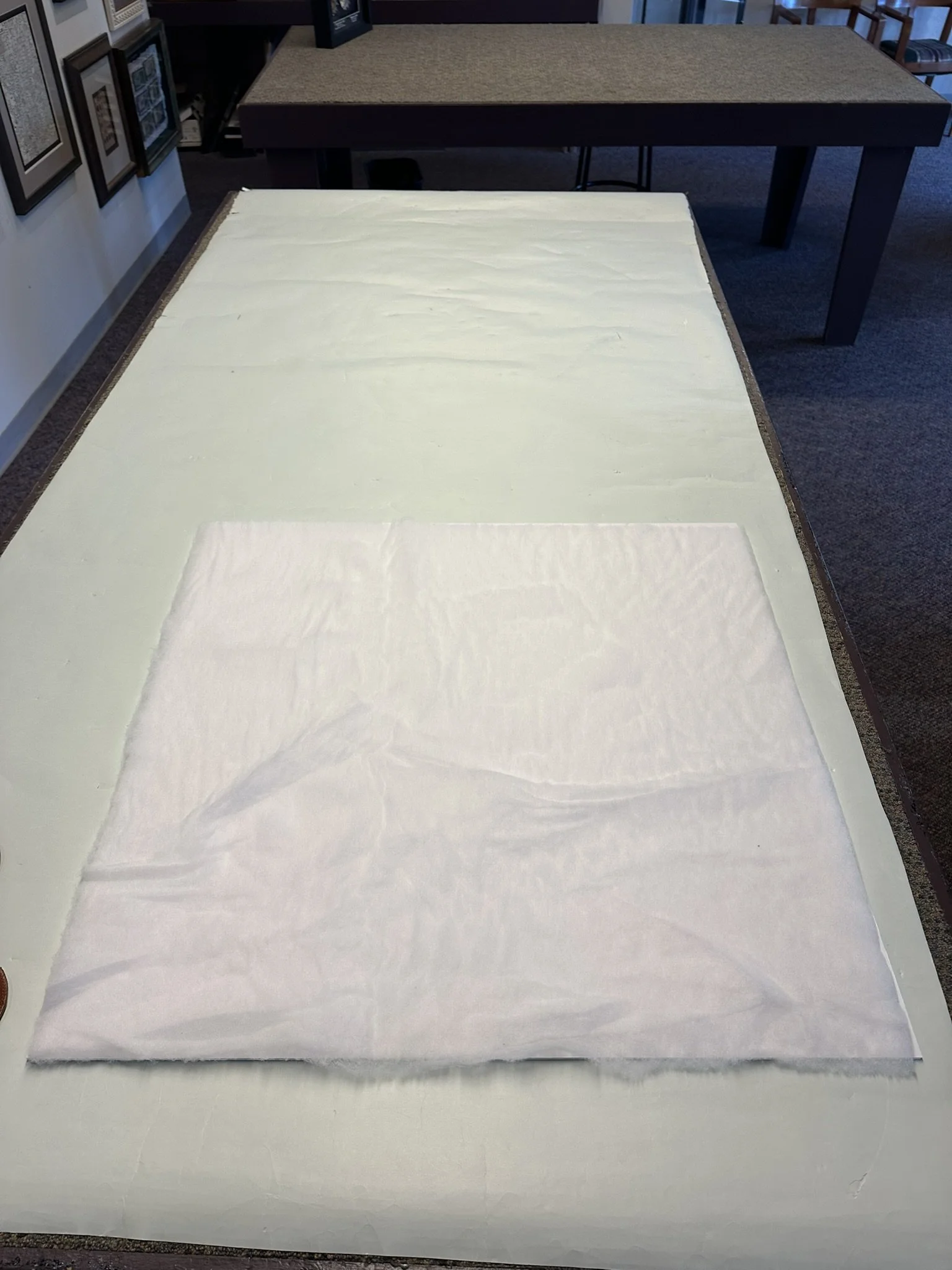
I am using polyester batting to add cushioning to one side of the substrate.
Trim the batting to the size of the board. It will not be square due to the nature of the material. This is fine, I accommodated for the extra space needed for this board to go into the frame.
-
![]()
Step 3: Cutting your fabric
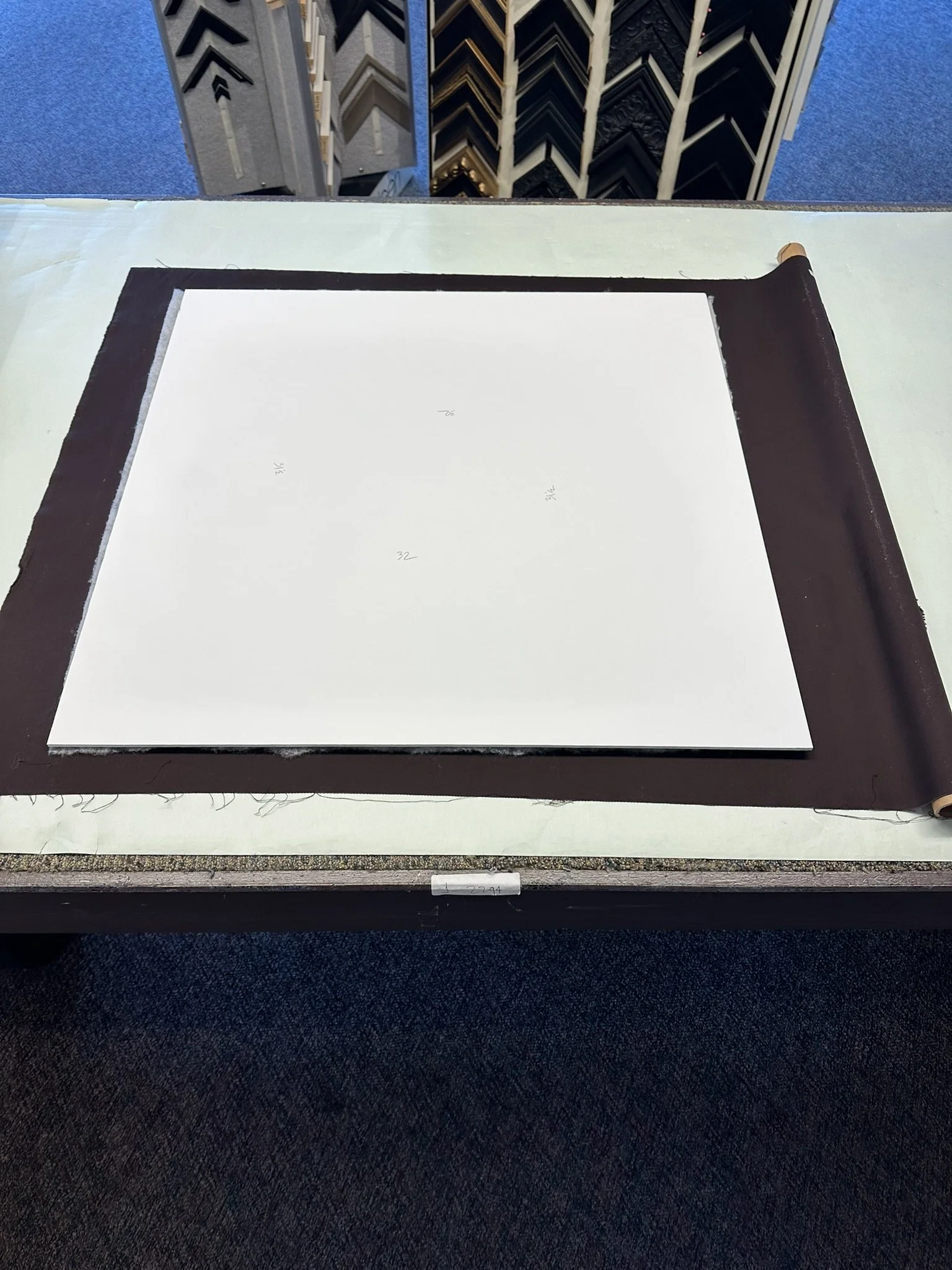
Since the artwork is a textile, I am using a linen fabric as the decorative background.
The fabric serves several purposes, a few being that it provides enough friction for the scarf to cling to the fabric and the linen covers our batting.
-
![]()
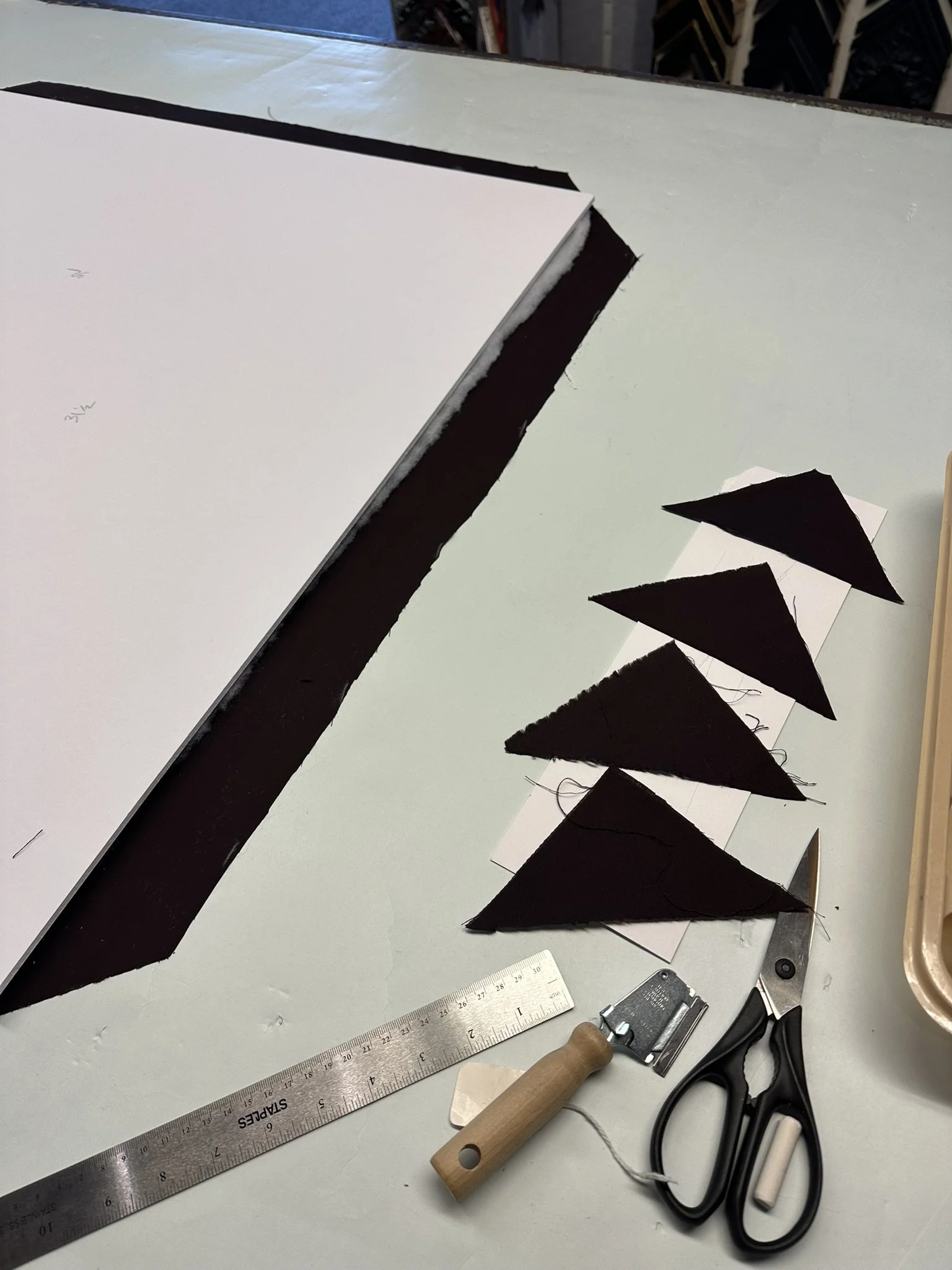
Step 4: Cutting corners
Trim the 4 corners of the piece of fabric. We are left with triangle pieces.
This is so the overlap of the fabric does not add too much bulk to the frame. The frame that was selected for the project has a rather shallow depth, and it is best to not have the framing package sticking out of the back of the frame.
-
![]()
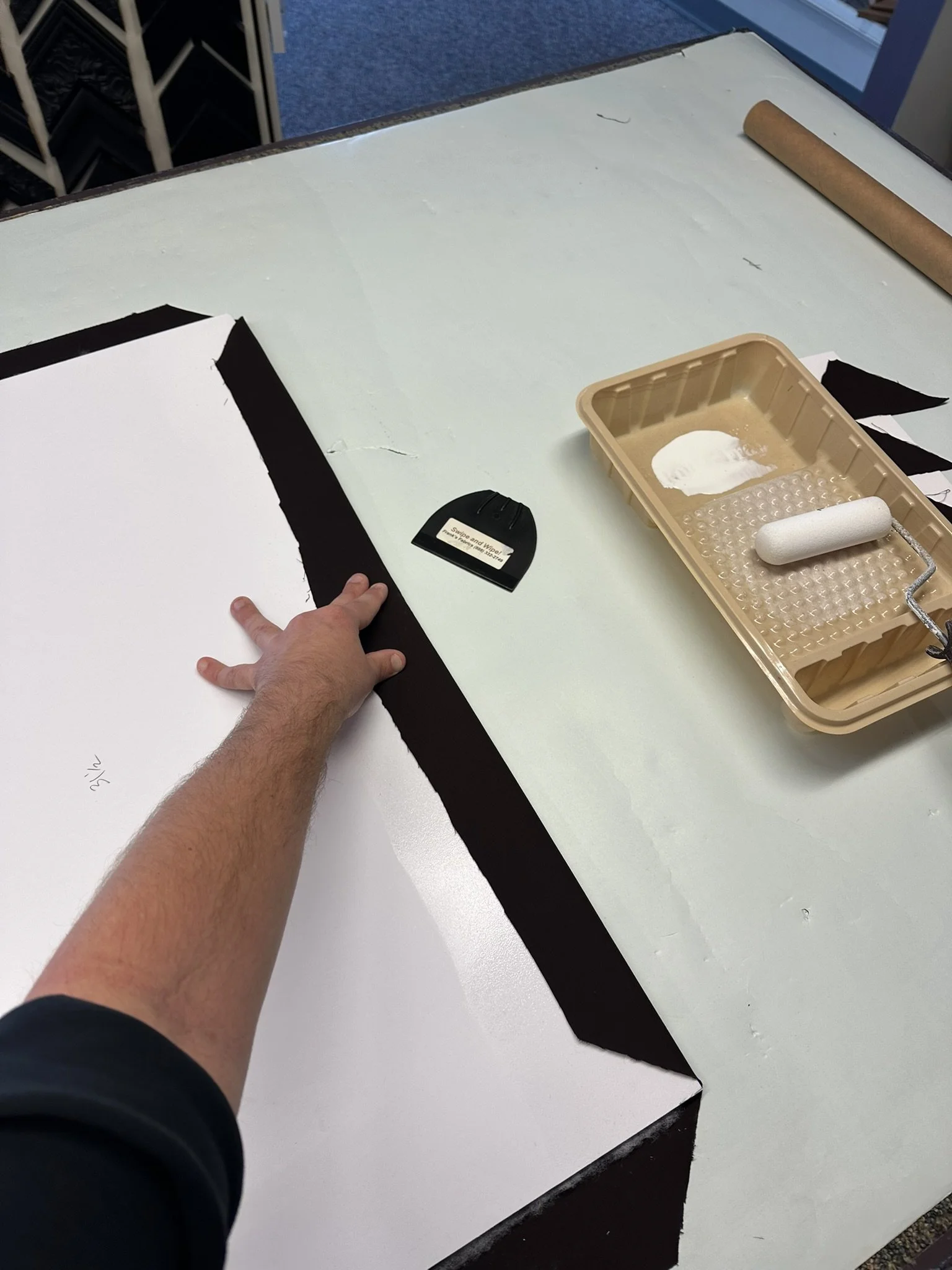
Step 5: Gluing the fabric
We are gluing the edges of the fabric to the backside of our mounting board. I am using a fabric glue in this instance. It dries fast and becomes tacky within a minute.
This can be a hectic step in the project, be careful as to not get glue on the recto side.
-
![]()
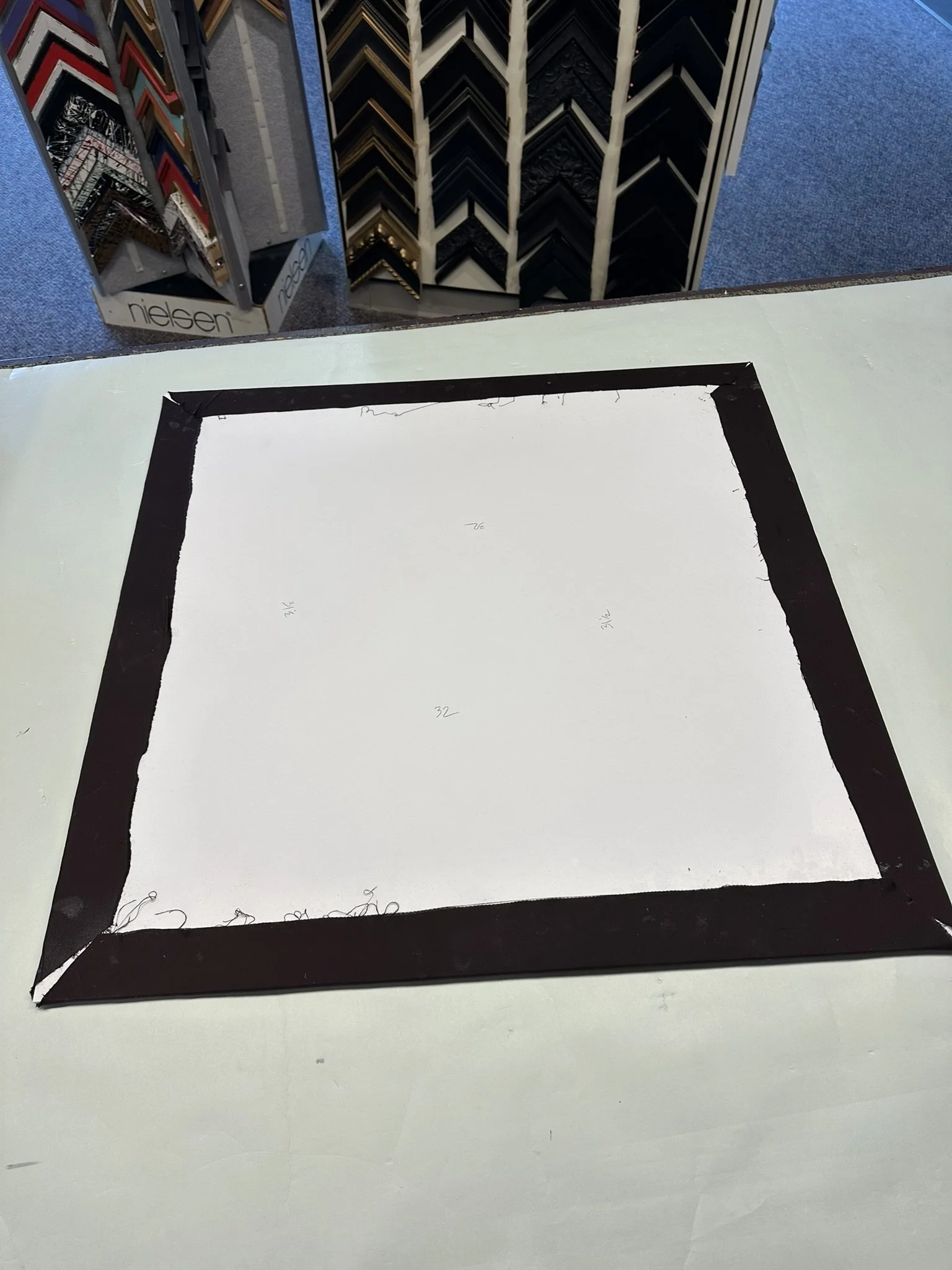
Step 6: Letting it dry
Allow for proper drying time. I also secured the edges of the fabric with acid-free framer’s tape—just as an extra precaution.
-
![]()
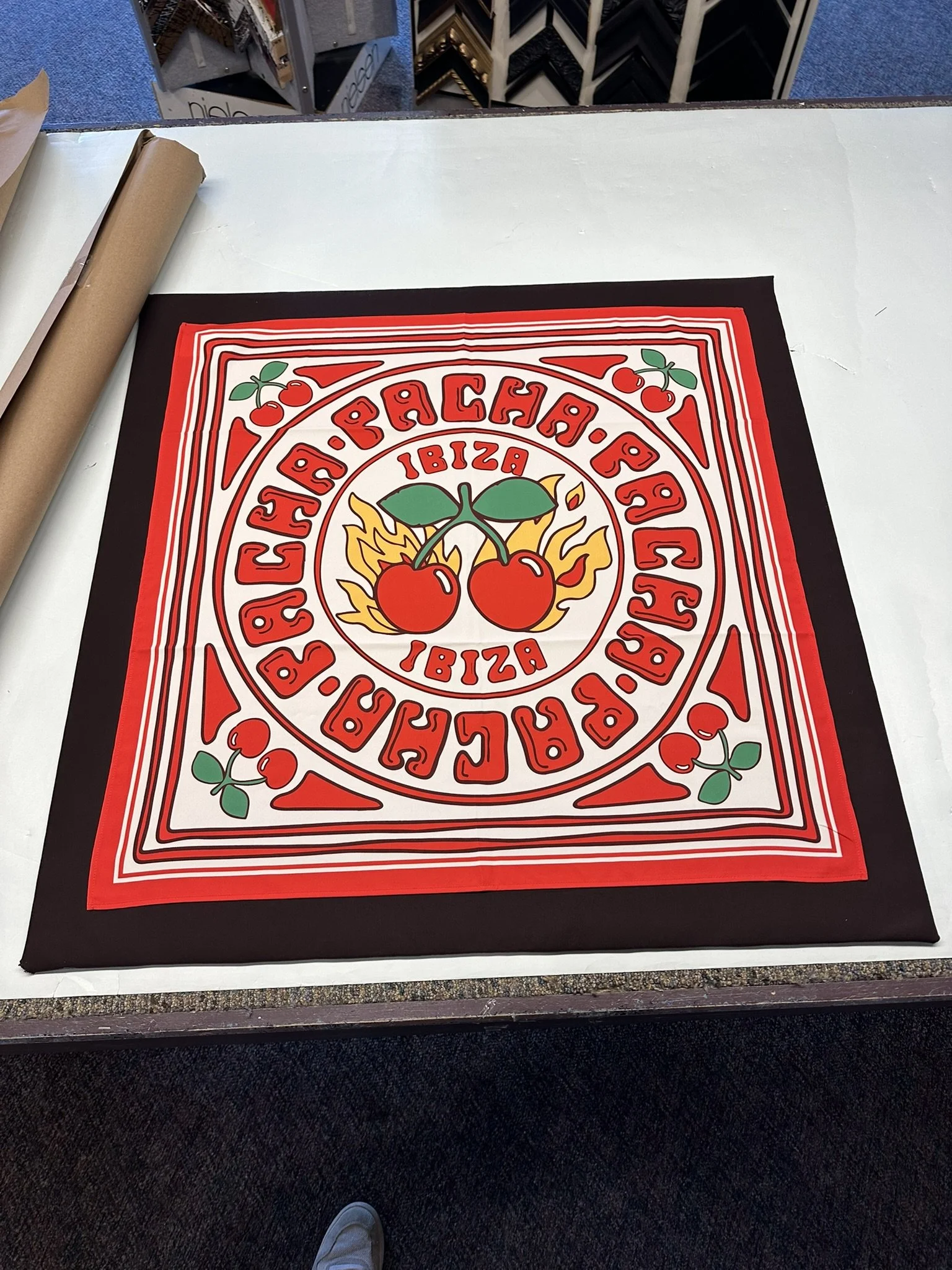
Step 7: Placing the scarf
Setting the scarf matters most here, because we want the borders of our background to look as even as possible.
The following step is to place the acrylic on top of the scarf, and it is difficult to tweak the edges of the scarf without tracking dust or scraping the acrylic.
-
![]()
Step 8: Fitting into the frame
After placing the acrylic, then the frame, onto the mounting board, it is important to apply as much pressure as possible when flipping to the verso side.
Put firm pressure onto the back of the board when using the fitting gun. The artwork is held in place by pressure, and we want to avoid the scarf from ever slipping over time.
Platform mount, a step-by-step
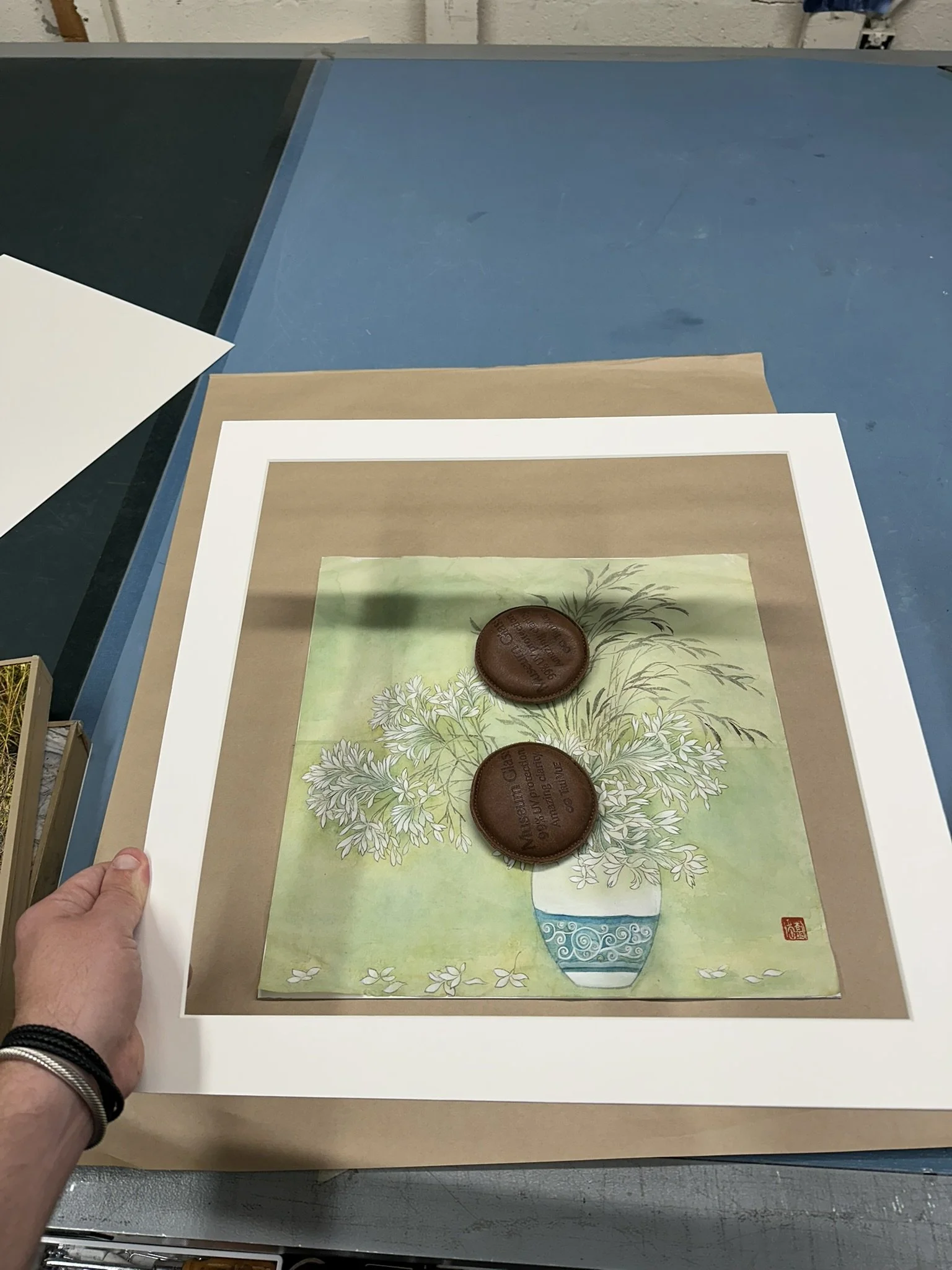
A noninvasive mounting method that relies solely on pressure to keep the artwork in place. Adhesive does not touch the artwork in this instance.
This application works well with sensitive photographs or impossibly thin papers.
-
![]()
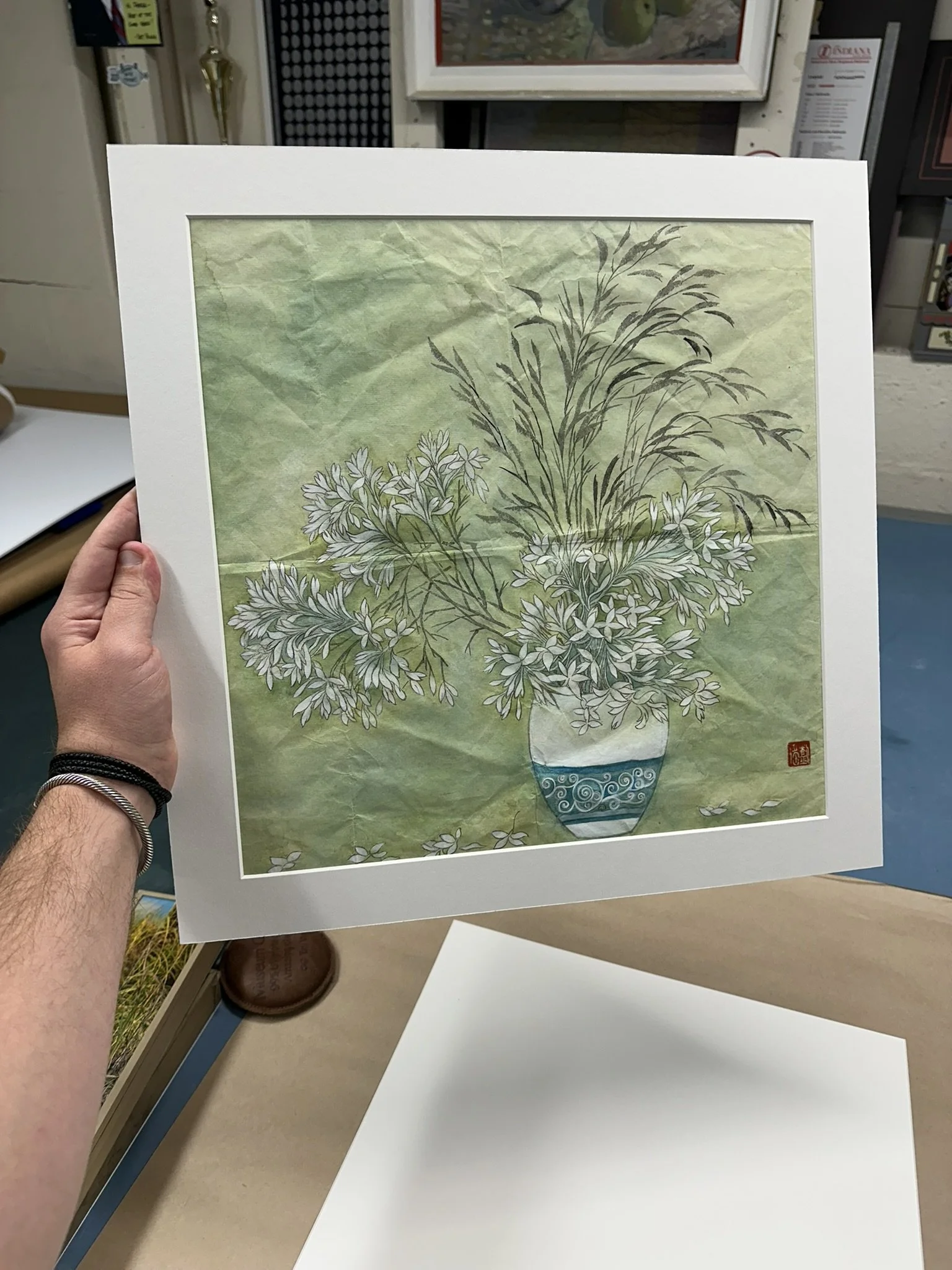
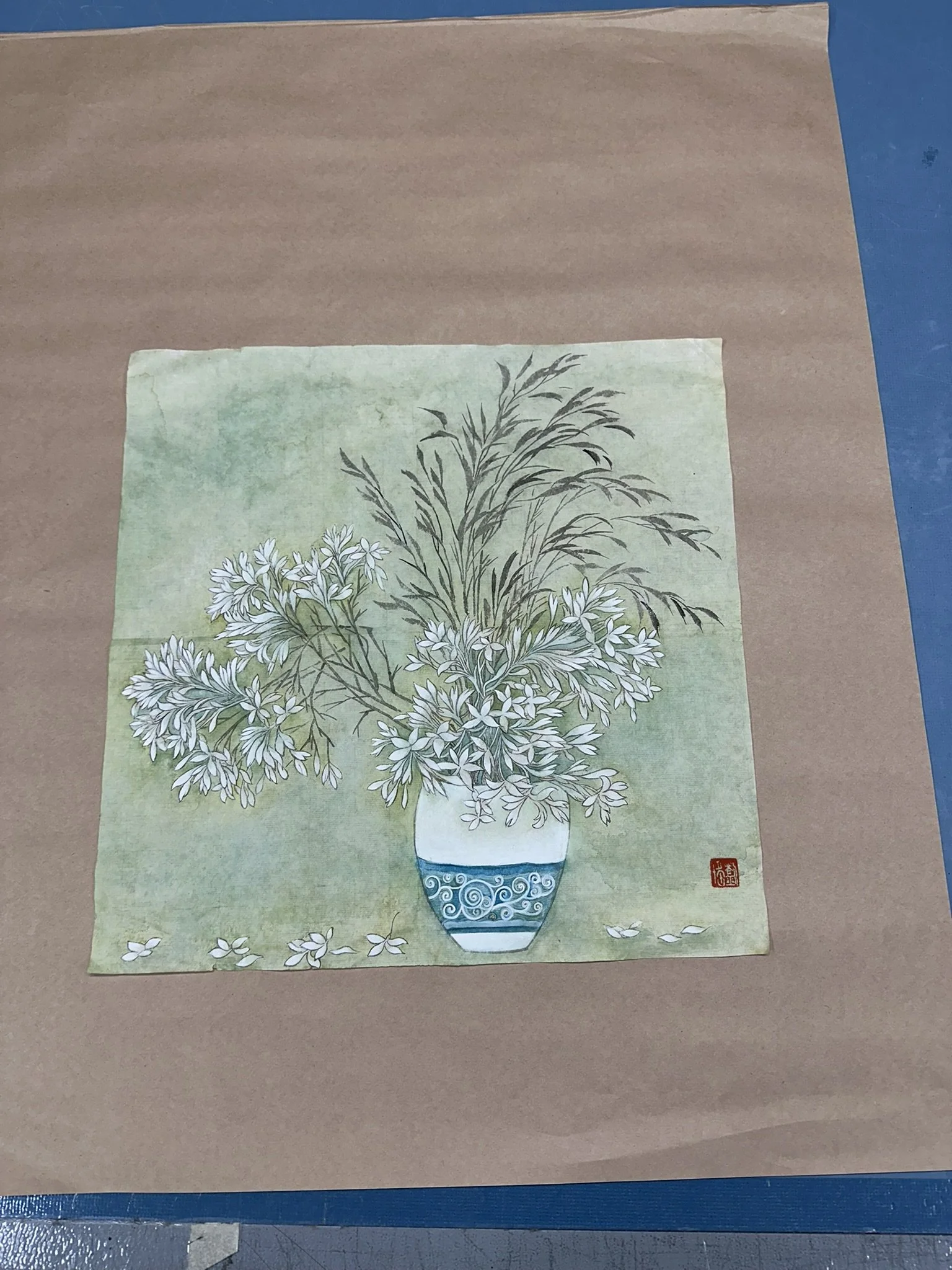
The artwork
The watercolor is done on a sheer paper, and it is transparent enough that my hinging papers will show through the watercolor.
In this instance, the watercolor is out of square, so I will have to do some tracing for my matboard substrate.
-
![]()
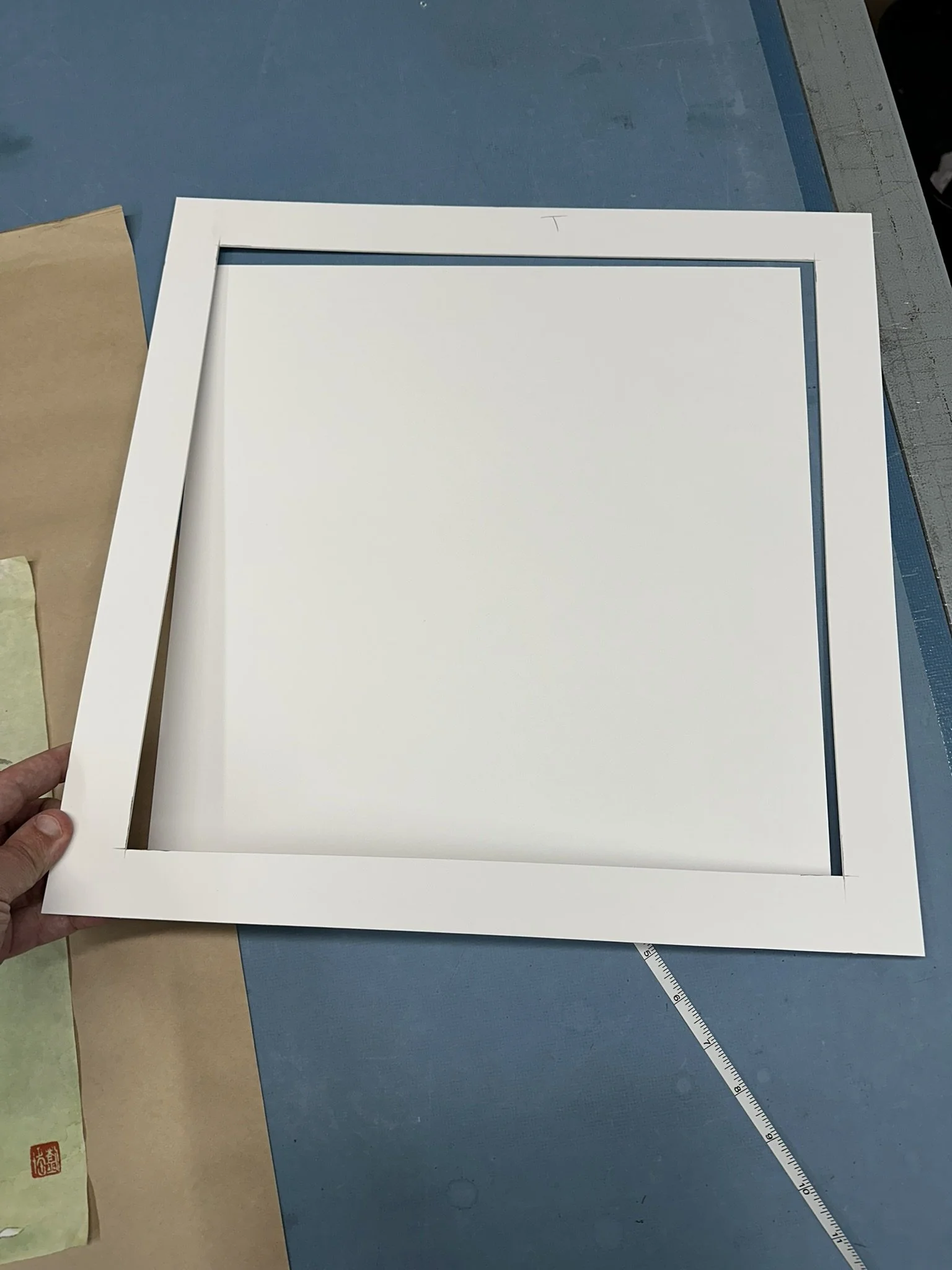
Step 1: Trace the perimeter of the artwork
Place the artwork on a matboard that is cut larger than the frame size. We will be trimming the additional measurement off later in this process.
To achieve this particular mount, we need to cut into our mounting board. Here I am tracing the artwork since it is out of square.
The fallout from our mounting board will actually hold the artwork in place at the end of this process.
-
![]()
Step 2: Cut out the traced window
Cut the traced window a sixteenth of an inch larger than the dimensions of our watercolor.
Save the fallout. This piece will be used at the very end of this mounting method.
-
![]()
Step 3: Place the surface window mat on the riser
Here I have cut the face mat that will cover the matboard we cut into in previous steps.
I marked the placement of the window mat after making sure the mat window is placed as desired.
-
![]()
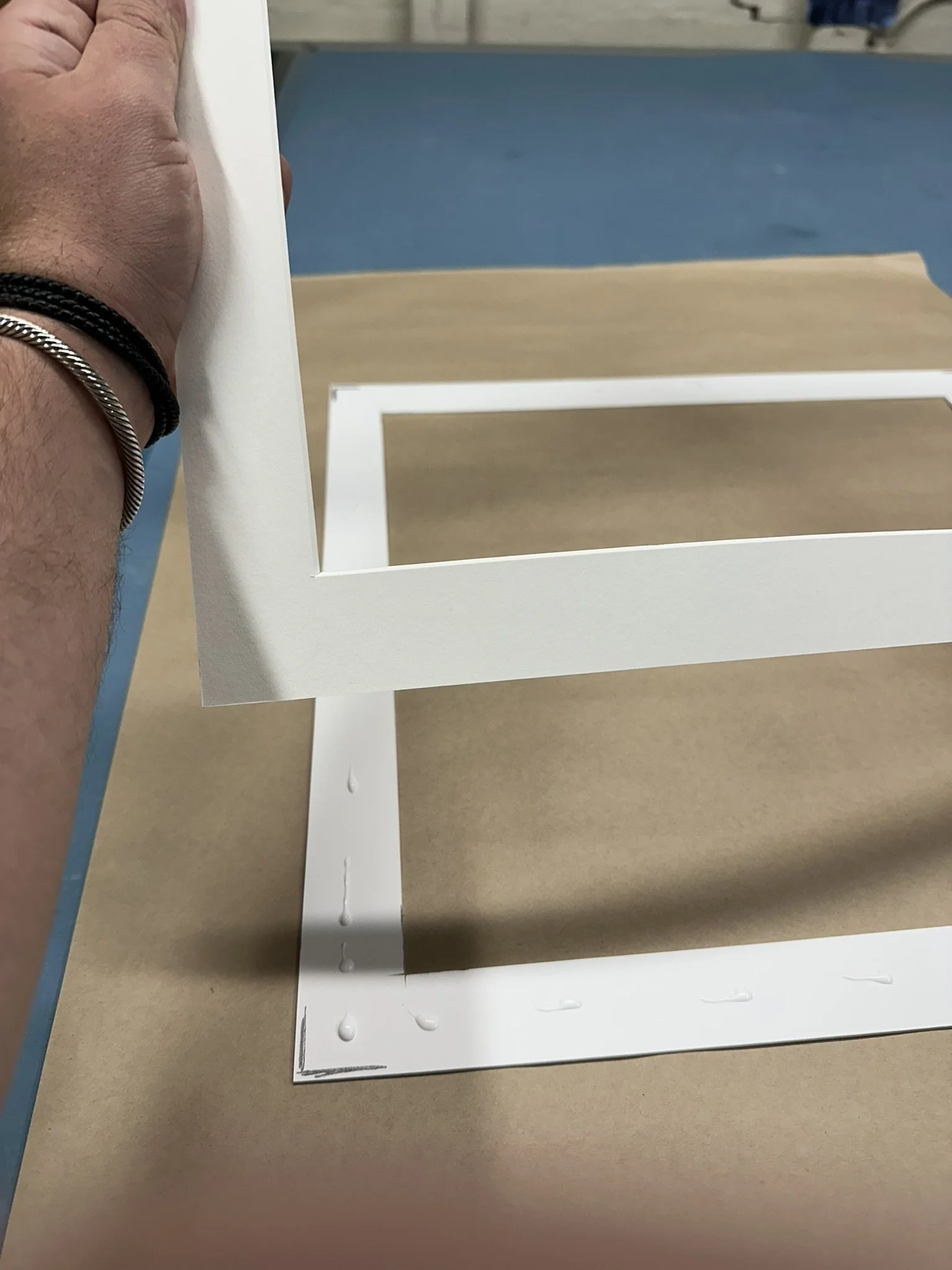
Step 4: Glue the window mat to the riser
Essentially, we are making a tray for the watercolor to rest in.
Adhere the window mat to the matboard we cut into.
-
![]()
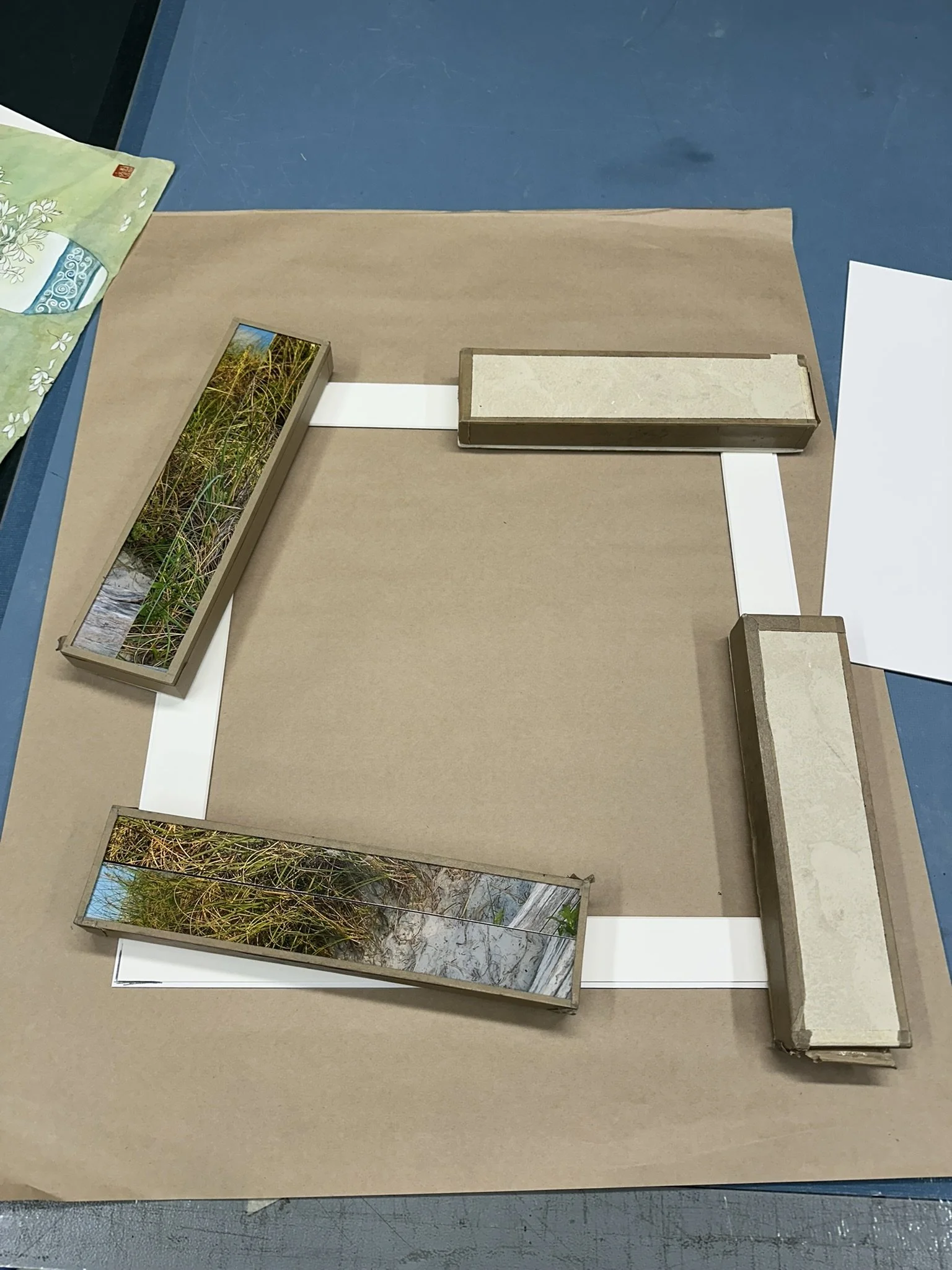
Step 5: Let it dry
Dry time is critical here, as we do not want any clue or adhesive coming into contact with the artwork.
-
![]()
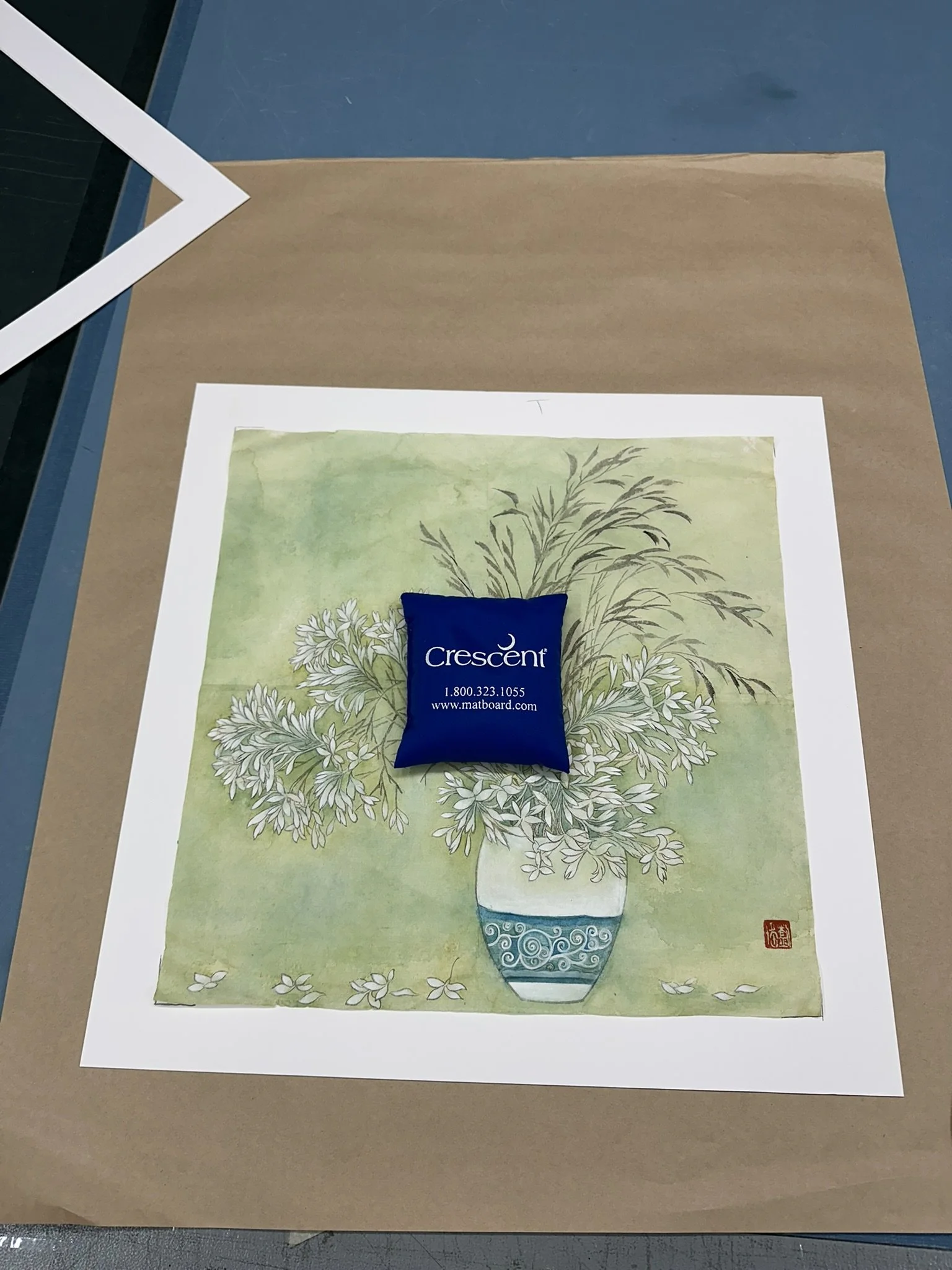
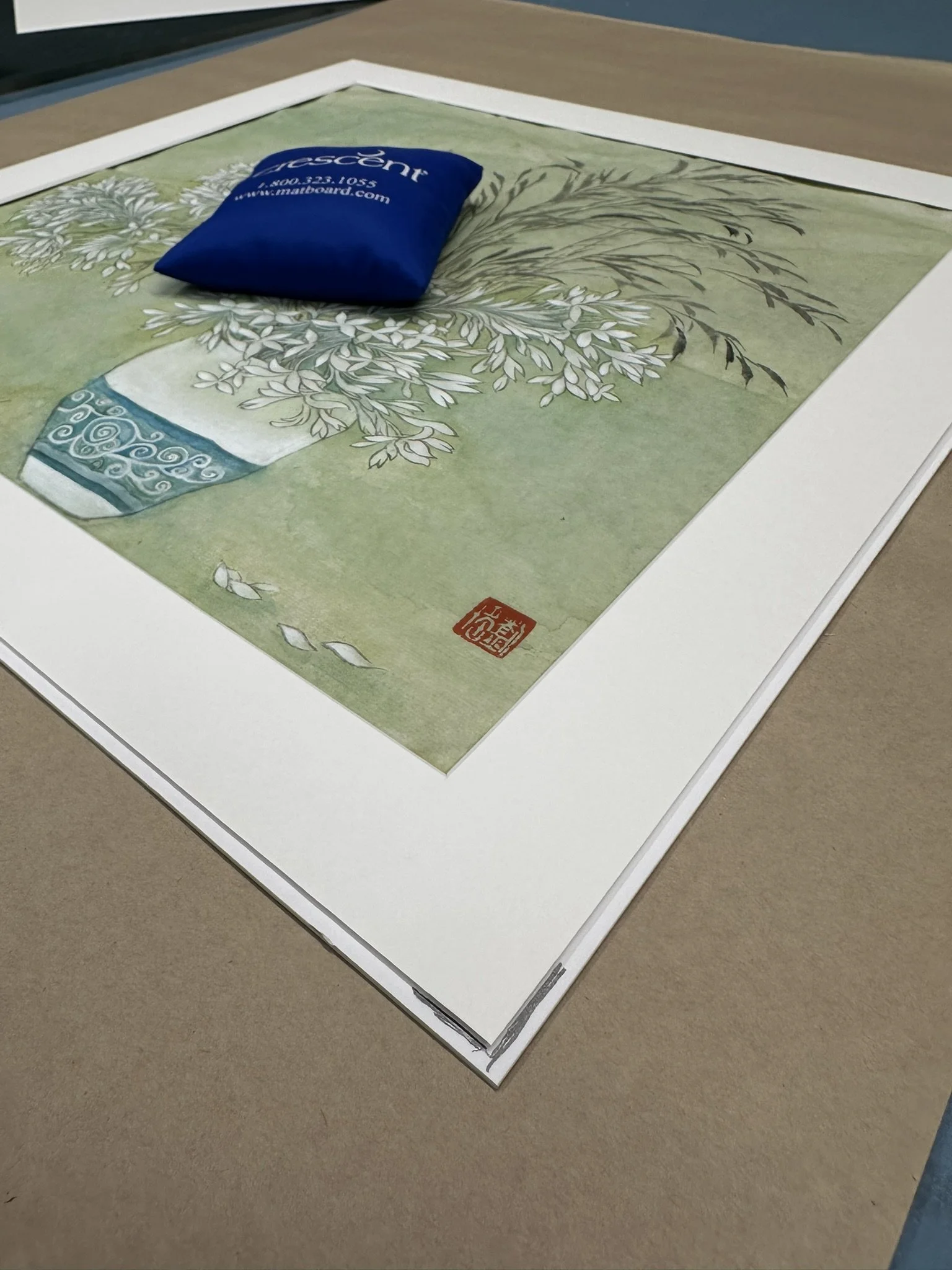
Step 6: Place the contents together
After drying, I trimmed the sides protruding out of the window mat.
Behind the watercolor is the fallout we saved from earlier.
Make sure everything fits together without the watercolor shifting out of place.
-
![]()
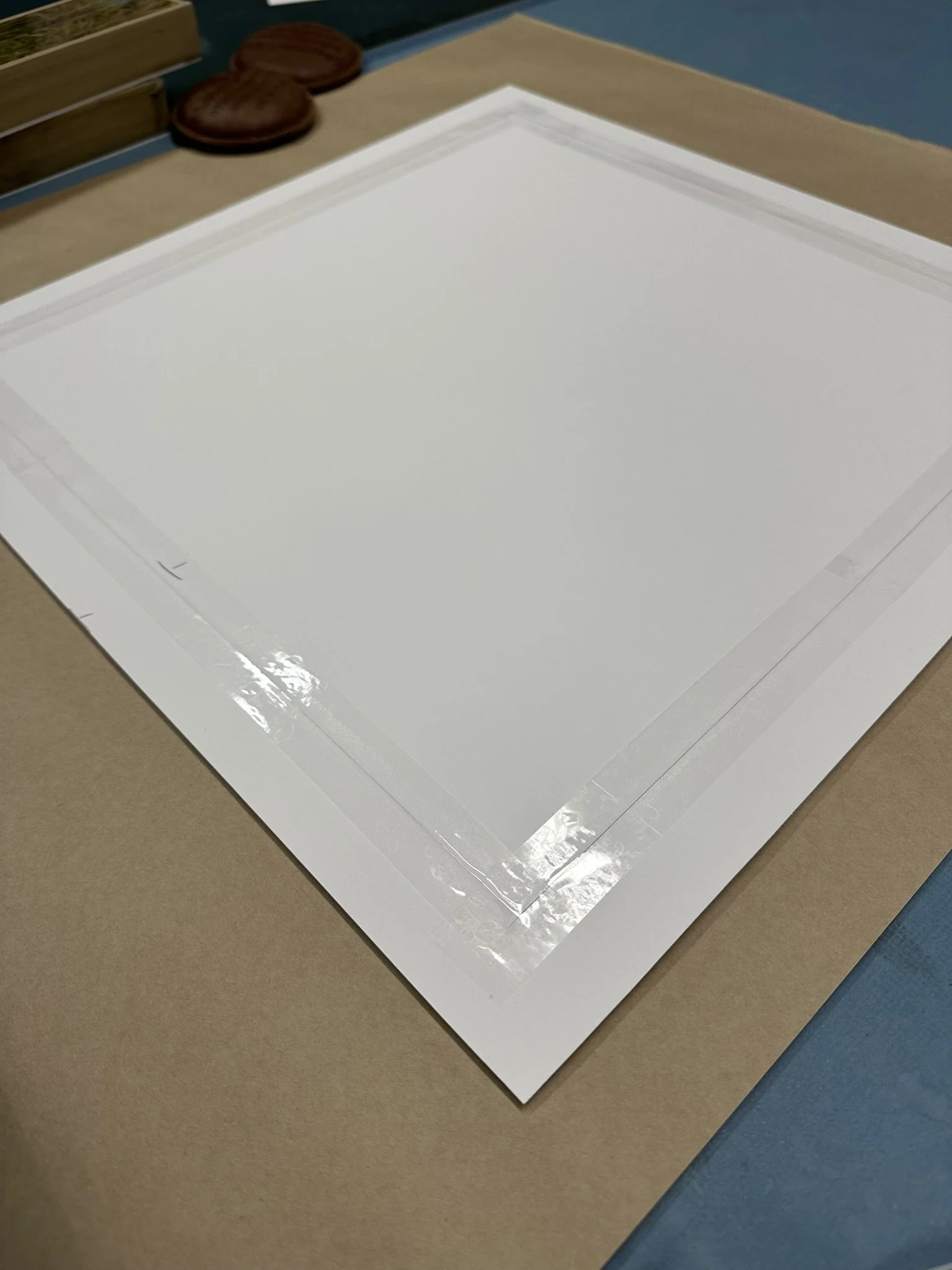
Step 7: Tape in the fallout
The final step is to flip over the contents and secure the fallout.
Here I used an acid-free framer’s tape. It is important to burnish the pressure-sensitive tape.
Edge Mounting Example
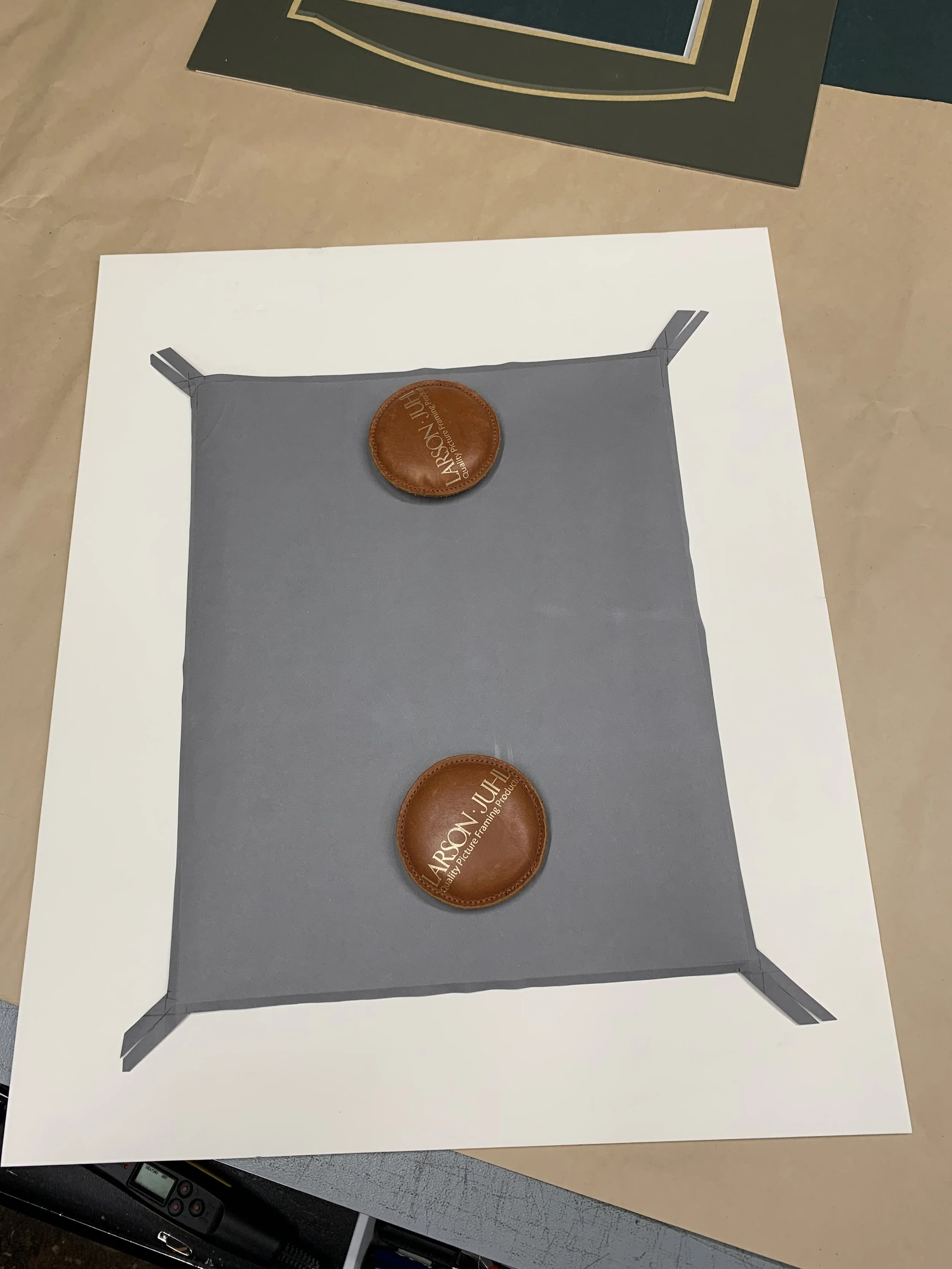
Edge mounting works well with artwork on heavyweight paper, and this approach to mounting meets preservation standards.
A tray is crafted from acid-free backing paper, but the backing paper must be sized large enough to be folded over the edges of the artwork.
Strips are left on the corners to allow the tray to be mounted to the substrate. The strips are attached with water-activated linen tape.
Year
2021


Cove Mat Construction
A cove mat is a skillful approach to adding depth in a frame design.
The cove is created by cutting a v-groove into the mat board, and by mitering the corners of the board.
Using foam board as building blocks, the walls of the mat are supported.
The structure is durable, and provides adequate air space between the artwork and the glazing. This method works well with dimensional objects.
Year
2022


Shadowbox Example
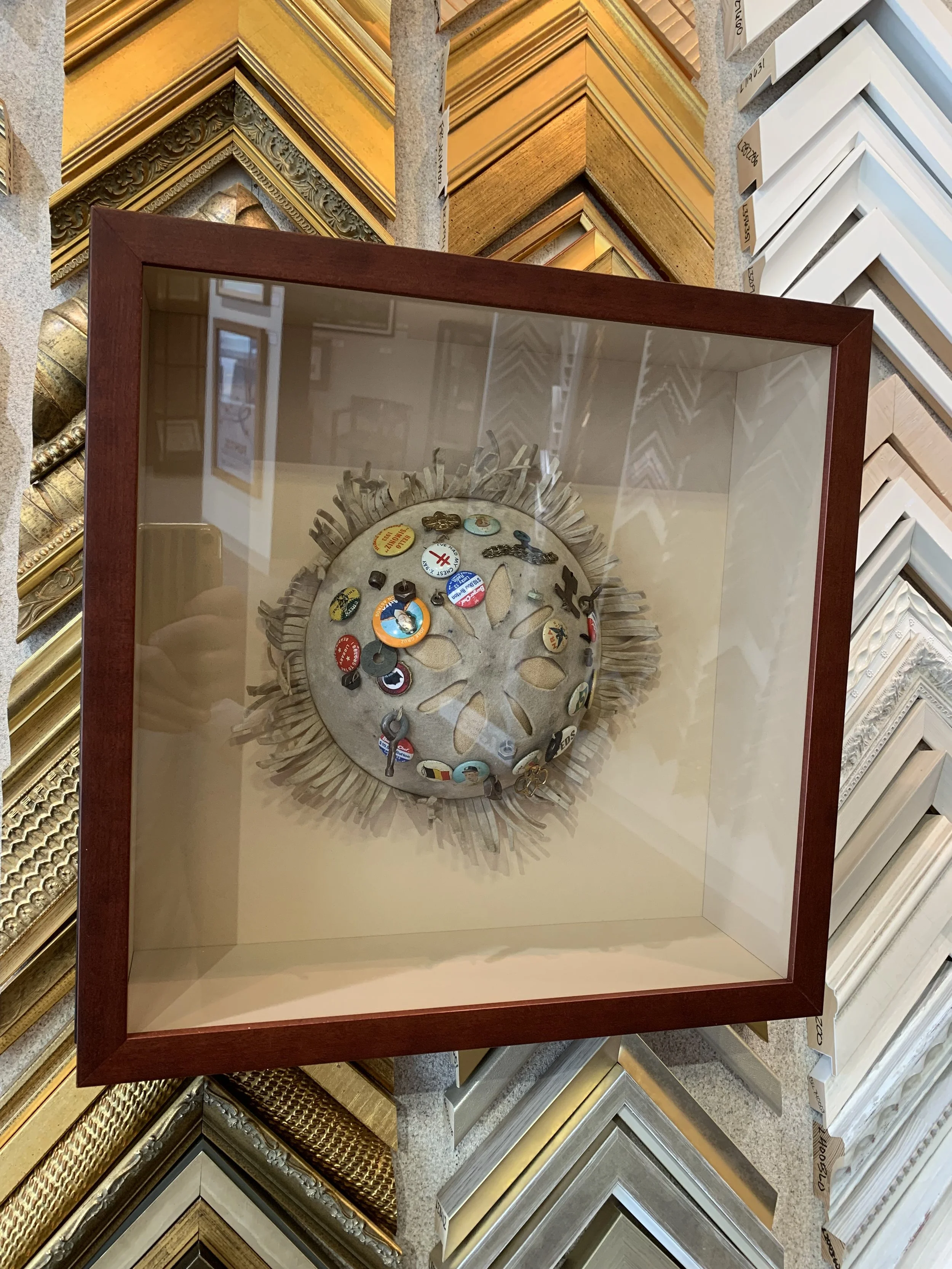
Our client wanted their childhood charm to become a wall-hanging piece.
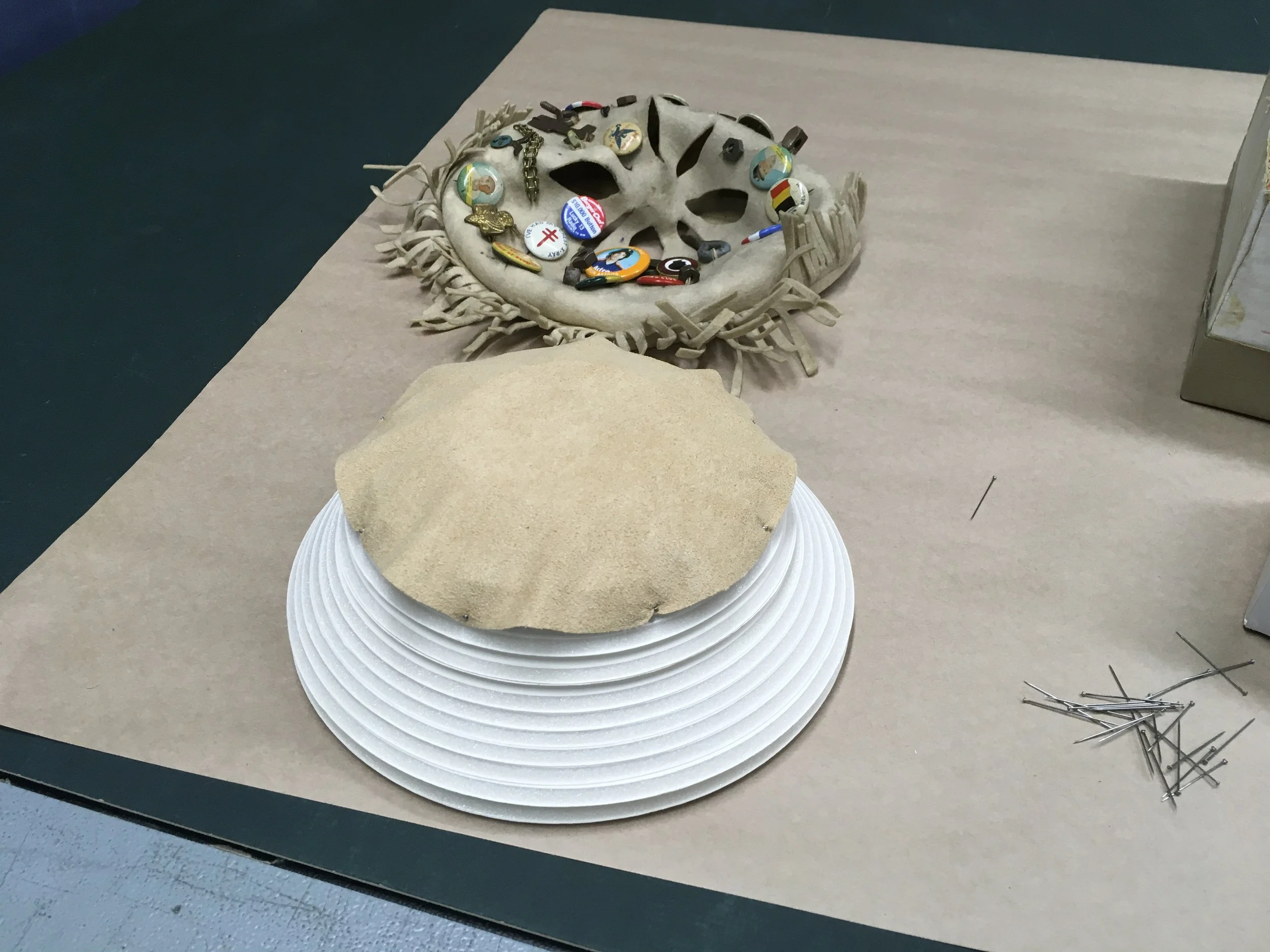
There were a few challenges; creating a frame deep enough to prohibit the dangling objects from scratching the glazing, and designing a structure to shape the hat.
A shadowbox frame and a 3-inch wide frame are combined by using glue, staples, and Tyvek tape.
The mount was made by cutting many layers of foam board, and the hat was attached with silk pins.
Client
Marinelle
Year
2022




The strongest custom builds come with exceptional challenges.
Below is a gallery dedicated to recent and favorable projects.